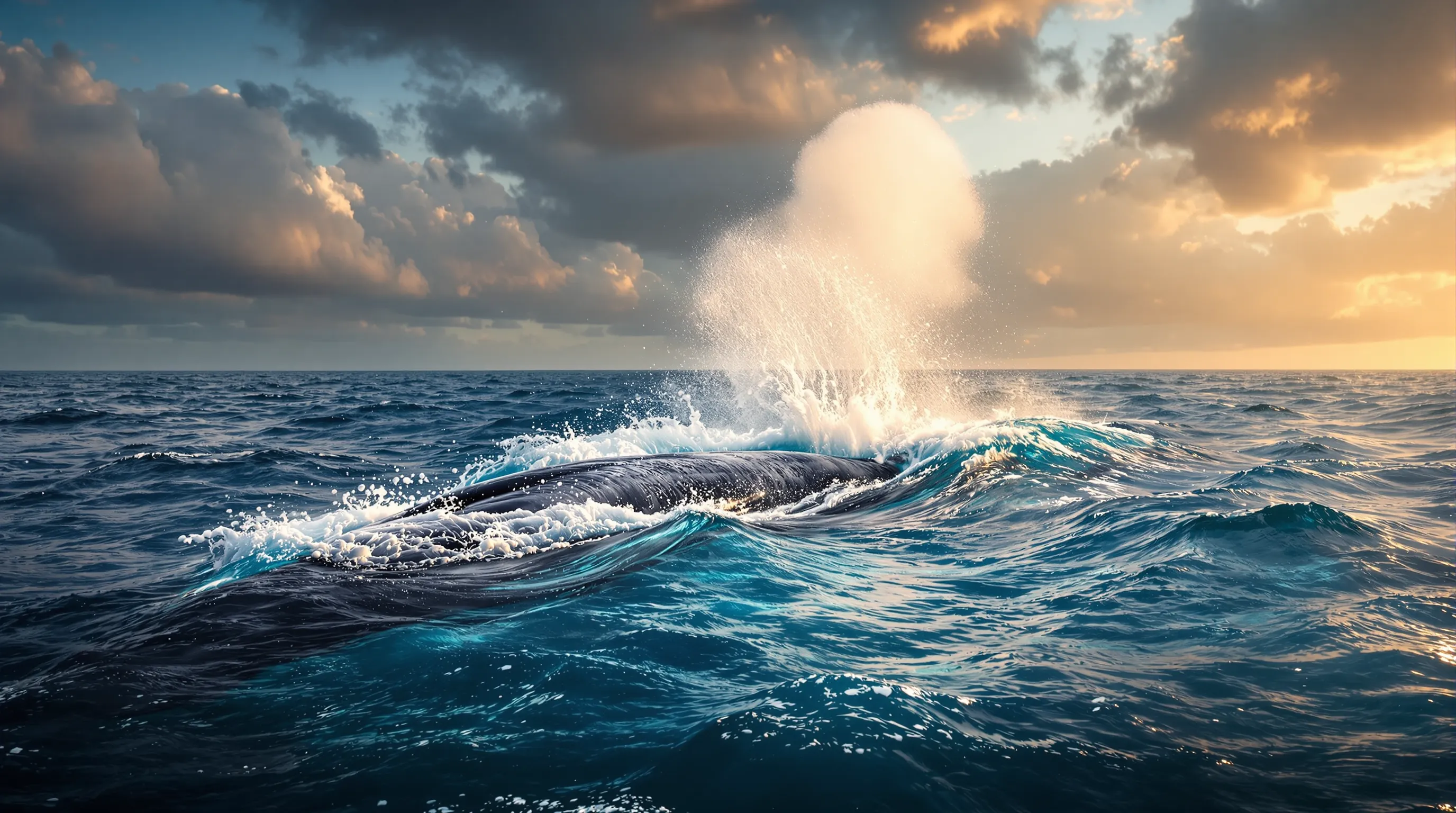
These 20-metre giants hiding in our Mediterranean waters will amaze you
The Mediterranean is home to a resident population of sperm whales estimated at 2,500 individuals, primarily concentrated in the Pelagos Sanctuary between France, Monaco and Italy. These sea giants, which can reach 20 metres in length and weigh up to 50 tonnes, inhabit the deep Mediterranean waters year-round. Contrary to popular belief, they don't migrate and form a unique population in the world, genetically distinct from their Atlantic cousins. Their spectacular dives can last up to 90 minutes at depths exceeding 1,000 metres.
The Pelagos Sanctuary, realm of Mediterranean sperm whales
The Pelagos Sanctuary spans 87,500 km² between the French, Monégasque and Italian coasts, providing exceptional habitat for sperm whales. This protected zone, established in 1999, concentrates 80% of sperm whale sightings in the western Mediterranean. The deep waters of the Roya Canyon, off Nice, and the Monaco Canyon quickly reach 2,000 metres depth, creating an ecosystem rich in squid, the sperm whales' favourite food. The particular bathymetry of this region, with its steep drop-offs close to shore, allows sperm whales easy access to their hunting grounds. Marine currents also concentrate plankton here, forming the base of the food chain.
Guaranteed observation hotspots
The Roya Canyon off Nice offers 90% observation chances between April and October. Excursions from Antibes, Cannes and Monaco reach these zones in just 45 minutes. Local professionals know perfectly the most productive sectors according to weather conditions and seasons.
Unique behaviours of Mediterranean sperm whales
Mediterranean sperm whales exhibit specific behaviours linked to their enclosed environment. Their dives last an average of 45 minutes, compared to 35 minutes for their oceanic cousins, as they hunt in deeper waters. They live in family groups of 8 to 12 individuals, led by the eldest matriarch. Their communication system using clicks is unique: each family possesses its own dialect, passed down through generations. Adult males, solitary creatures, can reach 18 metres and only join groups for reproduction. Their hunting technique uses echolocation to locate giant squid in the total darkness of the depths.
Threats and conservation in the Mediterranean
Mediterranean sperm whales face major challenges in this dense maritime space. Ship strikes represent the primary cause of mortality: 20% of stranded individuals show collision marks. Noise pollution from vessels disrupts their echolocation system vital for hunting and communication. Plastic waste constitutes a scourge: 95% of stranded sperm whales have ingested plastic. Climate change is altering the distribution of their prey, forcing them to dive deeper. Despite these threats, the population appears stable thanks to conservation efforts within the Pelagos Sanctuary and growing awareness amongst maritime professionals.
Concrete protection measures
The Pelagos Sanctuary imposes speed limits on commercial vessels in sensitive areas. Whale-watching operators follow strict non-disturbance charters. Citizen science programmes involve recreational boaters in population monitoring and surveillance.
Practical tips for observing sperm whales
The best period extends from April to October, with peak activity in June-July when the sea is calm and visibility optimal. Choose 6 to 8-hour excursions from Nice, Antibes or Monaco to reach the deep waters. Expect to pay £65 to £95 per person depending on season and duration. Book at least 48 hours in advance, as places are limited to maximum 12 passengers per boat to comply with regulations. Bring sun cream, hat and warm clothing as temperatures drop offshore. Weather conditions may cancel trips: favour high-pressure periods with calm seas and light winds.
Frequently asked questions
What's the best time to see sperm whales in the Mediterranean?
April to October with peak activity in June-July. Sperm whales are present year-round but favourable weather conditions allow regular excursions during this period. Calm seas provide better visibility and more comfort for observation.
How much does a whale-watching trip to see sperm whales cost?
Between £65 and £95 per person for a 6 to 8-hour excursion from Nice, Antibes or Monaco. Prices vary according to season, duration and included services. Booking required at least 48 hours in advance.
Can you see sperm whales from the French Mediterranean coast?
No, sperm whales inhabit deep waters more than 20km from shore. You must board a specialist boat to reach the Pelagos Sanctuary where they live. Excursions last minimum 6 hours to have observation chances.
Mediterranean sperm whales offer an exceptional natural spectacle just hours from our shores. These marine giants, witnesses to the richness of our natural heritage, deserve our respect and protection. To experience this unique adventure and discover other marvels of Mediterranean marine fauna, explore dauphin-mediterranee.com and plan your next adventure in the heart of the Pelagos Sanctuary.
Read also

What you didn't know about fin whales, the Mediterranean giants that captivate
Discover fin whales, the world's second-largest marine mammals, thriving in Medi...

Why Mediterranean Fishermen Jealously Guard These 7 Ancestral Recipes
Discover the culinary secrets of the Mediterranean coast: traditional fish recip...
7 Fascinating Things You Didn't Know About Long-finned Pilot Whales in the Mediterranean
Discover the secrets of long-finned pilot whales in the Mediterranean: behaviour...
These Mediterranean Wrecks Will Transform Your Scuba Diving Passion
Discover the legendary Mediterranean shipwrecks for scuba diving. Exceptional si...