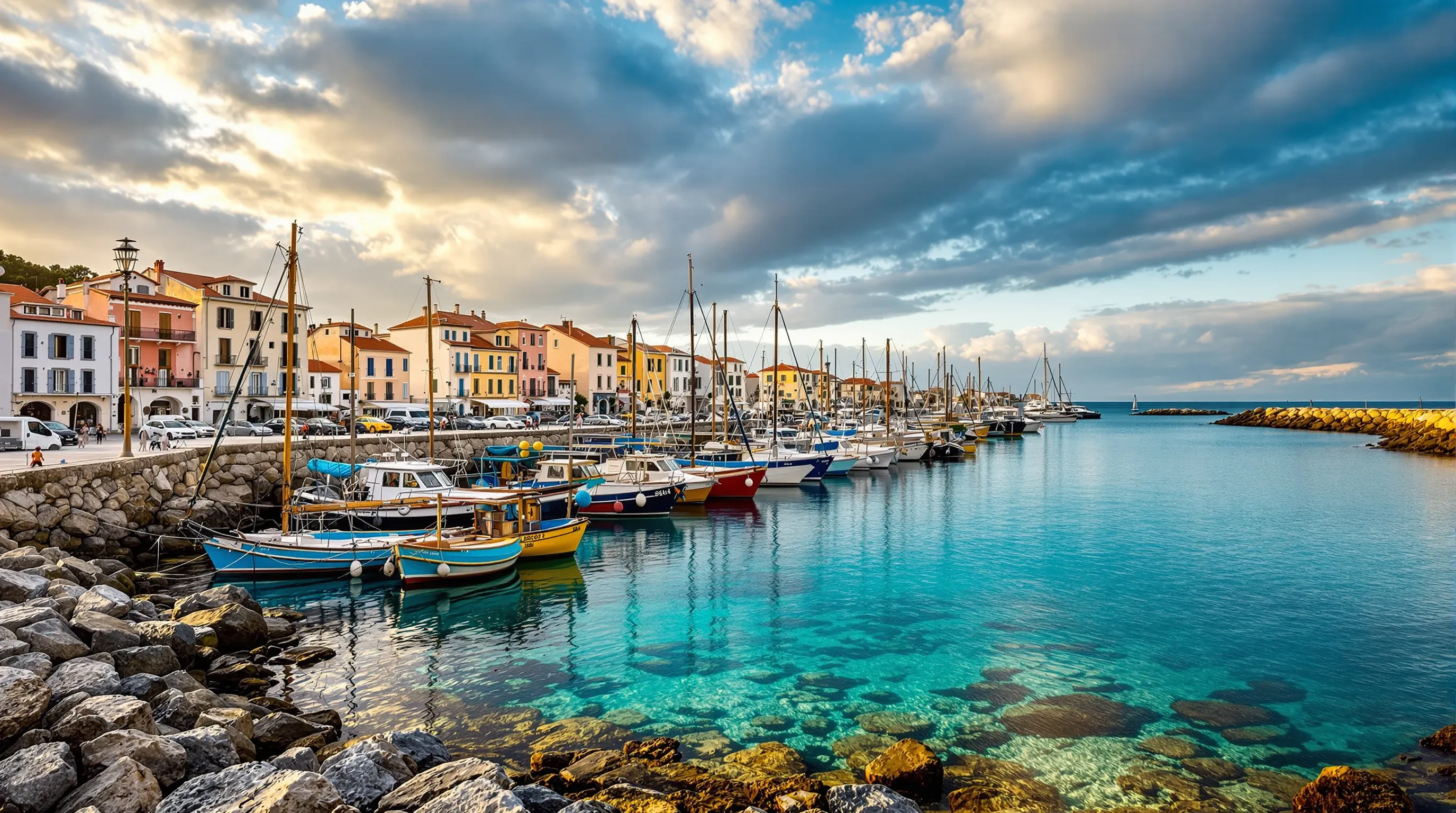
Sète and the Thau Lagoon: secrets of a territory between sea and lagoon
The first time I saw the Thau lagoon from Mont Saint-Clair, I understood why the people of Sète call their town the singular island. On one side, the deep blue Mediterranean; on the other, this pearly 7,500-hectare lagoon lined with thousands of oyster tables. Sète is not just a picturesque fishing port: it's a complete ecosystem where oysters, flamingos and passing minke whales coexist within a few kilometres of each other. A territory to explore slowly, between canals, coves and lagoons.
A territory shaped by water, sea and lagoon
Sète was literally built on water, between the Rhône to Sète canal, the Canal Royal running through the town and the open Mediterranean. The Thau lagoon, the largest in Languedoc at 19 kilometres long, connects to the sea via the graus of Sète and Agde. This dual nature explains the site's rich biodiversity: salty waters churned by tides and swell, and calmer waters ideal for oyster farming. The towns of Bouzigues, Mèze, Marseillan and Balaruc-les-Bains border this Natura 2000-listed lagoon, home to seahorses, cuttlefish, sea bream and a remarkable array of birdlife. Mont Saint-Clair, at 175 metres, offers the best vantage point to take in this amphibious geography at a single glance.
Bouzigues, capital of Thau oysters
This small oyster-farming village produces the bulk of the lagoon's oysters and mussels, grown on suspended tables visible from the jetties. The method differs from that used in the Arcachon basin: warmer water speeds up growth and gives the shellfish their distinctive briny flavour. The Étang de Thau Museum in Bouzigues traces this history back to Antiquity. Several shellfish farms offer tastings right on the water—best booked late in the day to enjoy the light over the lagoon.
Where to go exactly around the lagoon
From Sète, the road skirting the lagoon links several points of interest within an hour. Marseillan, at the western end, combines an old marina with Picpoul de Pinet vineyards running down to the lagoon's shores. Mèze, in the centre, has a lovely seafront and bird-watching trails. Balaruc-les-Bains, a spa town renowned since Roman times, closes off the northern side of the lagoon with thermal baths drawing on the hot waters of the Balaruc fault. On the open sea side, Sète's Corniche beach stretches for several kilometres of fine sand, while Mont Saint-Clair hides more secluded rocky coves accessible on foot from the marine cemetery, made famous by Paul Valéry.
Pointe du Barrou and the coves of Mont Saint-Clair
From the marine cemetery, a coastal path follows the corniche to the Pointe du Barrou. Allow 45 minutes' walk one way, and sturdy footwear is recommended on the rocky stretches. These coves are far less crowded than the Corniche beach, especially early in the morning. Access is on foot from Sète town centre, as there's no parking nearby; it's best to park near the cemetery and walk from there.
When to visit Sète and the Thau lagoon
Spring, from April to June, offers the best combination of mild weather and fewer crowds. The oyster tables are in full swing, the lagoon remains calm, and temperatures are already warm enough for a dip in the sheltered coves. July and August draw the majority of visitors, particularly for the Saint-Louis festival at the end of August with its famous water jousting on the Canal Royal, but also bring sweltering heat at times and packed beaches and oyster restaurants. September remains an excellent window, with the water still warm and golden light ideal for photographing the lagoon. Winter, from November to February, reveals another side entirely: the mistral and tramontane winds blow regularly, the lagoon takes on spectacular grey hues, and it's the best time to spot flamingos and other wintering wading birds among Thau's reed beds. Wind, a near-constant feature of this exposed territory, can whip up the open sea while the lagoon often stays more sheltered—worth checking before any boat trip or paddleboarding outing.
How to plan your visit: duration, level and kit
Two to three days are enough for a first taste of Sète and the lagoon: one day for the town and Mont Saint-Clair, one day to tour the lagoon by car with stops in Bouzigues, Mèze and Marseillan, and an optional half-day for Balaruc-les-Bains or a boat trip. For hikers, the coastal path around Mont Saint-Clair is easy to moderate, manageable in sturdy sandals or light trainers. The lagoon itself is best discovered by boat: several operators run guided trips from Sète or Mèze, with no particular experience required. Kayak and paddleboard hire is available in Marseillan and Bouzigues, though keep an eye on the wind, as the lagoon can whip up quickly under the tramontane.
Boat trips on the lagoon and out to sea
Boats departing from the Môle Saint-Louis in Sète offer tours of the Thau lagoon with commentary on oyster farming, as well as open-sea excursions weather permitting. No sailing experience is needed, just bring sun protection and a windbreaker, as the open sea is often cooler than the town. Booking ahead in summer is advisable, as spaces fill up quickly during peak season.
Practical tips and responsible tourism
Budget for a visit varies considerably by season: accommodation and dining costs rise sharply in July and August, while spring and autumn offer more reasonable rates in an equally pleasant setting. Tasting oysters straight from the producer is generally more affordable than in a restaurant, while guaranteeing maximum freshness. Book boat trips and shellfish farm visits in advance during high season, as slots are limited. If your sea trip happens to cross paths with dolphins or minke whales offshore, be aware that cetacean watching in the Mediterranean is governed by ACCOBAMS recommendations: a minimum distance of 100 metres, a gradual side-on approach, no more than two boats around a group at any one time, and no chasing or forced swimming with the animals. Choose operators certified High Quality Whale Watching, who are committed to these best practices and often involved in scientific monitoring programmes. On the lagoon itself, respect oyster farming zones, do not collect shellfish or wildlife, and stick to marked paths around the reed beds so as not to disturb nesting birds, particularly in spring.
Frequently asked questions
Can you see dolphins from Sète?
Yes, boat trips departing from Sète sometimes allow sightings of dolphins and minke whales offshore, particularly in spring and summer. These encounters are never guaranteed and depend on sea conditions. Choose an operator certified High Quality Whale Watching, which respects the approach distances recommended by ACCOBAMS.
How much time do you need to visit the Thau lagoon?
Allow a full day to tour the main towns: Bouzigues, Mèze, Marseillan and Balaruc-les-Bains, with stops for tastings and a visit to the Étang de Thau Museum. Two to three days let you add Sète and its Mont Saint-Clair coves at a more leisurely pace.
What's the best time of year to try Bouzigues oysters?
Bouzigues oysters can be enjoyed all year round, though autumn and winter tend to offer meatier flesh according to producers. Spring remains a lovely time to combine outdoor tastings with pleasant weather, ahead of the busy summer season at the shellfish farms.
Is the Thau lagoon suitable for children?
Yes, boat trips, discovering oyster farming in Bouzigues and the lagoon's gentle beaches all suit families well. The Étang de Thau Museum offers educational activities. Bring sun cream and hats, as the wind often masks the strength of the sun over the water.
What wind blows over Sète and how can you protect yourself from it?
Sète is exposed to the mistral and tramontane, two winds that can be strong and blow frequently throughout the year. The Thau lagoon is usually more sheltered than the open sea, but can whip up quickly. Check the marine forecast before any kayaking, paddleboarding or small boat trip.
Sète and the Thau lagoon form a rare territory where open sea, nourishing lagoon and oyster-farming heritage answer one another within a few kilometres. Between tastings in Bouzigues, the coves of Mont Saint-Clair and a possible encounter with cetaceans offshore, each season reveals a different face of this corner of the Mediterranean. To plan a responsible boat trip and keep up with news on Mediterranean cetaceans, dauphin-mediterranee.com remains a valuable resource before you set off.
Read also
Common Dolphins of the Mediterranean: 7 Secrets Local Sailors Don't Tell You
Discover where and when to spot common dolphins in the Mediterranean, their real...
Nature Weekend on the French Riviera: The 3-Day Itinerary Locals Keep Secret
3-day itinerary for a nature weekend on the French Riviera: rocky coves, coastal...
Swimming with Dolphins in the Mediterranean: The Truth Few Dare to Tell
Swimming with dolphins in the Mediterranean: is it really possible? Discover the...
Mediterranean Starfish and Sea Urchins: 7 Secrets Divers Keep to Themselves
Discover where to spot starfish and sea urchins in the Mediterranean: species, s...