Mediterranean Starfish and Sea Urchins: 7 Secrets Divers Keep to Themselves
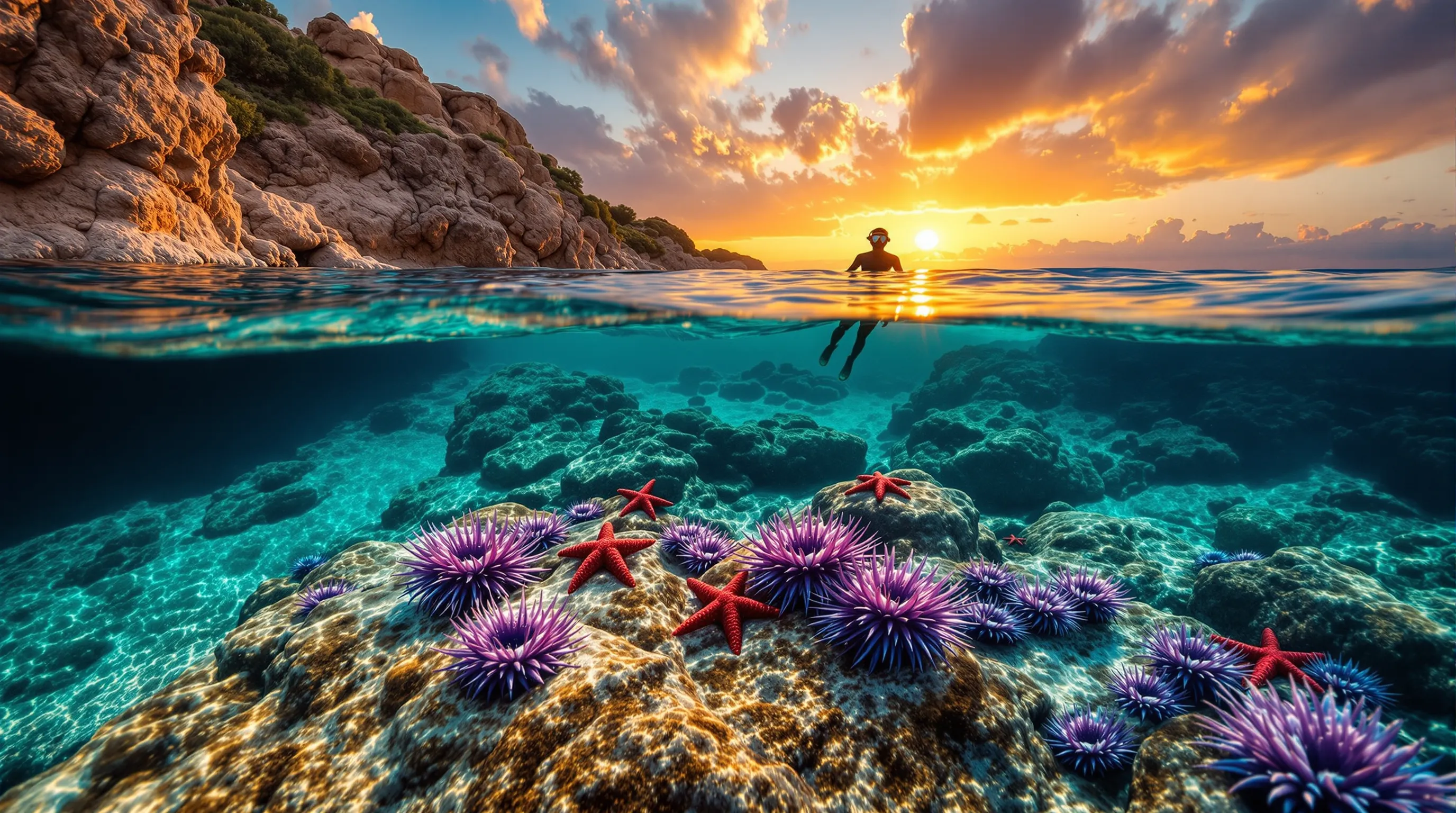
The first time I dipped my mask into the shallow waters off Port-Cros, I thought I'd stumbled upon a carpet of purple needles rippling beneath the waves: hundreds of Paracentrotus lividus sea urchins carpeting the rock. A few metres away, a red starfish, Echinaster sepositus, was slowly making its way across a boulder covered in algae. These creatures, often overlooked by holidaymakers eager to swim out to deeper water, tell the living story of the Mediterranean. Longevity, ecological role, climate threats: here's what twelve years of scientific diving have taught me about these fascinating echinoderms, and where you can observe them yourself without causing them any harm.
The iconic species of the Mediterranean seabed
The Mediterranean is home to a range of echinoderms that may be less spectacular than those found on tropical reefs, but are every bit as precious. The edible sea urchin Paracentrotus lividus, recognisable by its dark purple spines, colonises shallow rocky areas down to 20 metres, particularly around Marseille, Cassis and Corsica. Rarer still is Arbacia lixula, with its short black spines, which prefers surfaces exposed to swell. As for starfish, Echinaster sepositus displays a distinctive bright red colour and is commonly found in the calanques and Posidonia seagrass meadows. The larger Marthasterias glacialis, which can grow beyond 30 centimetres, actively hunts mussels and gastropods on deeper rocky seabeds, between 5 and 40 metres. These species play a crucial role: sea urchins regulate algae growth, preventing it from taking over, whilst starfish keep mollusc populations in check. An overpopulation of sea urchins, often linked to the overfishing of their natural predators such as certain wrasse species, can nevertheless turn a kelp forest into a barren rocky desert—a phenomenon observed by researchers at the Oceanographic Institute of Monaco in several overexploited coastal areas.
Why sea urchins are indicators of seabed health
Scientists use sea urchin density as a bio-indicator of the balance within rocky ecosystems. An overly dense population usually signals a trophic imbalance, often caused by the disappearance of natural predators due to fishing. Conversely, a reasonable population, paired with healthy Posidonia seagrass beds, points to a well-functioning coastal ecosystem. Managers of marine protected areas, such as the Cerbère-Banyuls reserve, regularly monitor these populations to fine-tune their conservation measures.
Where to spot starfish and sea urchins in the French Mediterranean
Port-Cros National Park, in the Var, remains the gold standard: its marked underwater trails, accessible from Plage de la Palud, allow you to observe sea urchins and starfish at less than two metres deep, with no technical equipment required. The calanques of Marseille, particularly Sormiou and Morgiou, boast rocky seabeds teeming with Paracentrotus lividus, visible from just a few metres offshore. In Corsica, the Scandola nature reserve and the area around Bonifacio are home to dense echinoderm populations in remarkably clear waters. Along the Languedoc-Roussillon coast, the Cerbère-Banyuls marine reserve, between Argelès and the Spanish border, offers educational underwater trails perfect for spotting red starfish and purple sea urchins without a boat. On the Italian Riviera, the Portofino reserve is also an excellent spot, accessible for snorkelling from the San Fruttuoso cove.
Marked underwater trails: an option accessible to everyone
Several Mediterranean sites have set up underwater trails marked with explanatory buoys, ideal for beginners and families alike. The one at Port-Cros, created in 1980, was the first of its kind in France and remains a benchmark for marine education. The trail at Banyuls-sur-Mer, run by the Arago laboratory, combines scientific discovery with awareness-raising. These trails, generally shallow at between 1 and 5 metres, require nothing more than a mask, snorkel and fins. They allow visitors to observe without disturbing, following a route designed to avoid the most fragile areas of the Posidonia seagrass beds.
When to go for the best chance of spotting them
Spring, from May to June, offers ideal conditions: the water starts to warm up, visibility remains excellent before the summer crowds arrive, and sea urchins are particularly active in their search for food. Summer, from July to August, guarantees comfortable water temperatures for extended snorkelling sessions, though the crowds at popular sites such as Port-Cros or the calanques can disrupt peaceful observation and put strain on the seabed through overtourism. September remains an excellent alternative: the water is still warm, visitor numbers drop significantly, and the light is soft towards the end of the day. Winter shouldn't be ruled out for divers equipped with a thick wetsuit: the colder waters, between 13 and 16 degrees, often offer superior visibility, and starfish remain active year-round, unlike certain fish species that migrate. Avoid periods of heavy swell, common in autumn, which cloud the water and make observation difficult. Always check local weather conditions before setting off, particularly the mistral wind along the Provençal coast, which can whip up a choppy sea within hours.
Equipment, skill level and planning your trip
No diving certification is needed to observe sea urchins and starfish while snorkelling on the surface: a mask, snorkel and fins are more than enough in the shallow areas along marked trails. Allow for a session of 45 minutes to 2 hours, depending on your stamina and how much the site has to offer. For deeper areas, such as the drop-offs at Scandola in Corsica or certain spots in the calanques exceeding 10 metres, an introduction to advanced snorkelling or a guided outing with a local club is recommended. Make sure to wear neoprene booties or water shoes: sea urchins often colonise areas where you'd wade in on foot, and a sting, though rarely serious, is genuinely painful. A shorty wetsuit is enough in summer, but a full 3-5mm wetsuit becomes necessary from autumn onwards. Bring a waterproof pouch for your phone if you fancy taking photos, and opt for a compact underwater camera rather than a bare smartphone. Guided outings run by local conservation groups, common at Banyuls or Port-Cros during the season, add real educational value when it comes to correctly identifying the species.
The right kit to avoid nasty surprises
Beyond the mask and snorkel, a few accessories can make all the difference. Thin gloves protect against sharp rocks without compromising your sense of touch. An orange signal buoy, compulsory in certain areas frequented by boats such as the calanques, ensures you stay visible. Check that your mask is watertight before setting off, and opt for a dry snorkel if you'll be swimming in slightly choppy water. Finally, a mineral sunscreen, non-toxic to coral and seagrass, protects your skin without polluting the very seabed you've come to admire.
Practical tips and responsible tourism
The budget for a snorkelling trip is generally modest: basic equipment hire, possible entry fees for national parks such as Port-Cros, and travel costs make up the bulk of the expense. Guided outings with naturalist guides or certified clubs naturally cost more than going it alone, but they offer real educational value and ensure local regulations are respected. Book ahead during peak season, particularly for boat shuttles to Port-Cros or Scandola, which are often limited in passenger numbers to protect the site. The single most important rule is never to touch or remove starfish or sea urchins: collecting them is regulated, and even banned in marine reserves, and handling them out of the water can prove fatal. Never walk on sea urchins or on Posidonia seagrass beds, which are essential to the ecosystem and to the reproduction of numerous species. If you spot dolphins or other cetaceans during your outing, keep to the distances recommended by ACCOBAMS—at least 100 metres—and favour operators certified as High Quality Whale Watching, who follow non-intrusive approach protocols. Always take your litter home with you, even the smallest bits, and choose sunscreens free from oxybenzone.
Frequently asked questions
Are Mediterranean sea urchins dangerous?
Their spines cause sharp pain but are rarely serious, barring an allergic reaction. Remove any fragments with tweezers, disinfect the area, and see a doctor if the pain persists or an infection develops. Avoid walking barefoot on rocky areas and wear water shoes to prevent any risk of getting stung.
Can you pick up starfish from the beach?
No, collecting starfish and sea urchins is regulated, and even banned in marine reserves and national parks such as Port-Cros. Even when washed ashore, these creatures may still be alive or play a role in the local food chain. Observe them without moving them, and photograph rather than collect them.
What's the best time of year to see sea urchins in the Mediterranean?
Spring, from May to June, and early autumn, in September, offer the best balance of warm water, good visibility and moderate crowds. Sea urchins remain visible year-round, but observing them is more pleasant outside the peak summer season, when heavy footfall can sometimes disturb shallow seabeds.
Do you need to know how to dive to observe these species?
No, the vast majority of Mediterranean sea urchins and starfish live at depths of between 1 and 10 metres, well within reach of anyone snorkelling on the surface with a mask, snorkel and fins. The marked underwater trails at Port-Cros or Banyuls-sur-Mer are specifically designed for observation without any diving certification.
Are Mediterranean starfish under threat?
Some local populations are feeling the effects of warming waters and the degradation of Posidonia seagrass beds, their main habitat. Whilst no common species is officially classed as critically endangered, scientists have observed worrying fluctuations during marine heatwaves, particularly in the western Mediterranean.
Mediterranean starfish and sea urchins bear quiet witness to the health of our coastlines. Observing them requires little equipment but plenty of respect: don't touch, don't collect, and choose the right season and the right spots, such as Port-Cros, Banyuls or the Marseille calanques. Every responsible outing helps preserve these fragile ecosystems for generations to come. To continue your marine adventure and discover our guided dolphin-watching trips and Mediterranean biodiversity tours, find all our expert advice at dauphin-mediterranee.com.
Read also
Watching Dolphins as a Family: What Marina Advises Parents Before Setting Off
Expert guide to watching dolphins as a family in the Mediterranean: best times, ...

Corsica: The Secret Coves Where Turquoise Waters Rival the Caribbean
Discover Corsica's most beautiful marine spots: hidden coves, nature reserves an...

Porquerolles, Port-Cros, Levant: what the Hyères locals won't tell you
Complete guide to the Golden Isles: access, best time to visit, secret spots on ...

Diving in the Mediterranean: what beginners absolutely need to know before taking the plunge
Beginner diving in the Mediterranean: easy spots, best season, kit and practical...