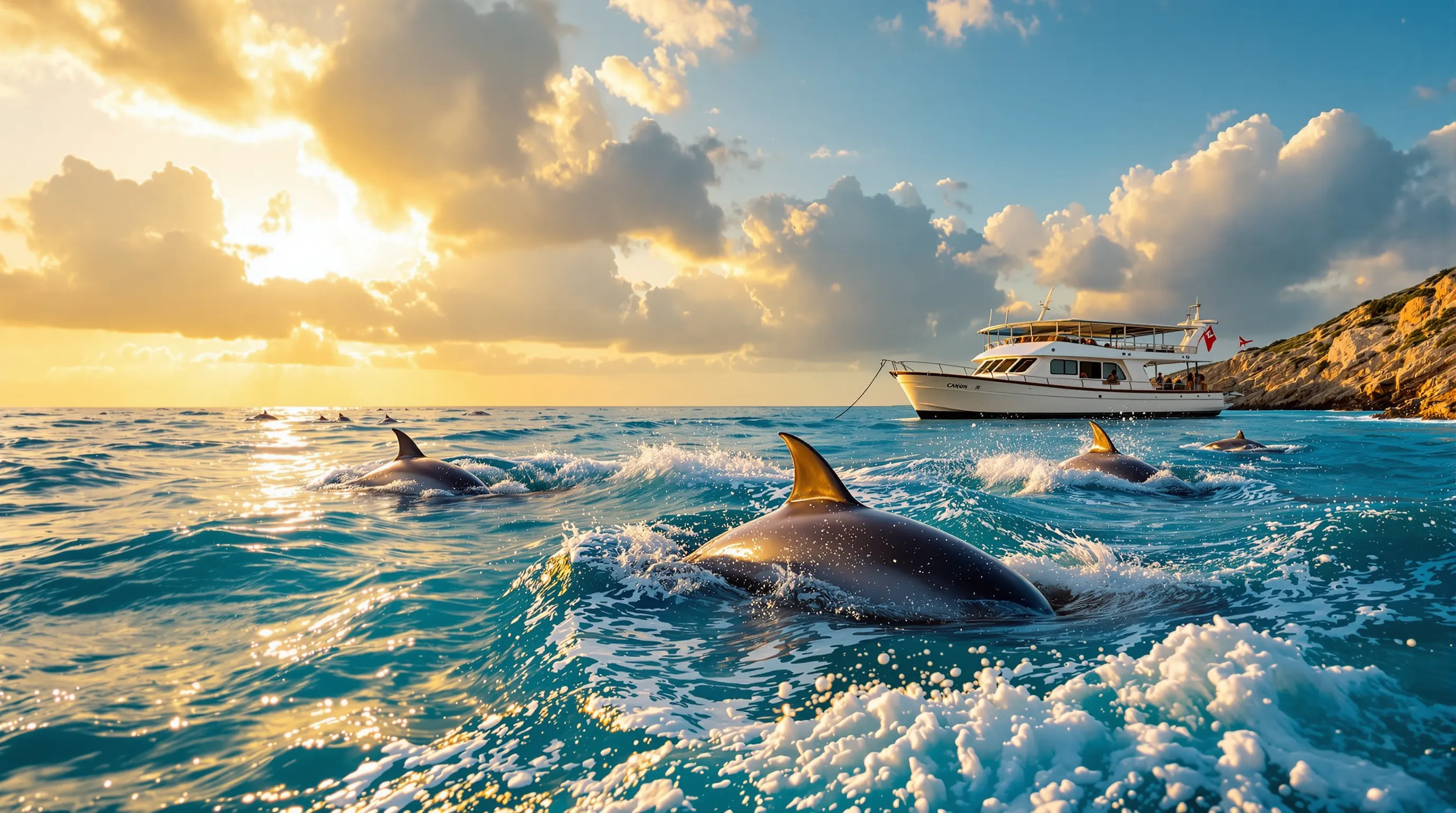
Swimming with Dolphins in the Mediterranean: The Truth Few Dare to Tell
The first time I saw a bottlenose dolphin surface just metres from our boat off Toulon, I understood why so many visitors dream of swimming alongside them. But let's be honest from the outset: in the Mediterranean, swimming with wild dolphins is extremely rare, tightly regulated, and often discouraged by scientists. This fantasy deserves to be tempered by the reality on the ground, one I've observed for years between the Pelagos Sanctuary and the Provençal coast.
What science really says about swimming with wild dolphins
Contrary to the idyllic images circulating on social media, swimming with wild dolphins in the Mediterranean is neither simple nor harmless. Populations of bottlenose dolphins (Tursiops truncatus) and striped dolphins (Stenella coeruleoalba) found in the Pelagos Sanctuary, between Liguria, Corsica and Provence, are naturally shy and generally avoid prolonged human contact. Encounters almost always happen by chance, from a boat, never on demand. Researchers from GECEM and WWF France are adamant: approaching a dolphin while swimming disrupts its natural behaviour, hunting, resting, and can even interfere with calves nursing. A study by ACCOBAMS showed that repeated exposure to boats and swimmers permanently alters the areas frequented by pods. Some unscrupulous operators, particularly outside Europe, offer supervised swims with captive or semi-captive dolphins, a practice I firmly discourage on both ethical and health grounds. Across the French, Italian or Spanish Mediterranean, no natural site can legally or safely guarantee a swim with wild dolphins.
Why dolphins avoid close contact
Mediterranean dolphins live in an environment already under significant human pressure, from shipping traffic to fishing and noise pollution. Unlike populations accustomed to intensive tourism, such as those in the Bahamas, dolphins in the Pelagos Sanctuary remain largely wary. Their sonar detects a swimmer long before they're spotted, and they almost always choose to swim away. This natural distance protects their behavioural balance, though it often disappoints tourists hoping for direct, prolonged contact.
Where to spot dolphins in the Mediterranean: the best-known locations
While swimming remains exceptional, boat-based observation is very real and genuinely spectacular. The Pelagos Sanctuary, a protected area of 87,500 km² stretching between Nice, Corsica and Tuscany, holds the highest concentration of cetaceans in the western Mediterranean. From Toulon, Sanary-sur-Mer or Hyères, several accredited associations run respectful observation trips. In Corsica, the ports of Calvi and Bastia give direct access to deep waters frequented by striped dolphins and, occasionally, fin whales in summer. Further east, the Italian Riviera, notably Genoa and Portofino, offers similar excursions accompanied by onboard biologists. In Spain, the Strait of Gibraltar remains a major site, technically sitting at the hinge between the Atlantic and Mediterranean, with near-daily sightings of bottlenose dolphins and passing orcas. Along the Costa Brava, trips depart from Roses or L'Estartit towards the waters of the Gulf of Lion. These excursions typically last half a day and favour a slow approach, engines idling, never encircling the pods. None of these sites legally offer an organised in-water encounter with the animals.
The Pelagos Sanctuary, heart of Mediterranean biodiversity
Established in 1999 through an agreement between France, Italy and Monaco, the Pelagos Sanctuary protects eight species of cetacean, including fin whales, sperm whales and bottlenose dolphins. It is Europe's largest marine protected area dedicated to marine mammals. Operators accredited with the High Quality Whale Watching label follow strict protocols on distance and speed, ensuring observation that doesn't stress the animals while still offering visitors memorable encounters.
When to go to maximise your chances of seeing dolphins
The ideal period runs from May to September, peaking between June and August when the sea is calm and visibility is at its best. Dolphins follow shoals of fish that rise closer to the surface as the water warms, making encounters more frequent in early summer. July and August also bring the highest numbers of tourists, meaning more boats at sea, which can paradoxically scatter cetacean pods towards quieter areas. I often recommend June or September, months when the weather remains pleasant, the sea less crowded, and the animals more relaxed. The Mistral and periods of strong wind, common in spring along the Provençal coast, can lead to cancelled sea trips, so it's wise to build some flexibility into your holiday plans. In Corsica, deep waters close to the coast allow trips as early as May. In winter, surface sightings become rare, though some fin whales remain within the Pelagos Sanctuary, tracked mainly by scientists rather than through standard tourist excursions.
How to plan your trip: skill level, equipment and duration
No particular swimming or diving ability is required for a standard boat-based observation trip, making it suitable for families as long as children can manage a few hours at sea. Pack suitable clothing for sea breezes, sun cream, and ideally a pair of binoculars to spot dorsal fins from a distance. Trips generally last between two and five hours, sometimes a full day for excursions further offshore from Corsica or Gibraltar. For those still hoping for some form of immersion, certain centres offer supervised snorkelling in protected areas, with no guarantee of encountering dolphins, but with useful insight into the marine ecosystem, seagrass meadows, Mediterranean fish, and occasionally loggerhead turtles. Always book with an operator that displays a clear observation charter, committing to cutting the engine on approach, never chasing a pod, and limiting time spent near the animals to around thirty minutes. Steer clear of any company promising a guaranteed swim: that's a red flag regarding their practices.
Useful kit for a successful trip
A simple swimsuit, a light windbreaker and non-slip shoes are enough for most excursions. Marine binoculars and a camera with an optical zoom let you enjoy the encounters without needing to get physically closer. For snorkelling trips in protected areas, bringing your own mask and snorkel is recommended for hygiene reasons, although equipment is often provided. Don't forget a water bottle and water-resistant sun protection, as trips take place under full sun for several hours.
Practical tips and responsible tourism
The cost of an observation trip varies depending on duration, region and type of boat, ranging from an affordable group excursion on a small vessel to a considerably pricier private full-day charter. Always book ahead during peak season, particularly in Corsica and along the French Riviera, where spots fill up quickly in July and August. Systematically favour operators accredited with the High Quality Whale Watching label or affiliated with recognised organisations such as GECEM, Souffleurs d'Écume or WWF, a sign of respectful protocols. ACCOBAMS regulations recommend a minimum distance of one hundred metres from cetaceans, a gradual, side-on approach rather than head-on, and a strict ban on feeding or touching the animals. Getting into the water in close proximity to a group of wild dolphins without specific authorisation is officially discouraged, and outright banned in some areas. As a visitor, your behaviour matters just as much as the operator's: stay quiet, avoid sudden movements, and accept that a trip without a sighting is still an ecological success. Every responsible excursion also often helps fund scientific monitoring programmes for local populations.
Frequently asked questions
Can you legally swim with wild dolphins in the Mediterranean?
No, there is no regulation permitting an organised, guaranteed swim with wild dolphins in the Mediterranean. Encounters remain brief and unplanned, usually from a boat. Reputable operators discourage getting into the water near pods so as not to disturb their natural behaviour and to respect the distances recommended by ACCOBAMS.
What's the best place to see dolphins in the Mediterranean?
The Pelagos Sanctuary, spanning Provence, Monaco, Corsica and Liguria, offers the highest density of sightings. The ports of Toulon, Sanary-sur-Mer, Calvi and Bastia run regular accredited trips. The Strait of Gibraltar is also an outstanding site for bottlenose dolphins, sitting right on the border between the Atlantic and the Mediterranean.
What's the best time of year to spot dolphins in the Mediterranean?
From May to September, with June and September being particularly favourable thanks to calm seas, good weather and fewer tourists. July and August remain the busiest months, with more boats out at sea, which can push cetacean pods towards quieter, more remote areas.
Do you need to know how to swim or dive to see dolphins?
No, standard observation trips take place aboard a boat and require no particular water skills, making them suitable for families and children. Only supervised snorkelling trips in protected areas call for basic comfort in the water, with no guarantee of encountering dolphins during the session.
How can you recognise a responsible dolphin-watching operator?
Look for operators accredited with the High Quality Whale Watching label or affiliated with organisations such as GECEM or WWF. They maintain a minimum distance of one hundred metres, approach slowly and from the side, limit time spent near the animals, and never promise a guaranteed swim, a reliable sign of ethical, sustainable practice.
Swimming with wild dolphins in the Mediterranean remains largely a fantasy rather than an accessible reality, but responsible boat-based observation offers encounters that are just as moving and far more respectful of their world. Between the Pelagos Sanctuary, the Corsican coastline and the Strait of Gibraltar, there's no shortage of opportunities for those willing to let nature set the pace. To plan your trip, choose an accredited operator and learn the right observation etiquette, explore our detailed guides on dauphin-mediterranee.com.
Read also
Mediterranean Starfish and Sea Urchins: 7 Secrets Divers Keep to Themselves
Discover where to spot starfish and sea urchins in the Mediterranean: species, s...
Watching Dolphins as a Family: What Marina Advises Parents Before Setting Off
Expert guide to watching dolphins as a family in the Mediterranean: best times, ...

Corsica: The Secret Coves Where Turquoise Waters Rival the Caribbean
Discover Corsica's most beautiful marine spots: hidden coves, nature reserves an...

Porquerolles, Port-Cros, Levant: what the Hyères locals won't tell you
Complete guide to the Golden Isles: access, best time to visit, secret spots on ...