
Common Dolphins of the Mediterranean: 7 Secrets Local Sailors Don't Tell You
I still remember that morning off the coast of Fréjus, when around thirty common dolphins suddenly appeared around our boat, carving silvery arcs through the low afternoon light. Delphinus delphis, once so abundant across the Mediterranean, has seen its population drop by more than 50% in just a few decades, a victim of overfishing and the dwindling stocks of small pelagic fish it feeds on. And yet, certain areas still hold out, genuine sanctuaries where the species clings on. This article takes you to the places where these dolphins still survive, along with the know-how to observe them without causing harm.
The common dolphin: a declining species we need to understand in order to protect it
The common dolphin (Delphinus delphis) is easily recognised by its hourglass-shaped yellow and grey pattern along its flanks, quite unlike the bulkier, uniformly grey bottlenose dolphin. Once found right across the Mediterranean, it has all but vanished from certain areas, such as the Gulf of Lion, since the 1960s, gradually replaced by the more adaptable striped dolphin. Today, the remaining populations are concentrated mainly in the Algerian-Provençal basin, around the Alboran Sea, and in parts of the Ionian Sea, notably the Gulf of Corinth and the Amvrakikos Gulf in Greece, which is home to one of the last stable resident populations left in the Mediterranean. The species is classified as Endangered on the IUCN Red List for this Mediterranean subpopulation, which is genetically distinct from its Atlantic counterparts. Its vulnerability stems from its specialised diet of sardines and anchovies, resources themselves under pressure from overfishing and warming seas. During my own monitoring surveys with GECEM (the Mediterranean Cetacean Study Group), I've observed mixed pods where common dolphins and striped dolphins swim together, which can make identification tricky for an untrained eye.
How to spot one at sea
Look out for the golden-yellow hourglass pattern at the front and pale grey towards the tail, divided by a dark stripe beneath the dorsal fin. The body is more streamlined and the size more modest (1.7 to 2.4 metres) than the bottlenose dolphin. Groups tend to be large, from 10 to over 100 individuals, and highly active at the surface, with frequent leaps. The beak is slender and clearly defined, unlike the shorter snout of the bottlenose. In the western Mediterranean, it sometimes mixes with pods of striped dolphins, making the sighting all the more rewarding.
Where to genuinely spot common dolphins in the Mediterranean
The Amvrakikos Gulf, near Preveza in Greece, remains Europe's most reliable site for observing resident common dolphins year-round, with guided trips run by local researchers departing from Vonitsa. In France, the Pelagos Sanctuary, stretching between Toulon, Corsica and the Italian Ligurian coast, occasionally hosts pods, although the bottlenose dolphin is more commonly seen closer to shore. The waters off Port-Vendres and Cap Creus, near the French-Spanish border, offer more regular sightings, linked to the underwater canyons rich in small pelagic fish. In Spain, the Strait of Gibraltar and the Alboran Sea, accessible from Tarifa or Almería, support a sizeable population thanks to the upwelling of cold, nutrient-rich waters. In Italy, the Bonifacio Strait marine sanctuary and the southern Sardinian coast near Cagliari remain occasional but genuine sighting spots.
The Amvrakikos Gulf, an overlooked sanctuary
This enclosed gulf in western Greece has hosted a stable resident population for decades, studied by NGOs such as the Ionian Dolphin Project. Trips depart from Vonitsa or Preveza aboard lightweight vessels that follow strict scientific protocols. Unlike standard tourist excursions, these outings often combine participatory research with public education. The relative seclusion of the site makes it a prime spot where dolphins display natural behaviour, less disturbed by the heavy maritime traffic found elsewhere in the Mediterranean.
When to go to maximise your chances of a sighting
The ideal period runs from May to September, when the sea is calm and surface waters warm up, concentrating the shoals of sardines and anchovies that common dolphins feed on. June and July often bring the best weather conditions in the western Mediterranean, with the mistral less frequent and the sea generally navigable from dawn onwards. In the Amvrakikos Gulf, dolphins can be seen all year round thanks to their resident status, but spring (April to June) is particularly special for spotting calves born earlier in the season, a genuinely touching time when mothers can be seen teaching their young coordinated hunting techniques. Tourist numbers rise sharply in July and August along the French and Spanish coasts, which can increase boat traffic and disturb the pods; early morning trips, before 9am, remain the best strategy for a calmer, quieter sighting with less noise pollution. In Greece, autumn (September to October) offers still-warm seas with a marked drop in tourist numbers, an ideal compromise between comfort and tranquillity for both cetaceans and visitors alike.
Planning your boat trip: duration, fitness level and kit
A dolphin-watching trip generally lasts between 2 and 4 hours, either as a half-day or full morning outing, aboard motorboats between 8 and 15 metres long or occasionally sailing boats for a quieter approach. No particular fitness level is required, but anyone prone to seasickness should consider preventive treatment, as swell can occur even in summer. Pack windproof clothing even in high summer, as it feels noticeably cooler at sea than on land, along with a cap, polarising sunglasses to help spot dolphins beneath the surface, and water-resistant sun cream. A camera with a telephoto lens (at least 200mm) or waterproof marine binoculars will greatly enhance your experience, as dolphins rarely stay within arm's reach except during spontaneous encounters when they come to bow-ride. Participatory scientific trips, such as those run by certain associations in the Amvrakikos Gulf or in Corsica with GECEM, also allow you to help gather photo-identification data, a far more enriching experience than a standard tourist excursion.
Choosing between a scientific trip and a tourist excursion
Scientific outings, often limited to 6-8 participants, are led by researchers and take a more respectful approach, though with less guarantee of an immediate sighting. Standard tourist excursions, more numerous and affordable, offer greater comfort but vary enormously in quality depending on the operator. Always check whether the operator follows a responsible observation charter or holds recognised certification before booking, as this makes all the difference in how the boat behaves around the animals.
Practical tips and responsible tourism
The cost of a trip varies depending on duration, group size and type of operator: participatory scientific outings tend to cost more than standard group excursions, but often include high-quality educational guidance. Book several weeks in advance during peak season, especially in popular areas such as the Amvrakikos Gulf or the Costa Brava, where places are limited. Always favour operators certified as High Quality Whale Watching, a label that guarantees strict adherence to cetacean approach protocols. ACCOBAMS regulations recommend a minimum distance of 100 metres, a gradual side-on approach rather than a direct head-on one, reduced speed when approaching, and a ban on splitting up or encircling a group of animals. Feeding is strictly forbidden at all times, and observation time per boat should be kept limited to avoid cumulative stress on the same group when several boats take turns nearby. Report any sightings to networks such as GECEM or the Tethys Research Institute, as this feeds valuable databases used to monitor populations. Finally, reduce your own footprint at sea by avoiding non-biodegradable sun cream and limiting plastic waste on board, as the Mediterranean remains one of the most microplastic-polluted seas in the world.
Frequently asked questions
What's the difference between a common dolphin and a bottlenose dolphin?
The common dolphin is smaller, with a distinctive yellow and grey hourglass pattern and a slender beak. The bottlenose dolphin is bulkier, uniformly grey, with a shorter snout. Common dolphins live in larger groups and are now rarer in the Mediterranean than bottlenose dolphins, which are more adaptable and coastal.
Can you swim with common dolphins in the Mediterranean?
Swimming with wild dolphins is strongly discouraged and often regulated, as it stresses the animals and alters their natural behaviour. ACCOBAMS protocols and responsible certification schemes generally prohibit entering the water near pods. Watching from the boat at a respectful distance remains the recommended practice, so as not to disturb these already fragile populations.
What's the best time of year to see common dolphins in the Mediterranean?
May to September offers the best overall conditions in the western Mediterranean, with calm seas and a good concentration of prey. In the Amvrakikos Gulf in Greece, the resident population can be seen year-round, with a peak in activity during spring births. Early morning trips are best for calmer seas and less boat traffic.
Are common dolphins dangerous to swimmers or boaters?
No, common dolphins are not aggressive towards humans and generally avoid unsolicited close contact. The main risk actually comes from human behaviour: approaching too quickly, making excessive noise, or chasing the animals, all of which can cause stress. Keeping your distance and letting the animal choose whether to interact remains the key rule for both safety and respect.
Why have common dolphin numbers declined so much in the Mediterranean?
Overfishing of sardines and anchovies, their main food source, has significantly depleted their food supply since the 1960s and 70s. This is compounded by pollution, accidental bycatch in fishing nets, and heavy maritime traffic. Competition with the more adaptable striped dolphin has also contributed to its decline in several areas of the western basin.
Spotting a common dolphin in the Mediterranean today means encountering a fragile species that's holding on against the odds, from the Amvrakikos Gulf to the waters off Cap Creus. Choosing a responsible operator, respecting approach distances, and favouring quieter periods turns a simple boat trip into a genuine act of conservation. To plan your next encounter at sea and follow the latest news on these Mediterranean populations, find all our guides and expert advice at dauphin-mediterranee.com.
Read also
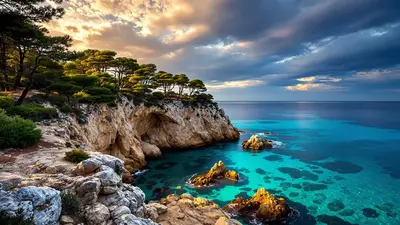
Nature Weekend on the French Riviera: The 3-Day Itinerary Locals Keep Secret
3-day itinerary for a nature weekend on the French Riviera: rocky coves, coastal...
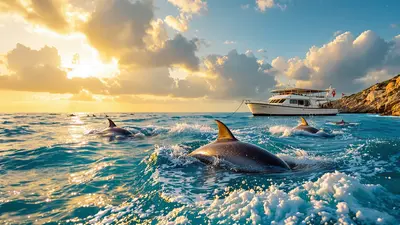
Swimming with Dolphins in the Mediterranean: The Truth Few Dare to Tell
Swimming with dolphins in the Mediterranean: is it really possible? Discover the...
Mediterranean Starfish and Sea Urchins: 7 Secrets Divers Keep to Themselves
Discover where to spot starfish and sea urchins in the Mediterranean: species, s...
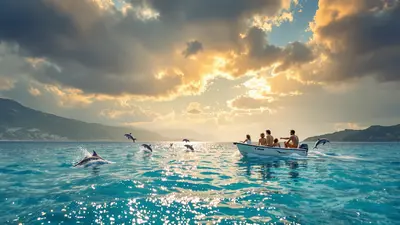
Watching Dolphins as a Family: What Marina Advises Parents Before Setting Off
Expert guide to watching dolphins as a family in the Mediterranean: best times, ...