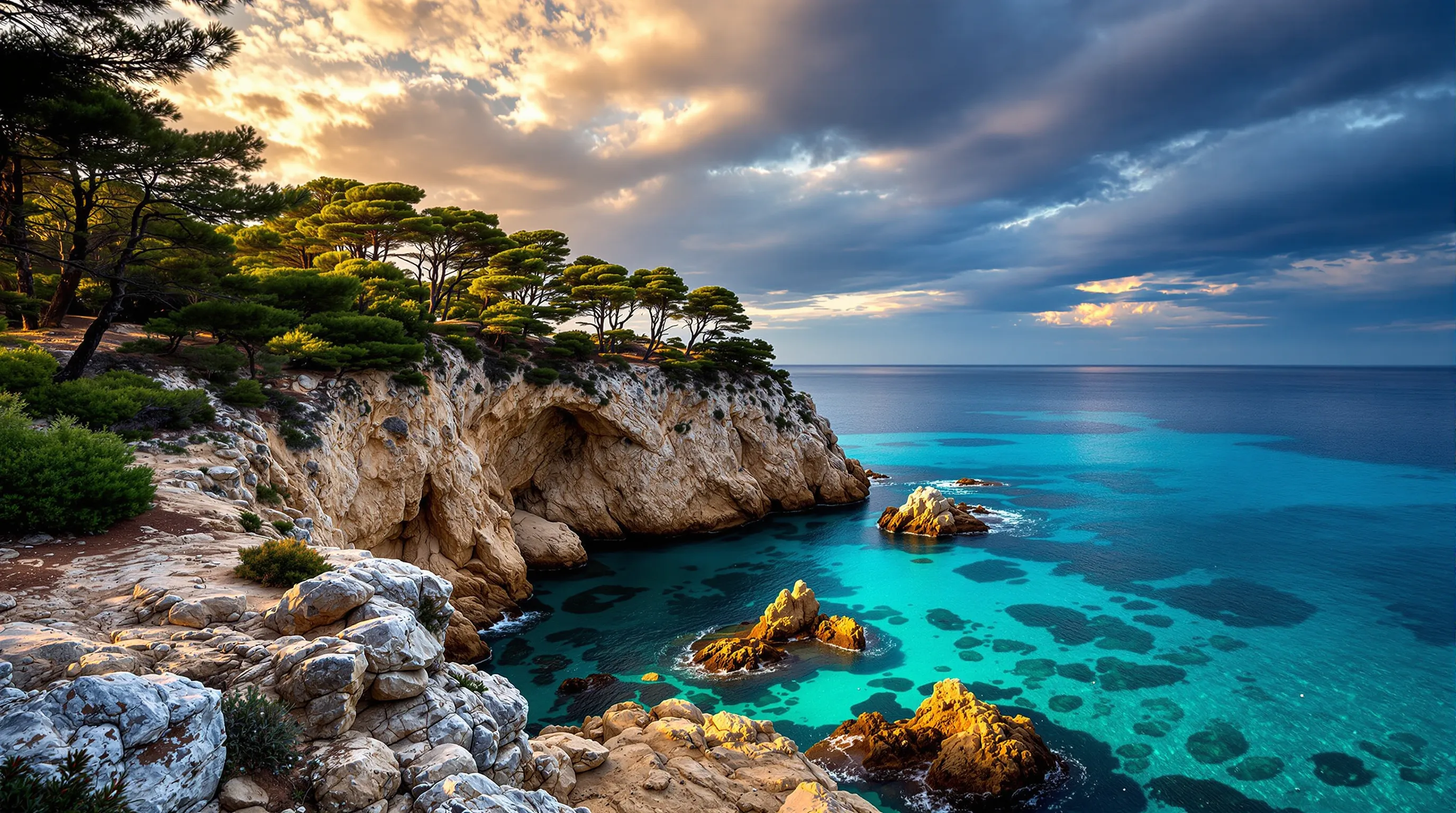
Nature Weekend on the French Riviera: The 3-Day Itinerary Locals Keep Secret
The first time I set foot on the coastal path between Cap d'Antibes and Juan-les-Pins, a flock of Cory's shearwaters skimmed the surface just metres from the shore. That's the lesser-known French Riviera: amid the palaces of Cannes and the yachts of Saint-Tropez, wild coves, protected islands and waters where dolphins and fin whales regularly pass through still remain. Over three days, without needing a car for everything, you can string together coastal walking, a guided boat trip and a stay in a hilltop village. Here's the itinerary I recommend to friends and family when they ask me where to see the real Riviera nature, far from the packed beaches of July.
Day 1: coastal path and coves of Cap d'Antibes
Head to Cap d'Antibes, where the Tirepoil path winds for around 5km between umbrella pines and red rocks battered by sea spray. You can start from Plage de la Garoupe or the car park at Anse de l'Argent Faux. The route skirts secluded coves, with the Baie des Anges visible in the distance, and offers views towards Cap Ferrat on a clear day. Allow 2.5 to 3 hours for a leisurely walk, easy to moderate depending on the swell, which can make some sections slippery. You'll spot yellow-legged gulls, occasionally shags perched on the rocks, and towards the end of the day, groups of dolphins may pass along the coast at a distance, visible from the headlands with binoculars. In the afternoon, head to Vieil Antibes to wander the old town's lanes before dinner overlooking Port Vauban.
Getting there and parking at Cap d'Antibes
The Ponteil car park or the one at Plage de la Garoupe are the most convenient starting points, a 10-minute drive from Antibes or reachable by bus from the railway station. In peak season, arriving before 9am avoids the crowds. The path isn't a full loop: plan to retrace your steps or arrange a circuit via the cape's residential streets, which lengthens the walk slightly but adds variety to the scenery.
Day 2: boat trip from Antibes or Golfe-Juan to spot cetaceans and seabirds
The second day is dedicated to a boat trip departing from Antibes, Golfe-Juan or Cannes, heading into the Pelagos Sanctuary, the protected marine area stretching as far as Italian Liguria. You'll mainly encounter striped dolphins, sometimes pods of pilot whales or, more rarely, fin whales out at sea in summer and autumn. Choose an operator certified High Quality Whale Watching, which guarantees a respectful approach: reduced speed, a minimum distance of 100 metres, and no chasing. The trip usually lasts half a day, aboard a small rigid inflatable boat or catamaran. In the afternoon, head to the Lérins Islands from Cannes: Sainte-Marguerite for its holm oak forest and fort, or Saint-Honorat for the monastery and vineyards tended by the monks.
Choosing a responsible operator for wildlife watching
Check that the operator follows an approach charter guided by conventions such as ACCOBAMS, limiting the number of boats around a single group and banning swimming with the animals. A good sign is having a naturalist on board who explains the species' behaviour rather than promising guaranteed close contact. Nature can't be commanded, and the best trips are those that respect the animals' own rhythm.
Day 3: hilltop village inland and return via the Loup Gorges
To wrap up the weekend, head into the Riviera hinterland, less than 30 minutes from the coast. Gourdon, perched at 760 metres, overlooks the Loup Valley with a sweeping view down to the sea on a clear day. The medieval village can be explored in about an hour, wandering its cobbled lanes and hanging gardens designed by Le Nôtre. Next, head to the Loup Gorges for a short walk to the Courmes or Saut du Loup waterfalls, reachable in 20 to 30 minutes on foot from the designated car parks. The turquoise water contrasts with the limestone rock, and pallid swifts often nest in the surrounding cliffs in spring. This final day reveals how the Riviera's biodiversity extends from the coastline right up to the first foothills of the Alps, just a few kilometres from the Croisette.
When to go for this nature weekend
May, June and September offer the best balance: the sea is still calm for boat trips, temperatures are pleasant for walking without the crushing heat of July-August, and tourist numbers are noticeably lower. Dolphins can be seen year-round in the Pelagos Sanctuary, but calmer sea conditions in spring and early autumn improve the chances of comfortable sightings. July and August are still possible but require booking boats well ahead, plus expect crowded trails at Cap d'Antibes, especially at weekends. Winter, from November to March, remains an option for walking, with beautiful light and empty paths, but boat trips are rarer and weather-dependent, often cancelled if the mistral blows hard. Always check the marine weather forecast before booking a boat trip, as it directly affects both safety and viewing comfort.
How to plan this weekend: duration, fitness level and kit
Three full days are enough for this itinerary, ideally from Friday evening to Sunday evening, basing yourself in Antibes or Cannes as a central hub. Fitness level required: easy to moderate walking, suitable for families with children who can walk reasonable distances; the boat trip needs no particular physical fitness but isn't advisable for those prone to seasickness without preventive medication. Essential kit: sturdy walking shoes for the coastal path and the Loup Gorges, a cap and sun cream, binoculars for coastal spotting, and a windproof layer for the boat, even in summer, as it can get chilly out at sea. A hire car makes getting to Gourdon and the Loup Gorges much easier, as these are poorly served by public transport, whereas the coast is easily covered by bus or on foot between Antibes and Cannes.
Booking the boat trip in advance
Spaces on certified boats fill up fast in high season, sometimes one to two weeks ahead. Booking directly online with the operator also lets you check their environmental commitments and average sighting rate, without unrealistic promises. In low season, booking 48 hours ahead is usually enough, though it's best to confirm the day before given marine weather conditions.
Practical tips and responsible tourism
The budget for this weekend varies considerably depending on the accommodation chosen and the season: overnight stays in Antibes or Cannes rise sharply in July-August, while spring and autumn offer more reasonable rates. The boat trip is the main expense after accommodation, with its price depending on duration, boat type and whether a naturalist is on board. Walking and visiting hilltop villages remain free, though parking may charge a fee in season. Book the boat trip and accommodation as soon as your dates are set, especially between June and September. Out on the water, follow the skipper's instructions carefully: never insist on getting closer to the dolphins, avoid sudden movements and excessive noise, and favour quiet observation, which allows the animals' natural behaviour to show through. On the trails, stick to marked paths to protect the fragile Mediterranean flora, take your rubbish home with you, and avoid feeding local wildlife, including gulls, which quickly grow used to human presence to the detriment of their natural behaviour.
Frequently asked questions
Can you see dolphins from the coast without going on a boat trip?
Yes, it's possible but not guaranteed. The headlands at Cap d'Antibes, Cap Ferrat or the Lérins Islands sometimes offer sightings of dolphin pods travelling along the coast, especially early in the morning with a calm sea. Binoculars significantly improve your chances, but a guided boat trip remains far more reliable for a proper, respectful sighting.
What's the best month for this nature weekend on the French Riviera?
May, June and September are ideal: calm seas, mild temperatures, fewer crowds and good conditions for boat trips. July-August also work but require booking well in advance. Winter suits walking alone, as boat trips become more uncertain depending on marine weather and the mistral.
Do you need a car for this 3-day itinerary?
A car isn't essential for the coastline between Antibes and Cannes, which is well served by bus and easily walkable. However, it makes getting to Gourdon and the Loup Gorges inland much easier, as these areas have limited public transport, particularly if you want to make the most of your three days.
Are dolphin-watching trips suitable for children?
Yes, most certified trips welcome families with children from around 4-5 years old, with suitable life jackets and educational explanations from the naturalist on board. Bring seasickness remedies if your child is prone to it, and opt for shorter half-day trips to keep them comfortable and engaged.
How can you recognise an environmentally responsible watching operator?
Look for the High Quality Whale Watching label or adherence to ACCOBAMS principles: a respected minimum approach distance, reduced speed near the animals, no chasing or forced swimming with cetaceans, and a naturalist guide on board explaining behaviour rather than guaranteeing close contact.
This three-day weekend proves that you can combine the Riviera's laid-back charm with a genuine nature immersion, blending coastal trails, hilltop villages and guided sea encounters. The key is to favour responsible operators and quieter periods, to protect this fragile coastline as much as your own experience. To prepare for your boat trip and better understand the cetaceans of the Pelagos Sanctuary before you go, check out our detailed guides and recommendations for certified observers at dauphin-mediterranee.com.
Read also
Swimming with Dolphins in the Mediterranean: The Truth Few Dare to Tell
Swimming with dolphins in the Mediterranean: is it really possible? Discover the...
Mediterranean Starfish and Sea Urchins: 7 Secrets Divers Keep to Themselves
Discover where to spot starfish and sea urchins in the Mediterranean: species, s...
Watching Dolphins as a Family: What Marina Advises Parents Before Setting Off
Expert guide to watching dolphins as a family in the Mediterranean: best times, ...

Corsica: The Secret Coves Where Turquoise Waters Rival the Caribbean
Discover Corsica's most beautiful marine spots: hidden coves, nature reserves an...