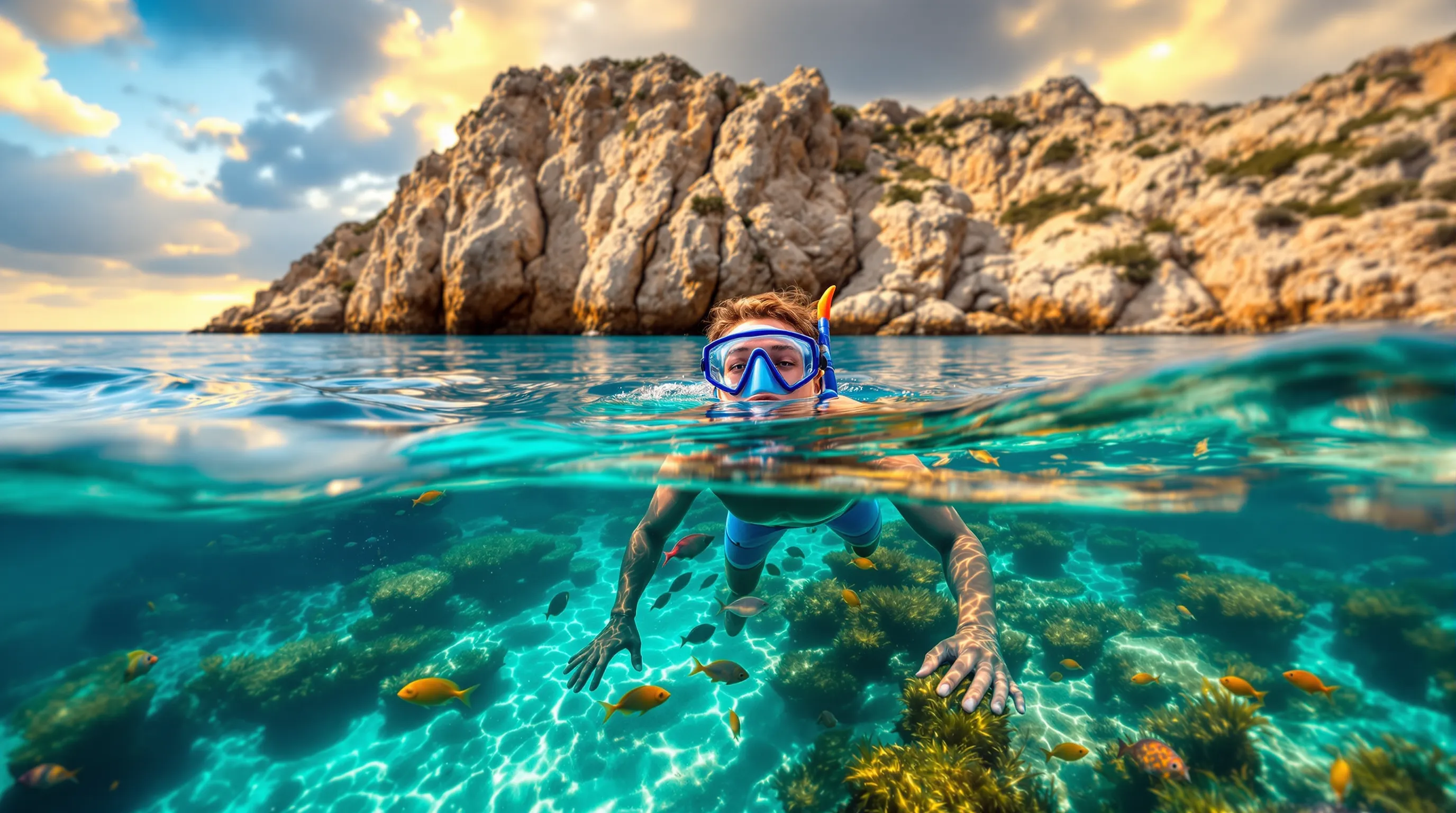
What Divers Keep Secret About Mediterranean Snorkelling Spots
The Mediterranean conceals exceptional underwater treasures accessible with simple mask, fins, and snorkel. With over 17,000 endemic marine species and visibility reaching 40 metres, it offers unique snorkelling experiences. From Posidonia seagrass meadows to rocky drop-offs populated by grouper, these 10 spots reveal unsuspected biodiversity. Ideal temperatures between 18°C and 26°C depending on seasons, preserved seabeds and coastal accessibility make these locations paradises for underwater observation.
Hidden Jewels of the French Riviera
The Scandola Reserve in Corsica reveals unique volcanic seabeds with underwater caves populated by red coral. Exceptional visibility of 25 to 35 metres between May and October. Port-Cros Island houses France's oldest marine park since 1963, protecting 700 hectares of seabed. 40kg grouper, schools of white seabream and gilthead bream thrive in 3 to 15 metres of water. Villefranche-sur-Mer Bay offers a spectacular drop-off starting at 2 metres, ideal for beginners. The Marseille Calanques hide blue caves accessible by free-diving, with preserved Mediterranean fauna in their translucent waters.
Scandola Reserve: A Protected Ecosystem
UNESCO-listed since 1983, this integral reserve prohibits fishing and scuba diving. Only snorkelling is permitted in defined zones. Access solely by boat from Porto or Calvi. Red coral from 10 metres depth, giant grouper and moray eels in volcanic crevices. Best period: June to September with water at 22-24°C.
Spain: From the Balearics to Costa Brava
Formentera unveils its Posidonia meadows in the Ses Salines Reserve, a vital ecosystem filtering 20,000 litres of water daily per square metre. Seahorses and pipefish feature among 200 recorded species. Cabo de Gata in Andalusia presents unique volcanic seabeds in Spanish Mediterranean waters. Depths of 2 to 12 metres, stable temperatures between 16°C and 24°C seasonally. Costa Brava hides wild coves like Cala Montjoi with rocky drop-offs populated by sea fans. Schools of Mediterranean barracuda from May to October. The Medes Islands, a marine reserve since 1990, concentrate 600 species within 21 protected hectares.
Italy: Sardinian and Sicilian Treasures
Sardinia reveals the Tavolara Marine Protected Area with 15,000 hectares of preserved seabeds. Record visibility of 40 metres in optimal conditions, exceptional pelagic fauna including bluefin tuna and occasional hammerhead sharks. Sicily conceals Ustica, Italy's first marine park created in 1986. Coralligenous beds from 5 metres depth, caves adorned with colourful bryozoans. The Egadi Islands shelter the largest Mediterranean Posidonia seagrass meadow, a sanctuary for 300 fish species. Cinque Terre offers marked underwater trails in their marine protected areas, perfect for family introduction with depths of 2 to 8 metres.
Ustica: Underwater Natural Laboratory
This volcanic island concentrates all Mediterranean ecosystems across 15km of coastline. Integral protection zones, buffer zones and partially protected areas offer different observation levels. Punta Spalmatore underwater trail with submerged panels explaining fauna. Free but regulated access according to zones.
Practical Tips for Exploring These Spots
Average budget £35-70/day including equipment hire and maritime transport to reserves. Watertight silicone mask, fitted fins and anti-return snorkel essential. 3mm wetsuit recommended October to May. Optimal season May-September with temperatures 20-26°C and maximum visibility. Booking mandatory for certain reserves like Port-Cros (maximum 30 snorkellers/day). Useful apps: Fish Mediterranean for identification, Marine Traffic for weather conditions. Strict respect for protected zones: prohibited to touch corals, minimum 5m distance from wildlife, no feeding. Specific snorkelling insurance recommended covering sea rescue and medical repatriation.
Frequently asked questions
What's the best time for snorkelling in the Mediterranean?
May to September offer optimal conditions with temperatures of 20-26°C and maximum visibility. July-August present more crowds but warmer water. September remains ideal with fewer people, water still warm (22-24°C) and excellent visibility up to 30 metres in certain spots.
What equipment is essential for exploring these snorkelling spots?
Silicone mask with watertight skirt, adjustable polypropylene fins, snorkel with anti-return valve. 3mm wetsuit October to May, UV-protective lycra in summer. Neoprene boots for sea urchin protection. Hire budget: £12-20/day, purchase: £70-130 for complete quality kit.
How do you access Mediterranean marine reserves for snorkelling?
Access regulated by water taxi or private boats depending on zones. Port-Cros: £25 return from Hyères. Scandola: £38 from Porto. Booking essential in high season. Some spots accessible from shore: Calanques, Costa Brava, Cinque Terre. Check permissions and quotas before travelling.
These 10 spots reveal the unsuspected richness of Mediterranean seabeds, accessible through simple snorkelling. From the French Riviera to the Balearics, each site offers a unique experience between Posidonia meadows and coralligenous drop-offs. To deepen your knowledge of Mediterranean fauna and plan your next explorations, consult specialist resources on dauphin-mediterranee.com.
Read also
7 Truths About Mediterranean Sharks That Divers Keep Quiet
Discover the truth about Mediterranean sharks: real species, risks, and location...
7 Secrets of Mediterranean Starfish That Even Marine Biologists Don't Know
Discover the hidden mysteries of Mediterranean starfish and sea urchins: behavio...
Why Mediterranean Starfish Fascinate Marine Biologists
Discover the secrets of Mediterranean starfish and sea urchins: rare species, fa...
What Marine Biologists Are Discovering off Monaco's Coast Will Amaze You
Discover Monaco's exceptional marine wealth: whale watching cruises, Pelagos San...