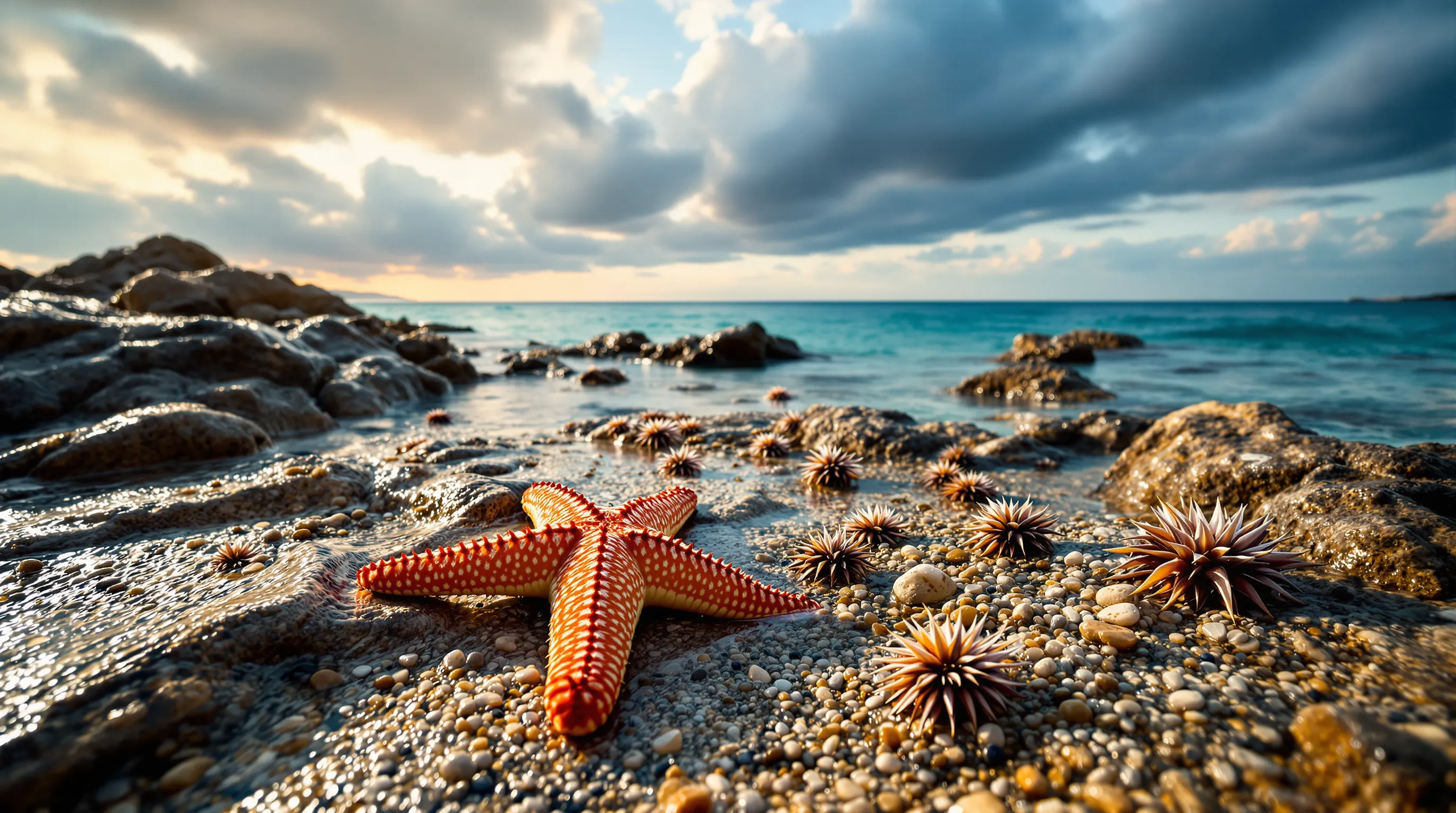
Why Mediterranean Starfish Fascinate Marine Biologists
The Mediterranean Sea harbours over 45 species of starfish and 28 species of sea urchins, extraordinary creatures that have populated our coastlines for 450 million years. These echinoderms play a crucial role in maintaining the balance of Mediterranean marine ecosystems. The common starfish Asterias rubens can regenerate its arms within 8 months, whilst the purple sea urchin Paracentrotus lividus can live up to 50 years. These fascinating animals transform our understanding of marine biodiversity and reveal remarkable biological secrets during each diving expedition.
Iconic Mediterranean Species
The cushion star Asterina gibbosa, measuring 5cm, dominates shallow rocky areas with its unique ability for asexual reproduction. The red starfish Echinaster sepositus, reaching 20cm with its blood-red colouration, colonises posidonia seagrass beds between 5 and 200 metres depth. Among sea urchins, Paracentrotus lividus bores cavities into limestone rock with its spines, literally reshaping the underwater landscape. The long-spined sea urchin Centrostephanus longispinus, with 4cm spines, hides within rocky crevices. These species show remarkable adaptation to Mediterranean conditions: temperatures ranging from 13°C in winter to 26°C in summer, and high salinity levels of 38 parts per thousand.
Surprising Marine Adaptations
Mediterranean starfish possess a unique water vascular system enabling movement without muscles. Their tube feet generate hydraulic pressure of 0.2 bar to grip onto rocks. Sea urchins use their spines as legs, moving at 15cm per minute. Their jaw system, called Aristotle's lantern, crushes 2g of algae daily with a force of 750 newtons.
Fascinating Behaviour and Reproduction
Mediterranean starfish reproduction follows a strict annual cycle: mass spawning occurs in March-April when temperatures reach 16°C. A single Asterias rubens releases 2.5 million eggs into the water. Larval development lasts 45 days in open sea before metamorphosis. Sea urchins synchronise their reproduction with lunar cycles: spring full moons trigger simultaneous release of 5 million gametes per individual. This strategy increases fertilisation success by 340%. Some starfish practise defensive autotomy: they voluntarily shed a threatened arm, which regenerates within 6-12 months. Sea urchins change colour according to their diet, varying from purple to brown-green depending on the algae consumed.
Ecosystem and Crucial Ecological Role
Starfish regulate mollusc populations: one Asterias consumes 12 mussels per week, maintaining balance within benthic communities. Sea urchins graze 15g of algae daily, preventing eutrophication of posidonia seagrass beds. In the Carry-le-Rouet marine reserve, scientists have documented a 45% increase in biodiversity in areas with high sea urchin density. These echinoderms serve as biological indicators: their presence signals excellent water quality with fewer than 10 pollution units. Climate change threatens this balance: above 28°C, sea urchin mortality rates reach 23%. Mediterranean marine protected areas contain three times more echinoderms than unprotected zones.
Climate Change Impact
Extreme temperatures in 2022 caused 15% mortality among purple sea urchins in Provence-Alpes-Côte d'Azur. Ocean acidification, with pH dropping from 8.2 to 8.0, weakens their calcium carbonate skeletons. Starfish show superior resilience, colonising warmer areas. Scientists observe northward migration of certain thermophilic species.
Practical Observation Tips
The best observation period extends from April to October, with optimal visibility of 15-25 metres. Essential sites include the Calanques of Marseille (Sugiton, Morgiou), the Cerbère-Banyuls reserve, and the Hyères Islands where density reaches 8 starfish per square metre. Recommended equipment: fins, mask, quality snorkel (budget £50-100), 3mm wetsuit for morning excursions. Diving centres offer eco-responsible trips from £30. Preferred timing: early morning (7am-10am) when animals are most active. Maintain 50cm distance, never handle directly. Mobile apps like iNaturalist and Seek enable instant identification. Photograph without flash to preserve natural behaviour.
Frequently asked questions
Can you touch starfish in the Mediterranean?
It's strongly discouraged to touch starfish. Human contact disturbs their protective film and can transmit bacteria. Observe from a minimum distance of 50cm. Some Mediterranean species can cause skin irritation. Marine protected area regulations prohibit any handling with fines ranging from £115 to £1,300.
Where can you see the most sea urchins and starfish in the French Mediterranean?
The richest spots include Carry-le-Rouet marine reserve (13 echinoderm species), the Calanques of Marseille, Port-Cros in the Hyères Islands, and the Cerbère-Banyuls reserve. Posidonia seagrass beds between 5-15m depth concentrate the highest biodiversity. Avoid July-August to prevent tourist overcrowding.
How do you distinguish a sick starfish from a healthy one?
A healthy starfish displays vibrant colours, symmetrical arms, and reacts to movement by contracting. Signs of illness include: dull colours, soft or missing arms without visible regrowth, lack of response to stimuli, presence of white lesions. Wasting syndrome sometimes affects Mediterranean populations during marine heatwaves.
Mediterranean starfish and sea urchins reveal new secrets daily to marine nature enthusiasts. These guardians of rocky seabeds bear witness to the extraordinary richness of our coastlines. To deepen your discovery of Mediterranean wonders and plan your next marine explorations, visit dauphin-mediterranee.com and dive into the fascinating universe of our coastal marine fauna.
Read also
What Marine Biologists Are Discovering off Monaco's Coast Will Amaze You
Discover Monaco's exceptional marine wealth: whale watching cruises, Pelagos San...
7 Secrets of Mediterranean Starfish That Divers Keep to Themselves
Discover the fascinating secrets of Mediterranean starfish and sea urchins. Comp...
What Divers Do in Secret in Villefranche-sur-Mer Waters
Discover the secret water activities of Villefranche-sur-Mer that only locals kn...
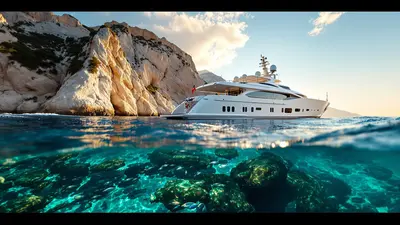
What Luxury Yachts Reveal About Monaco's Marine Wildlife
Discover the secrets of wildlife watching from Monaco. Exclusive cruises, Pelago...