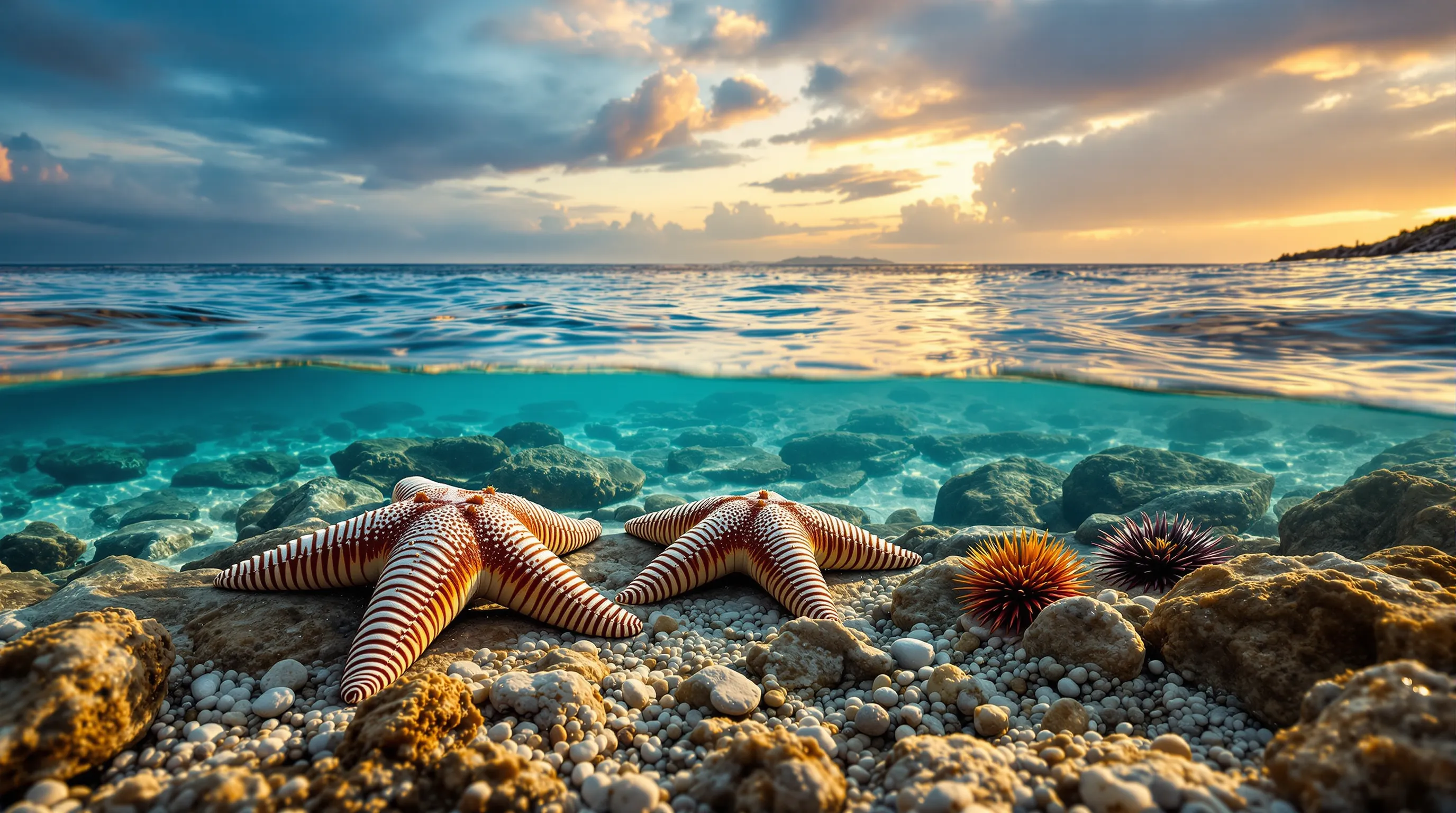
7 Secrets of Mediterranean Starfish That Even Marine Biologists Don't Know
The Mediterranean is home to over 40 species of starfish and 15 species of sea urchins, true architects of the seabed. These echinoderms have been shaping coastal ecosystems for 450 million years. The purple sea urchin Paracentrotus lividus burrows up to 3cm per year into limestone rock, creating unique microhabitats. The red starfish Echinaster sepositus can regenerate a lost arm in just 8 months. These extraordinary creatures reveal fascinating adaptations that you'll observe during your Mediterranean coastal explorations.
Iconic Species and Their Secret Habitats
The Asterina gibbosa, a 5cm cushion star, colonises rocky intertidal zones between 0 and 30 metres depth. It tolerates temperature variations of 15°C and can survive 6 hours out of water. The long-spined sea urchin Centrostephanus longispinus prefers dark caves between 5 and 200 metres, with spines reaching 8cm in length. The large spiny starfish Marthasterias glacialis measures up to 80cm across and actively hunts mussels and limpets. These predators regulate mollusc populations, maintaining the balance of Posidonia seagrass beds. Their reproductive cycles, synchronised with spring tides, create spectacular nurseries invisible to untrained eyes.
Areas of Maximum Concentration
Rocky headlands exposed to the mistral winds concentrate three times more echinoderms than sheltered bays. The Marseille Calanques, Cap d'Agde and the Catalonian Côte Vermeille offer record densities. The optimal observation depth lies between 3 and 15 metres, accessible whilst snorkelling with proper equipment.
Extraordinary Adaptations to Mediterranean Challenges
Mediterranean starfish have developed unique strategies against intensive predation. Coscinasterias tenuispina practises defensive autotomy: it voluntarily sheds threatened arms, which regrow within 6 months. Purple sea urchins secrete repulsive substances against sea bream and gilt-head bream. Their calcium carbonate test thickens by 40% in areas of strong wave action. The red starfish accumulates toxic carotenoids in its tissues, rendering it inedible. These adaptations result from 50 million years of evolution in the Mediterranean, a semi-enclosed sea with intense ecological pressures. Their evolutionary success now inspires marine biomimetics for developing self-repairing materials.
Unsuspected Ecological Roles in the Ecosystem
Starfish regulate 60% of Mediterranean bivalve populations, preventing eutrophication of coastal lagoons. A single Asterias rubens consumes 50 mussels per month, maintaining diversity on rocky substrates. Grazing sea urchins remove 2kg of filamentous algae per square metre annually, preserving the clarity of coastal waters. Their calcareous droppings enrich sediments with magnesium essential for soft corals. This bioturbation generates 30% of sediment renewal in shallow waters. Without these marine gardeners, Posidonia seagrass beds would disappear beneath opportunistic algae, compromising nursery habitat for 400 species of Mediterranean fish.
Environmental Quality Indicators
Starfish density reveals ecosystem health: more than 5 individuals per square metre signals excellent water quality. Their absence indicates pollution or overfishing. Scientists use their regeneration rates as bio-indicators of anthropogenic coastal disturbances.
Practical Tips for Responsible Observation
The optimal period runs from April to October, with maximum visibility during calm morning seas. Equip yourself with fins, mask and a minimum 3mm wetsuit. Spring low tides expose intertidal zones rich in echinoderms. Observation budget: snorkelling equipment hire £12/day, discover scuba experience £35. Book BSAC-approved dive centres between April and September. Maintain minimum distances: 2 metres for fragile starfish, avoid direct contact. Photograph without flash to preserve their photosensitivity. Mediterranean marine parks offer guided naturalist trips at £20, including species identification and ecological awareness. Check marine weather conditions before venturing out.
Frequently asked questions
Can you touch starfish and sea urchins in the Mediterranean?
Absolutely avoid contact. Starfish breathe through their skin and handling disrupts their osmotic balance. Sea urchins can sting and some species secrete defensive toxins. Observe from a respectful distance of at least 50cm to preserve these fragile organisms and their natural behaviour.
Where can you observe the most echinoderm species in the French Mediterranean?
The Calanques National Park concentrates 28 echinoderm species along 20km of coastline. The Cerbère-Banyuls Marine Reserve boasts 15 sea urchin species and 12 starfish varieties. Port-Cros and Scandola offer privileged observations between 5-20 metres depth, accessible by snorkelling or discover diving.
Are Mediterranean starfish dangerous for swimmers?
No Mediterranean species poses danger to humans. Spiny starfish may cause minor scratches if handled. Only long-spined sea urchins require caution whilst diving. At surface level, risk is virtually nil. These animals avoid human contact and generally remain in deeper rocky areas.
Mediterranean starfish and sea urchins reveal an unsuspected marine biodiversity, a true natural treasure within flipper's reach. Their millennia-old adaptations and essential ecological roles deserve our admiration and protection. Discover these marvels during your next Mediterranean coastal adventures on dauphin-mediterranee.com, your expert guide to the marine riches of our azure sea.
Read also
Why Mediterranean Starfish Fascinate Marine Biologists
Discover the secrets of Mediterranean starfish and sea urchins: rare species, fa...
What Marine Biologists Are Discovering off Monaco's Coast Will Amaze You
Discover Monaco's exceptional marine wealth: whale watching cruises, Pelagos San...
7 Secrets of Mediterranean Starfish That Divers Keep to Themselves
Discover the fascinating secrets of Mediterranean starfish and sea urchins. Comp...
What Divers Do in Secret in Villefranche-sur-Mer Waters
Discover the secret water activities of Villefranche-sur-Mer that only locals kn...