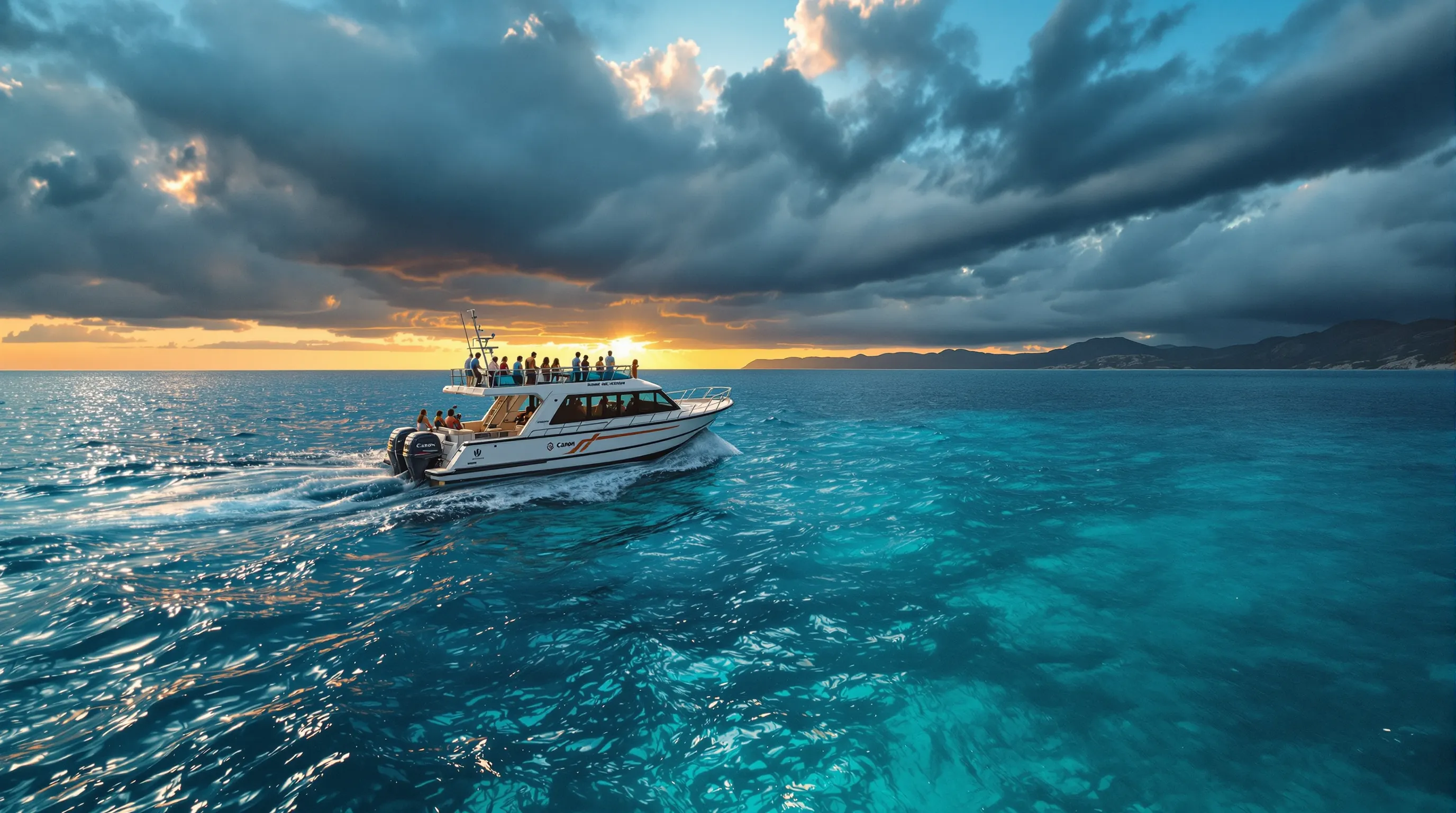
Seasickness on Whale Watching Trips: The Tricks Marina Actually Uses
I remember a trip off Toulon, in the Pelagos Sanctuary, where half the passengers had turned green long before a fin whale even showed its blow. Seasickness ruins more whale watching trips than bad weather itself. In fifteen years of accompanying observation campaigns, I've seen enthusiasts miss the experience of a lifetime simply because they hadn't planned ahead. The good news is that seasickness can largely be prevented, and even managed in choppy swell, without heavy medication or giving up on the experience.
Understanding why seasickness strikes during whale watching trips
Seasickness stems from a sensory conflict: the inner ear perceives the boat's movement, but the eyes, fixed on the horizon or on a camera, send contradictory information to the brain. Whale watching trips make this worse because you're often scanning the water's surface, leaning over the railing, following a fin whale's blow or a striped dolphin's fin through binoculars. In the Pelagos Sanctuary, between Nice, Toulon and Corsica, the underlying swell can persist even in fine weather, creating a slow rolling motion that's particularly conducive to seasickness. Observation boats, often smaller than ferries, amplify this rolling. I've noticed that the passengers most affected are those who've never sailed before, but also experienced sailors caught out by the prolonged wait, engine cut, to observe a pod of pilot whales or Risso's dolphins off Genoa or Cap Ferrat.
The role of waiting with the engine cut
Unlike a standard cruise, whale watching requires long stops with the engine cut, so as not to disturb the animals. The boat then rolls with the swell, without the stabilising effect of forward motion. It's often at this precise moment, after twenty to thirty minutes of waiting to photograph a sperm whale or a pod of common dolphins, that the first symptoms appear in sensitive passengers.
Where and how to prepare before boarding
Prevention starts on dry land, at departure ports such as Sanary-sur-Mer, Cassis, Golfe-Juan or Bonifacio. Eating light two to three hours before departure, avoiding alcohol and fatty meals, and favouring plain biscuits and still water are simple but effective habits. Many operators certified High Quality Whale Watching, based in Marseille, Toulon or La Ciotat, explicitly recommend these precautions when you book. Where you sit on the boat matters enormously: staying in the centre of the vessel, near the waterline, reduces the felt amplitude of the rolling compared with the bow or stern. Acupressure wristbands, sold in pharmacies, work on the Neiguan point on the wrist and give good results for many passengers, without the drowsiness associated with tablets. For those who are very sensitive, taking anti-nausea medication the evening before, on a pharmacist's advice, tends to work better than taking it on the morning of departure.
Choosing your seat and observation spot
On a typical observation boat heading out into the Pelagos Sanctuary, choose the rear or central deck, in the open air, rather than a closed cabin where engine fumes make nausea worse. Keeping your eyes fixed on the horizon, never on a phone screen, helps the inner ear recalibrate considerably. Experienced naturalist guides often place sensitive passengers on the leeward side, where sea spray is lighter and air circulates better.
When to go to limit swell and seasickness
The ideal period for observing cetaceans in the Mediterranean runs from April to October, with the calmest seas typically in June and September. The Pelagos Sanctuary, spanning Provence, Liguria and Corsica, generally sees calmer waters in late spring, before the frequent summer afternoon thunderstorms of July and August. The Mistral, notoriously fierce along the Toulon and Marseille coastline, can whip up a short, choppy sea that's particularly uncomfortable; checking wind forecasts the day before departure, via specialist marine bulletins, often helps you anticipate a rough outing. Morning slots, between 8am and 11am, generally offer calmer seas than early afternoon, when the thermal breeze picks up along the Var or Ligurian coasts. August remains the busiest month, with boats often fully booked in Sanary or Antibes, but also the most prone to afternoon chop. Autumn trips, in September and October, combine calmer seas with an interesting concentration of fin whales feeding up before their winter migration—a good compromise for passengers prone to seasickness.
Organising your trip: duration, fitness level and useful kit
A whale watching trip typically lasts between three and six hours, sometimes longer for excursions further out to the continental slope where fin whales and sperm whales live. No particular fitness level is required, but a good tolerance for motion is a real asset; anyone prone to car sickness should prepare seriously. Always bring a windproof jacket even in summer, as the open sea is cooler and windier than the coast, along with polarised sunglasses that reduce eye strain from glare. Binoculars remain useful, but prolonged use tends to bring on seasickness, so it's best to use them in short bursts. An acupressure wristband, crystallised or capsule ginger, and a bottle of water are the essentials of any anti-nausea kit. Always alert the crew as soon as you feel unwell, whether it's mild dizziness, excess saliva or repeated yawning: lying down on deck with your head steady, and looking at the coast or the horizon, limits things getting worse. Never read or stare at a screen while sailing out to the observation zone.
What to do if you feel nauseous during observation
If symptoms appear despite your precautions, get out into the open air immediately, fix your gaze on a point on the horizon, and breathe slowly and deeply. Avoid dwelling on how you feel: actively watching the cetaceans and chatting with the naturalist guide about the animals' behaviour distracts your attention and often eases symptoms. Fresh ginger to chew on, sometimes available on board, remains a natural remedy Mediterranean crews have relied on for generations.
Frequently asked questions
What medication should I take for seasickness before a whale watching trip?
Antihistamines such as scopolamine or dimenhydrinate, available over the counter at pharmacies, work well when taken one to two hours before departure. Ask your pharmacist for advice based on your own profile, as some cause drowsiness that can get in the way of observation. Acupressure wristbands are a natural alternative with no side effects, worth trying from the moment you set off to the departure port.
Can seasickness ruin the whole dolphin or whale watching experience?
No, not if you follow good practice: a central seat on the boat, eyes fixed on the horizon, open air rather than a closed cabin. Most passengers, even sensitive ones, manage to observe the animals properly by staying active and focusing on the cetaceans' behaviour rather than on how they feel.
Is it better to set off in the morning to avoid seasickness in the Mediterranean?
Generally, yes. Morning slots, between 8am and 11am, often benefit from calmer seas before the thermal breeze picks up in the afternoon along the Var or Ligurian coasts. That said, check the marine weather forecast the day before, as an early Mistral can sometimes reverse this usual pattern.
Are children more prone to seasickness on whale watching trips?
Children aged 2 to 12 are often more vulnerable to seasickness than adults. Choose a central seat and open air for them, and avoid screen time. Ginger sweets and an active occupation, such as watching out for whale blows, help take their mind off feeling unwell.
Does a longer trip increase the risk of seasickness?
Not necessarily: the body often adapts after the first hour at sea, a phenomenon known as sea legs. Longer trips out to the continental slope, home to sperm whales and fin whales, sometimes prove easier to tolerate than a short trip with several closely spaced engine-off stops.
Seasickness should never rob you of a rare moment: crossing paths with a fin whale or a pod of Risso's dolphins in the Pelagos Sanctuary. Forward planning, a well-chosen seat, eyes on the horizon and a bit of patience are usually enough to turn apprehension into wonder. To prepare your trip, choose a responsible, certified operator, and discover the best times for observation in the Mediterranean, continue exploring on dauphin-mediterranee.com.
Read also

Scandola in Corsica: What This Reserve Reveals Before You Go by Boat
Visiting the Scandola nature reserve in Corsica: access, best time to go, boatin...

Cap d'Antibes: The Secret Path Where Sea and Pines Offer an Unforgettable Swim
Discover the coastal path at Cap d'Antibes: wild coves, turquoise swimming spots...

Collioure: The Secret Coves Local Divers Keep to Themselves
Discover the best coves in Collioure and the Vermeille Coast for swimming and sn...

La Ciotat: what lies beneath the turquoise surface at Bec de l'Aigle
Discover La Ciotat differently: hidden calanques, wreck diving and Bec de l'Aigl...