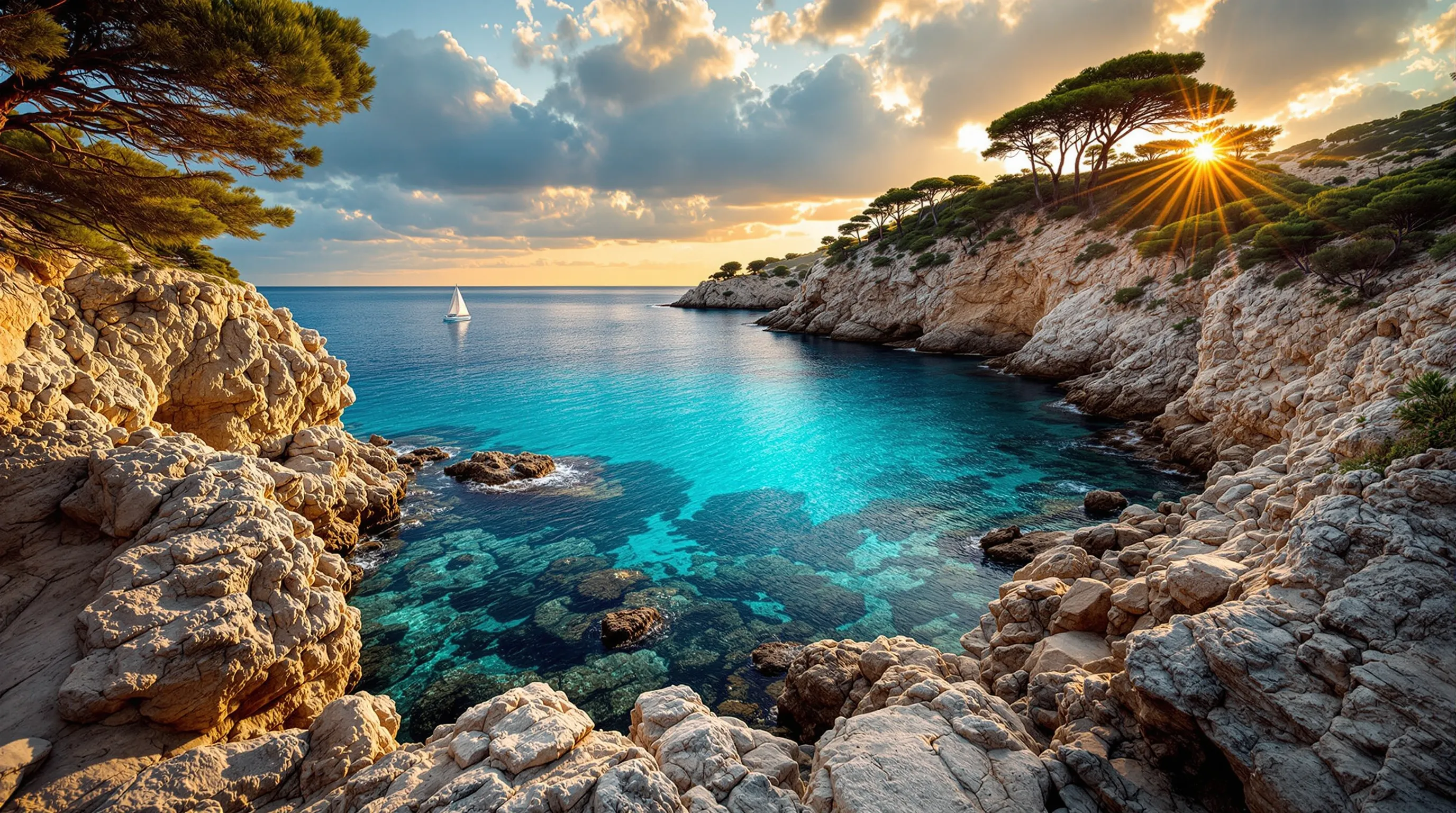
Saint-Tropez differently: the secret coves tourists never find
The first time I dropped anchor off the Salins cove, a couple of gulls were shrieking in the distance over Pampelonne beach, but here, total silence, turquoise water and umbrella pines leaning over the rocks. Everyone knows Saint-Tropez for its harbour and yachts. Few realise that just a stone's throw away lie rocky coves accessible only by footpath or boat, and boat trips where you might spot Risso's dolphins off Cap Camarat. Here's how to move beyond the clichés and experience the peninsula differently.
The wild coves the crowds overlook
Behind the postcard image of Pampelonne, the Saint-Tropez peninsula hides a string of far quieter rocky coves. The Salins cove, at the far end of Salins beach, offers crystal-clear water framed by ochre rocks and umbrella pines, reachable on foot from the car park of the same name. Further towards Cap Camarat, the Gigaro cove, already within the boundaries of La Croix-Valmer, unfurls fine sand bordered by Mediterranean scrubland, with water turning an almost Caribbean blue as early as May. On the Ramatuelle side, l'Escalet marks the starting point of the coastal path towards Cap Taillat, a wild, protected headland where tiny coves succeed one another, accessible only on foot or by paddleboard. These sites remain protected by the Conservatoire du littoral, which explains their near-pristine state despite the region's summer crowds.
Cap Taillat, the headland worth the walk
Cap Taillat is reached via the coastal path from l'Escalet, roughly a thirty-minute walk over stony ground. The reward: a thin strip of sand separating two seas, with views over the Îles d'Hyères on a clear day. Bring water, a hat and sturdy shoes, as the path gets scorching hot during the day. It's best to set off early, before 9am in July and August, to enjoy the site before the midday crowds arrive.
Where to set sail for a different view of the coast
To step off the beaten track, the Port des Marines in Cogolin and Saint-Tropez harbour offer licence-free boat hire, catamarans and guided excursions to coves unreachable by road. From Sainte-Maxime, opposite Saint-Tropez, several operators run day trips out into the gulf, sometimes spotting common dolphins or Risso's dolphins off Cap Camarat and as far as the Îles d'Hyères. The Cap Lardier marine nature reserve, between Gigaro and l'Escalet, can also be explored by sea kayak from Gigaro beach, a quiet way to approach the rocky seabed without disturbing the wildlife. For divers, the Petit Sec site off Ramatuelle offers remarkable visibility and Posidonia seagrass meadows, essential to local biodiversity. Finally, the Sentier des Douaniers customs path linking Cavalaire to Saint-Tropez over nearly 35 kilometres allows you to reach several coves on foot, an alternative for those who prefer dry land to open water.
Boat trips from the Gulf of Saint-Tropez
Departures mainly leave from Saint-Tropez harbour, Sainte-Maxime and Cavalaire-sur-Mer. Allow half a day to sail along the Cap Camarat coves, or a full day to reach the Îles d'Hyères. Some operators run dedicated cetacean-watching trips out in open water, led by naturalist guides trained to respect the approach distances required under ACCOBAMS regulations.
When to go to avoid the crowds and make the most of the sea
June and September remain the best months to discover Saint-Tropez differently. The water is already pleasantly warm by June, coves such as Gigaro or l'Escalet are still quiet, and the mistral wind, common in spring, generally eases off by early summer. July and August see the bulk of tourist traffic: the car parks at Salins and l'Escalet often fill up before 10am, and booking ahead becomes essential for any boat trip. September offers an ideal compromise, with the sea still warm until the end of the month, golden light perfect for photography, and noticeably fewer crowds after 20 August. For marine wildlife watching, May to July usually sees a greater dolphin presence in the gulf, before summer heat disperses groups further into deeper waters. Autumn, mild until October in the Var, suits walkers on the coastal path well, with gentle temperatures and a particular quality of light over the scrubland.
Planning your trip: duration, level and essential kit
For an on-foot exploration of the coves, allow at least half a day between l'Escalet and Cap Taillat, with sturdy walking shoes, plenty of water and sun protection, as the path offers little shade during the day. The required fitness level is moderate, suitable for occasional walkers, but the rocky, sometimes slippery ground near the water calls for extra caution with children. For a boat trip, allow half a day for a coastal excursion, or a full day to reach the Îles d'Hyères or attempt a cetacean sighting further out. No sailing experience is needed for skippered excursions, but licence-free hire requires careful attention to weather conditions and the authorised navigation plan. Useful kit includes a mask and snorkel to explore the rocky seabeds of the coves, water shoes for walking over pebbles, and binoculars to spot marine wildlife from a boat deck.
Kit you shouldn't forget
Sturdy shoes for stony paths, a mask and snorkel to explore the rocky coves, reef-safe sun cream so as not to pollute the seagrass meadows, and binoculars for any boat trip focused on wildlife watching. A waterproof bag protects your camera and phone during kayak or paddleboard crossings, common along this rocky and sometimes windy coastline.
Practical tips and responsible tourism
The budget for a boat trip varies considerably depending on duration, type of vessel and season: a few hours of licence-free hire costs noticeably less than a full day with a skipper and naturalist guide, and prices rise significantly during peak season. Booking several weeks ahead in July and August is essential, both for boat excursions and for parking at the most popular coves such as l'Escalet. Regarding dolphin watching, ACCOBAMS regulations require a minimum approach distance and prohibit any chasing or forced swimming with the animals: choosing operators certified High Quality Whale Watching guarantees respectful observation, led by guides trained in cetacean biology. On land, sticking to the marked coastal paths protects the scrubland and fragile dunes behind the coves. At sea, avoiding anchoring directly on Posidonia seagrass beds, visible through the clear water in shallow coves, helps preserve an ecosystem vital to local wildlife. Taking your rubbish home, limiting the use of non-biodegradable sun cream near swimming areas, and choosing local operators committed to environmental practices round off a responsible visit to this exceptional coastline.
Frequently asked questions
What's the most beautiful cove near Saint-Tropez?
The Gigaro cove in La Croix-Valmer and Cap Taillat, reachable from l'Escalet, rank among the most beautiful. Both offer turquoise water and an unspoilt setting, less crowded than Pampelonne, but require a walk from the nearest car park.
Can you see dolphins from Saint-Tropez?
Yes, common dolphins and occasionally Risso's dolphins can be spotted off the Gulf of Saint-Tropez, particularly near Cap Camarat, especially between May and July. Choose a trip led by a naturalist guide who respects the regulated approach distances.
How do you get to Cap Taillat without a car?
From Ramatuelle, a seasonal bus links the village to the l'Escalet car park during peak season. From there, allow around thirty minutes on foot along the coastal path to reach Cap Taillat, as there's no direct road access.
Which time of year should you avoid when visiting the Ramatuelle coves?
July and August see the heaviest crowds, with car parks full by morning and coves packed by 10am. Choosing June or September guarantees a calmer experience, with pleasantly warm water and fewer people on the paths.
Do you need a boat to explore the Cap Lardier reserve?
No, sea kayaking from Gigaro beach allows you to explore the Cap Lardier nature reserve without a motor, respecting the tranquillity of the site. A boat remains useful for reaching more distant coves or attempting to spot cetaceans further out.
Saint-Tropez isn't just about its harbour and yachts: the wild coves of Cap Taillat, the coastal paths towards Gigaro, and boat trips off Cap Camarat reveal another side to the peninsula, quieter and truer to its natural coastline. Choosing June or September, walking early in the morning, booking excursions in advance and respecting dolphin-watching regulations all help you make the most of this landscape without damaging it. To plan a responsible boat trip and learn more about Mediterranean cetaceans, the team at dauphin-mediterranee.com shares tips, itineraries and news about the marine wildlife of the Var coastline.
Read also

Motorhoming the Mediterranean: the secret spots most van-lifers never find
Motorhome touring on the Mediterranean coast: authentic spots, nature-friendly s...

Mediterranean Road Trip: The Locals' Secret for Spotting Dolphins and Coves
French Mediterranean coast road trip itinerary: stops, dolphin-watching spots, s...

Sunset on the French Riviera: Marina's Favourite Spots to Avoid the Crowds
Discover the most beautiful sunset spots on the French Riviera: hidden coves, co...

Mediterranean Whale-Watching Calendar: Which Animal to Spot Each Season
Fin whales, dolphins, sperm whales: discover the Mediterranean cetacean calendar...