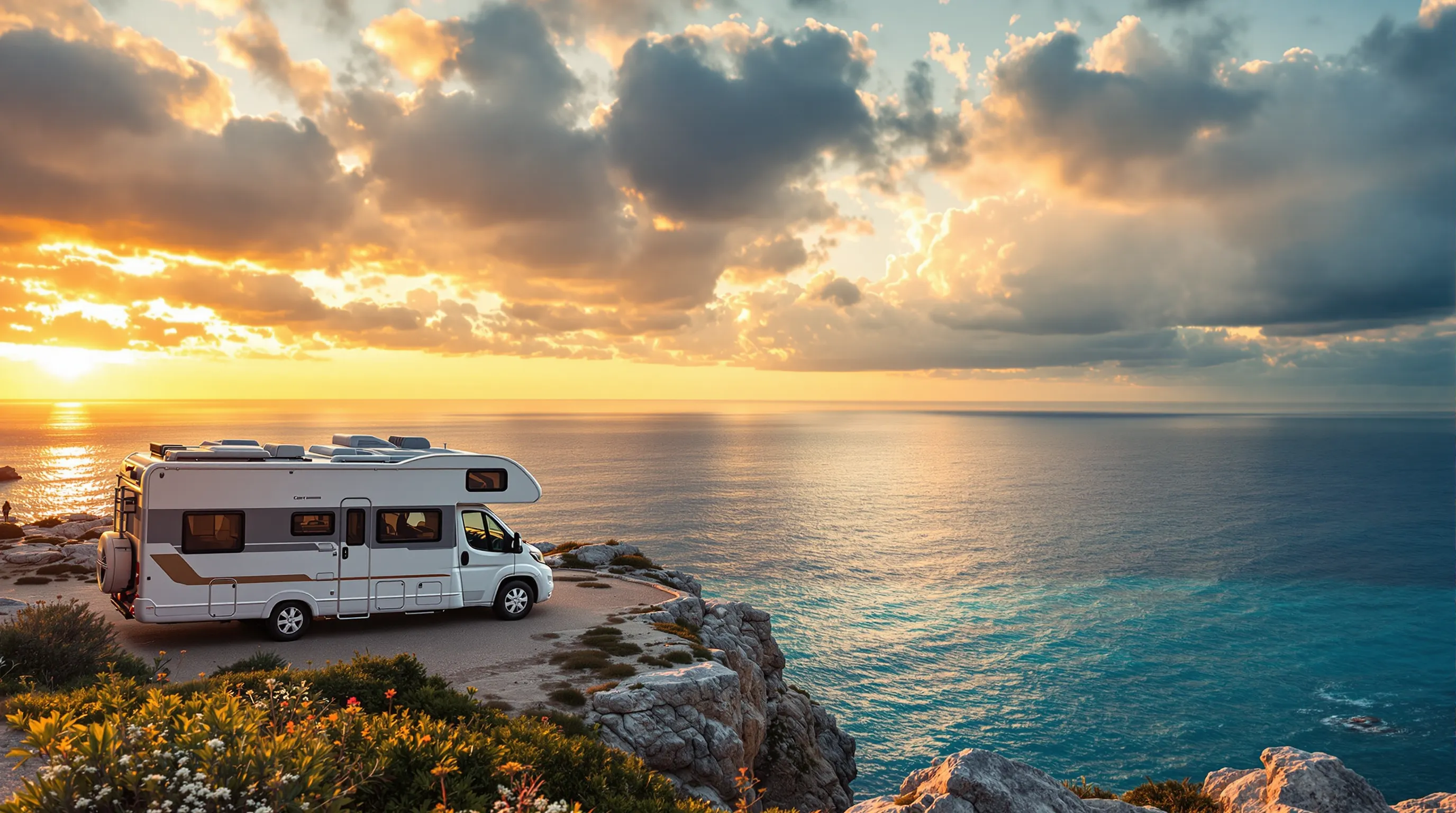
Motorhoming the Mediterranean: the secret spots most van-lifers never find
I spent fifteen years studying cetaceans between the Gulf of Lion and the Ligurian Sea, and more often than not, it was from a small harbour motorhome stopover that I spotted the day's first dolphins, just before dawn. The Mediterranean coast reveals itself differently from a motorhome: at the pace of the wind, deserted coves out of season, and fishing ports that still smell of fresh catch. Between Collioure and Menton, every stopover tells a different story. Here are the spots I genuinely recommend, along with the practical know-how you need to plan a touring holiday without any nasty surprises.
Unmissable spots between Occitanie and Provence
Cap d'Agde and Sète offer well-equipped motorhome sites right by the beaches, ideal for a first stopover. Further east, the Espiguette point near Grau-du-Roi charms visitors with its wild dunes, though motorhome access is restricted in peak season: it's best to arrive early in the morning. In the Camargue, the area around Salin-de-Giraud lets you camp near the salt marshes, with flamingos as a backdrop. Heading towards Marseille, you can't drive a motorhome right into the Calanques: park at Cassis or La Ciotat and continue on foot or by boat. Sanary-sur-Mer and Bandol have affordable municipal sites, perfect as a base for exploring the Golden Isles. Finally, the Giens peninsula, between Hyères and Porquerolles, offers a lagoon landscape unlike anywhere else in France, with views over the Pelagos Sanctuary where bottlenose dolphins sometimes swim.
The Giens peninsula, a rare geological site
This double tombolo links Hyères to the Giens peninsula via two sandbars framing the Pesquiers salt pans, now a nature reserve. Motorhomes can park at dedicated sites nearby, with direct sea views on both sides. It's an excellent base for spotting migratory birds in spring and easily reaching the ferry ports for Porquerolles, within the Port-Cros national park.
Exactly where to go along the French Riviera and beyond
Between Saint-Tropez and Cannes, official sites are mainly concentrated in Sainte-Maxime and Fréjus, as the heavily built-up Riviera coastline severely limits free parking. The bay of Cannes and Cap d'Antibes are best visited on a day trip from a peripheral site, followed by local transport. Further east, Villefranche-sur-Mer and its deep natural harbour make for a spectacular anchorage, best admired from the heights by motorhome. Menton, the last stop before Italy, has well-placed sites near the old port. Heading west towards Spain, Collioure and Banyuls-sur-Mer, at the foot of the Albères mountains, offer quieter rocky coves and direct access to the Cerbère-Banyuls marine reserve, the oldest in France, where you might occasionally spot striped dolphins offshore. For lovers of unspoilt nature, Cap Camarat and the Saint-Tropez peninsula hide coastal footpaths accessible from car parks suited to taller vehicles.
The Cerbère-Banyuls reserve, a hidden marine gem
Established in 1974, this reserve protects an outstanding stretch of rocky Mediterranean seabed near the Spanish border. Motorhomes can park easily in Banyuls-sur-Mer, just a few minutes' walk from the marked underwater trail, accessible for snorkelling from May to October. It's also a great spot for coastal watching, with occasional sightings of common dolphins travelling along the rocky shoreline, especially towards the end of the day.
When to go: seasons, weather and crowds on the coast
Spring, from April to June, is the period I recommend most: the sea gradually warms up, sites are still available without needing to book, and it's the best window for spotting dolphins moving into coastal waters to feed. July and August turn the coast into a busy hotspot, with sites often full by mid-morning and heavy traffic on coastal roads such as the Corniche or the D559. September and early October offer an excellent compromise: the water is still warm, the light is gorgeous, and crowds thin out noticeably after 15 August. The Mistral and Tramontane winds, common between the Gulf of Lion and Marseille, can make driving a tall motorhome tricky on exposed routes such as the A9 motorway or the road to Sète; it's worth checking wind forecasts before setting off on open coastal stretches. Winter, from November to March, appeals to those after some peace and quiet: mild temperatures on the Riviera, near-empty sites, though some services and ferries to the islands run on a reduced schedule.
Planning your road trip: duration, skill level and kit
Allow at least ten to fourteen days to travel from Roussillon to the Italian border without rushing, building in two or three fixed days for exploring on foot or by kayak. The driving skill required is fairly manageable, but the Corniche roads between Cassis and La Ciotat, or the climb up to Èze, call for caution in a wide vehicle. Go for a motorhome or campervan under seven metres to get around perched villages easily and park at standard sites. Bring levelling blocks, a European electrical adapter, enough water reserves for the remoter areas of the Camargue or Cap Camarat, and a good map of no-overnight-parking zones, common along the protected coastline. A real-time site-booking app saves unnecessary detours in peak season. Also pack some light wildlife-watching kit: 8x42 binoculars and a Mediterranean cetacean identification guide are all you need to make the most of sightings from the shore without lugging around heavy gear.
Essential kit for spotting marine wildlife
Compact binoculars, a pair of water shoes for rocky areas and a sightings notebook are enough for most coastal encounters. Avoid drones near bird nesting areas or marine reserves, where they're often restricted. For cetacean watching at sea, always choose a licensed operator's boat rather than personal equipment—it's kinder to the animals and usually far more effective for spotting groups.
Practical tips and responsible tourism
The budget for a Mediterranean motorhome road trip mainly depends on the season, the type of sites chosen and how often you go out on the water: municipal sites are generally cheaper than private campsites with full facilities, and travelling outside July and August noticeably cuts overall costs. Book your pitches from spring onwards for the summer months, particularly on the Riviera, where availability is structurally limited. For any boat trip, choose an operator displaying the High Quality Whale Watching label or following ACCOBAMS guidelines: a minimum distance of one hundred metres from cetaceans, a slow and gradual approach, never encircling the animals, and switching off the engine if they approach of their own accord. Never dump waste, even organic matter, and always empty your wastewater at designated disposal points rather than releasing it into nature. On land, stick to marked trails in reserves such as Cerbère-Banyuls or the Giens salt pans, avoid disturbing nesting birds in spring, and support local businesses in small harbours to help a coastal economy that's fragile in the face of mass tourism.
Frequently asked questions
Can you sleep in a motorhome anywhere along the Mediterranean coast?
No, free overnight parking is banned in many coastal towns, particularly in the Camargue and along the Riviera. Use official sites or dedicated apps to check local rules before settling in, especially near nature reserves and protected beaches.
What's the best time to see dolphins from the coast?
Spring and early autumn offer the best chances, when common and bottlenose dolphins move closer to shore to feed. Early morning or late afternoon are your best bets, watching from high vantage points such as Giens, Cap Camarat or the hills above Banyuls-sur-Mer.
Do you need a special licence to drive a motorhome on coastal roads?
A standard car licence covers the vast majority of motorhomes up to 3.5 tonnes. Beyond that weight, a C1 licence is required. Check your vehicle's GVW before hiring, particularly for the narrow Corniche roads or the perched villages of the Riviera.
How can you watch cetaceans responsibly in the Mediterranean?
Choose operators with the High Quality Whale Watching label who stick to ACCOBAMS distances and never encircle the animals. From the shore, keep a low profile, avoid making noise, and never fly a drone near known cetacean habitats or bird nesting sites.
Which motorhome sites are least crowded in summer?
The areas around Collioure, Banyuls-sur-Mer and the Cerbère-Banyuls reserve stay quieter than the stretch between Marseille and Menton. The Camargue, away from Grau-du-Roi, also offers more breathing room, particularly around Salin-de-Giraud.
Touring the Mediterranean coast by motorhome truly comes into its own when you slow down: dawn breaking over the Giens peninsula, the hush of the Cerbère-Banyuls reserve, or perhaps the fleeting sight of a pod of dolphins off Banyuls. These moments are priceless, but they call for respect and proper preparation. To learn more about the cetaceans you might encounter along the way and plan a responsible boat trip, explore our full guides at dauphin-mediterranee.com.
Read also

Mediterranean Road Trip: The Locals' Secret for Spotting Dolphins and Coves
French Mediterranean coast road trip itinerary: stops, dolphin-watching spots, s...

Sunset on the French Riviera: Marina's Favourite Spots to Avoid the Crowds
Discover the most beautiful sunset spots on the French Riviera: hidden coves, co...

Mediterranean Whale-Watching Calendar: Which Animal to Spot Each Season
Fin whales, dolphins, sperm whales: discover the Mediterranean cetacean calendar...

Boat Trip Bag: What Marina Always Brings Aboard
What should you pack for a boat trip? The complete guide from a marine biologist...