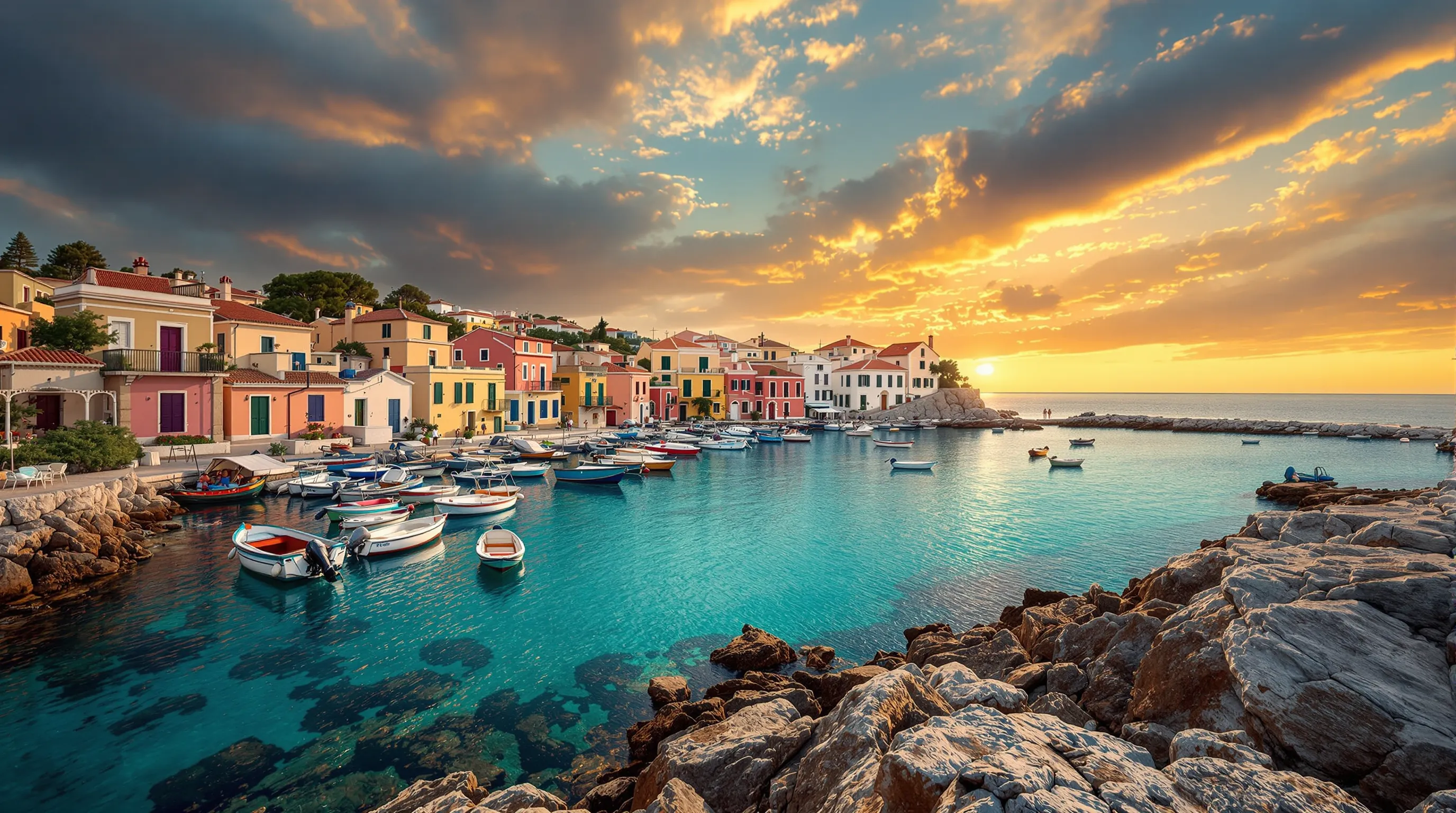
Picturesque Mediterranean Harbours: The Secrets Local Sailors Only Share Amongst Themselves
I've dropped my rucksack in around thirty Mediterranean harbours over the course of my cetacean-watching missions, from Collioure to Portofino. What always strikes me is the stark contrast: on one side, the big marinas heaving with crowds in July and August, and on the other, those tiny harbour coves where time seems to stand still, like Cassis out of season or the calanques of Port-Miou. The Mediterranean coastline boasts hundreds of harbours, but only a handful retain that authenticity which draws heritage lovers and marine wildlife enthusiasts alike – and it's worth noting that the Mediterranean is home to regular migration routes for dolphins and fin whales just a stone's throw from these very quaysides.
The harbours that have kept their fishing-village soul
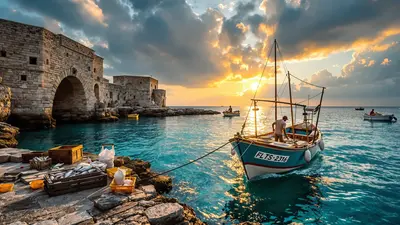
Some Mediterranean harbours still resist the tide of tourist standardisation. Collioure, in the Pyrénées-Orientales, with its painted Catalan boats and bell tower rising straight out of the sea, remains a textbook case: fishermen still land anchovies and sardines there at dawn. At the other end of the coast, Cassis keeps its early-morning fish auction going despite the summer influx. More under-the-radar spots, like the harbour at Niolon near Marseille or Sausset-les-Pins, retain a human scale, far removed from standardised marinas like Port Grimaud. In Italy, Portofino and Vernazza in the Cinque Terre illustrate that same fragile balance between preservation and touristic success. What sets these authentic harbours apart: the presence of working fishing boats, non-uniform architecture, and an economy that doesn't rely solely on seasonal tourism. I've often gone out with local fishermen on watching trips – a direct way of understanding the coastal ecosystem, and sometimes catching a distant glimpse of common dolphins following shoals of fish close to shore.
Collioure and its untouched Catalan charm
Collioure charms visitors with its Fort Miradou, pastel-hued lanes and the Notre-Dame-des-Anges church, built on a former lighthouse. The small harbour, overlooked by the royal castle, still welcomes around a dozen traditional boats used for anchovy fishing, an emblematic trade dating back to the 17th century. The distinctive end-of-day light that inspired Matisse and Derain can still be seen from the Quai de l'Amirauté. Best visited early morning out of season to avoid the summer crush.
Where exactly to go: precise routes along the French and Italian coasts
For a well-rounded discovery, I'd recommend structuring your trip by geographical zones. In Occitanie, the Collioure–Port-Vendres–Banyuls-sur-Mer route can be covered in half a day by car, with short stops along the way. In Provence, the trio of Cassis, La Ciotat and Sanary-sur-Mer offers appealing architectural variety, reachable from Marseille in under an hour. The Calanques National Park, accessible from Cassis or Marseille via boat shuttles, lets you reach Port-Miou and Port-Pin, two protected harbour coves. On the Côte d'Azur, Saint-Tropez before 9am reveals a completely different face from its postcard image, as do Cannes' old harbour and Antibes' Port Vauban, one of the oldest in the region. On the Italian side, the Cinque Terre villages are linked by train from La Spezia, each with its own jetty. Travelling by boat is often preferable to driving, particularly in Liguria where parking is extremely limited during the season. For marine wildlife enthusiasts, departures from Sanary-sur-Mer or Toulon allow access to the Pelagos Sanctuary, a protected area for cetaceans in the north-western Mediterranean.
The Pelagos Sanctuary, an unmissable zone
The Pelagos Sanctuary stretches between Provence, Corsica and Sardinia, covering roughly 87,500 km². This protected area is home to fin whales, sperm whales, striped dolphins and pilot whales. Several harbours, including Toulon, Sanary-sur-Mer and Nice, serve as departure points for guided trips run by operators holding the High Quality Whale Watching label, guaranteeing a respectful approach in line with ACCOBAMS standards.
When to go: ideal seasons and crowd levels by month
The timing of your trip largely determines the quality of the experience. May and June already offer mild weather, generally calm seas, and still moderate crowds in most harbours along the French coast. July and August see the bulk of tourism, with harbours like Saint-Tropez or Portofino packed out by 10am; it's best to stick to early morning or late afternoon visits during this period. September remains an excellent choice: the sea is still warm, the light is soft, and visitor numbers drop noticeably after the 20th of the month. For cetacean watching, April to October marks the most reliable presence of fin whales and dolphins in the Pelagos Sanctuary, with observation peaks in summer when concentrations of krill and fish draw these species closer to the surface. Autumn and winter suit visitors seeking the pure authenticity of fishing villages without the crowds, though some tourist services and boat trips close entirely during this period. The mistral in Provence and the libeccio in Corsica can disrupt boat trips, particularly between November and March; always check the forecast before booking a sea excursion.
How to plan your visit: duration, fitness level and logistics
A satisfying exploration of Mediterranean harbours takes a bit of planning. For a five to seven-day trip, I'd recommend no more than two or three harbours per day, so you can truly soak up the atmosphere of each place, particularly early in the morning when fishermen are unloading their catch. Driving remains practical in Provence and Languedoc, but becomes a hassle in Liguria and along the Riviera, where parking is scarce and pricey; regional trains or local boat links are a better bet there. No particular fitness level is required to visit the harbours themselves, but reaching certain coves such as Port-Pin in the Calanques involves a 20 to 30-minute walk along a stony path, so sturdy footwear is recommended. For cetacean-watching trips, pack warm clothing even in summer, as it's always chillier out at sea, along with binoculars and a camera with a zoom lens, and avoid taking any last-minute seasickness remedies that can cause drowsiness. Booking ahead becomes essential in peak season for licensed sea excursions, as spaces are limited to ensure observation distances are properly respected.
Essential kit for a successful trip
Bring non-slip shoes for often slippery quaysides, a cap and sun cream even under cloudy skies, and a windproof jacket for any time spent out at sea. 8x42 binoculars remain the ideal choice for spotting wildlife from a stable boat. Also bring a reusable water bottle and avoid single-use plastics, which are particularly problematic in these protected marine areas, where every piece of litter can affect local wildlife.
Practical tips and responsible tourism
The budget for a Mediterranean harbour-focused trip varies considerably depending on the season, choice of accommodation, and whether or not you take guided boat excursions. Expect to spend more in July and August along the Côte d'Azur and in Liguria, with noticeably better value out of season or along the Languedoc coast. High Quality Whale Watching-labelled cetacean trips generally cost more than standard excursions, but guarantee a wildlife-friendly approach, with skippers trained in ACCOBAMS regulations. These rules require, amongst other things, a minimum approach distance of 100 metres for large cetaceans, reduced speed when approaching, a ban on swimming with the animals, and a limited number of boats present around any given group at once. Always check that your chosen operator displays this label before booking. As for the harbours themselves, support local businesses rather than chain outlets, respect professional fishing zones (usually clearly marked), and avoid dropping cigarette butts or litter on the quaysides, as these end up directly in the sea. Booking accommodation and excursions at least two to three months ahead for the summer period is strongly advised, as spots fill up quickly in the most sought-after harbours like Cassis or Portofino.
Frequently asked questions
What is the most beautiful picturesque harbour on the French Mediterranean coast?
Collioure remains a firm favourite thanks to its well-preserved Catalan architecture, royal castle and traditional fishing boats still in active use. Cassis is equally charming, with its adjoining calanques. The best choice really depends on timing: out of season, both harbours reveal an authenticity that summer crowds largely obscure.
Can you spot dolphins from a Mediterranean harbour?
Spotting them directly from the quayside is rare but does happen occasionally, particularly at dawn near Sanary-sur-Mer or Toulon. Your best bet is a guided trip with a High Quality Whale Watching-labelled operator, which considerably increases your chances of a sighting whilst respecting ACCOBAMS-regulated distances.
What's the best time to visit the harbours without the crowds?
May-June and September offer the best balance between pleasant weather and moderate crowds. July and August draw the majority of tourists, particularly along the Côte d'Azur and in Liguria. Out of season, from October to April, the harbours regain their calm, though some tourist services close temporarily.
Do I need to book ahead to visit the picturesque harbours?
For accommodation during peak season, yes, absolutely – two to three months ahead in the most popular harbours. Simply visiting a harbour requires no booking at all, but sea excursions and cetacean-watching trips should also be booked in advance, as spaces are limited.
How can I recognise a responsible whale-watching operator?
Look out for the High Quality Whale Watching label, which guarantees adherence to ACCOBAMS approach distances and proper staff training. A reputable operator limits the number of participants, slows down near the animals, never encourages swimming with cetaceans, and consistently raises passengers' awareness of marine conservation.
From the Catalan lanes of Collioure to the limestone coves of the Calanques, via the clifftop villages of the Cinque Terre, the Mediterranean's picturesque harbours offer a rare diversity – provided you choose the right season and the right times of day. This coastal richness goes hand in hand with exceptional marine biodiversity, visible from several of these very same harbours on responsible boat trips. To plan a dolphin or fin whale watching trip with cetacean welfare in mind, dauphin-mediterranee.com lists licensed operators and the best times to visit for each stretch of coastline.
Read also
Mediterranean Octopuses: 7 Secrets of an Animal Smarter Than You'd Think
Discover where to spot octopuses along the Mediterranean coastline, their fascin...
Motorhoming in the Mediterranean: the secret spots regulars never share
Motorhoming on the Mediterranean coast: recommended sites, best seasons and advi...
Mediterranean Coastal Path: 5 Secrets Local Hikers Don't Share
Coastal hiking on the Mediterranean coastal path: routes, best seasons and exper...
What Mediterranean Fishermen Are Doing to Save Fish and Dolphins
Discover responsible fishing in the Mediterranean: protected species, committed ...