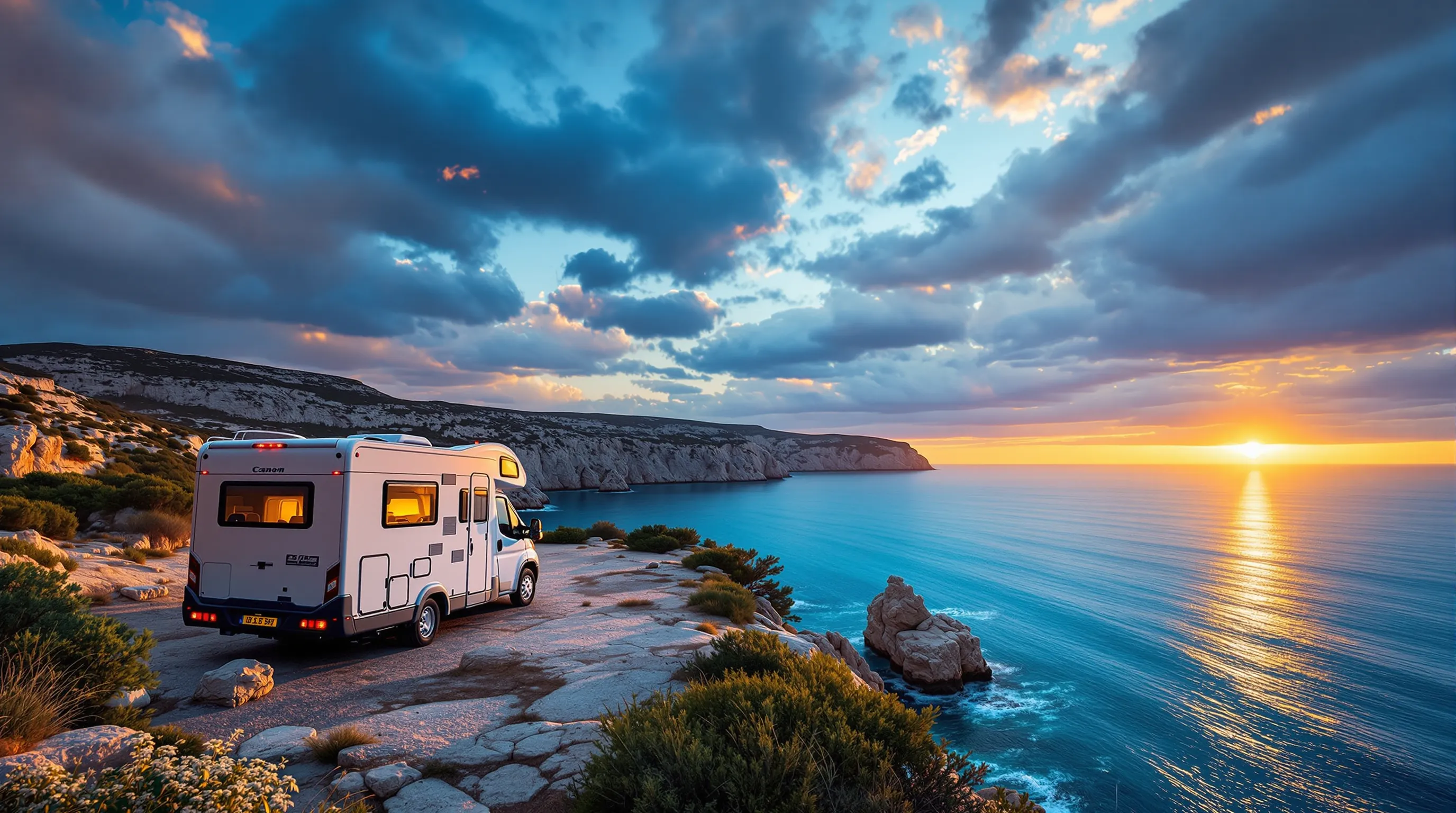
Motorhoming in the Mediterranean: the secret spots regulars never share
My name is Marina, I'm a marine biologist, and I've spent fifteen years touring the Mediterranean coast by motorhome, tracking populations of bottlenose dolphins and fin whales. What few travellers realise is that some of the most popular sites sit just a few hundred metres from cetacean breeding or feeding grounds, which calls for particular care. Between the Marseille calanques, Corsican coves and the Pelagos Sanctuary, this coastline offers exceptional spots, provided you know the right locations, the right seasons and the rules protecting this fragile wildlife.
Unmissable coastal spots for a nature-focused road trip
The Pelagos Sanctuary, an 87,500 km² marine protected area shared between France, Monaco and Italy, is the beating heart of Mediterranean biodiversity. From a motorhome, several land-based viewpoints allow you to spot striped dolphins or even fin whales without setting foot on a boat. Cap Ferrat and the Pointe de l'Esterel, between Saint-Raphaël and Théoule-sur-Mer, offer natural vantage points overlooking deep waters used year-round. In Corsica, the Scandola Nature Reserve, reachable by road as far as Galéria, borders seabeds regularly frequented by bottlenose dolphins and loggerhead turtles. Further west, the calanques of Cassis and Marseille, particularly Sormiou and Morgiou, offer short walks leading to viewpoints over the open sea where cetacean blows can sometimes be spotted in the distance, especially early in the morning.
The Pelagos Sanctuary as seen from land
Contrary to popular belief, you don't need to board a boat to observe the sanctuary's marine life. The heights of Cap Camarat near Ramatuelle or the coastal path between Théoule-sur-Mer and Miramar offer clear views over areas where dolphins regularly pass through. Bring along 8x42 binoculars, ideal for stability, and favour early mornings when the sea is calm. This kind of opportunistic, free observation fully respects the principle of non-disturbance, unlike poorly managed boat trips.
Where exactly to park: recommended towns and sites
On the French Riviera, the town of Ramatuelle offers a motorhome site near Pampelonne beach, an ideal starting point for exploring Cap Camarat on foot. In Cassis, the Gorguettes municipal site, roughly two kilometres from the centre, allows you to reach the calanques by shuttle bus or bicycle without taking the vehicle down narrow roads that are off-limits to larger vehicles. In Corsica, Porto and its marina offer a well-equipped site, a gateway to Scandola and the reserve's red cliffs. Further south, the Gulf of Lion near Port-Vendres and Banyuls-sur-Mer, on the edge of the Cerbère-Banyuls marine reserve, offers simple pitches with direct access to coastal paths rich in biodiversity. Avoid wild camping in calanque car parks, which is strictly forbidden and fined, and which also damages the coastal scrubland home to protected species such as Bonelli's eagle.
Cassis and the calanques without a car
From the Gorguettes site, a regular bus serves the centre of Cassis, from where paths lead to Port-Miou, Port-Pin and En-Vau. Allow two to three hours for the round trip to Port-Pin, with a moderate incline but stony terrain requiring sturdy footwear. This option avoids the summer car park gridlock and protects the fragile pine woods bordering the calanques, which are sometimes home to seabirds sensitive to disturbance.
When to go: seasons, weather and crowds along the coast
Spring, from April to June, remains the most favourable time for a motorhome road trip on the Mediterranean. Temperatures are mild, sites are less crowded than in summer, and this is precisely the season when bottlenose dolphins move closer to shore to feed, with the waters teeming with small pelagic fish. July and August bring peak crowds to sites in the Var and Alpes-Maritimes, with bookings often full weeks in advance and heavy traffic on the narrow Corsican coastal roads. Autumn, particularly September and October, offers an excellent compromise: the sea is still warm, crowds have thinned considerably, and this is when fin whales sometimes move back in to feed before winter within the Pelagos Sanctuary. Winter remains manageable along the Mediterranean coast thanks to a milder climate compared with the rest of France, but some sites close and the mistral wind can make parking on clifftops tricky. I strongly recommend avoiding the summer peak for wildlife watching: heavy boat traffic disturbs cetaceans, which then move away from the coastal areas easily visible from land.
Planning your route: duration, difficulty and essential kit
A coherent itinerary between Marseille and the Italian border, or between the Gulf of Lion and Corsica via ferry, ideally requires ten to fourteen days to enjoy the natural spots and observation trails without rushing. No particular driving skill is required, but some Corsican roads, especially towards Scandola and the coast between Porto and Piana, are narrow with hairpin bends poorly suited to vehicles over seven metres long. Check with the local town hall before setting off on these routes. As for kit, pack good-quality binoculars, a sturdy pair of walking boots for the often stony coastal paths, and a decent water supply for remote areas such as Scandola, where supply points are scarce. A Mediterranean cetacean identification guide, available from associations such as GECEM or Souffleurs d'Écume, greatly enriches the observation experience. Also consider solar panels or a leisure battery if you plan to stay several nights on sites without electric hook-up, which are common in protected areas where infrastructure is deliberately kept minimal to preserve the landscape.
Finding the right pace for stress-free observation
Avoid trying to see everything in a single week. Staying two to three nights per area lets you watch the sea at different times of day, with dawn and dusk being the most promising windows for spotting dolphins from the shore. This unhurried approach also fits the spirit of motorhoming: fewer miles covered, more attention paid to detail, to seabirds, and to the subtle changes in the sea that often reveal the discreet presence of a group of cetaceans.
Practical tips and responsible tourism
The budget for such a trip varies considerably depending on the season, the type of site chosen (budget municipal sites versus private campsites with facilities) and the length of stay; high season and very touristy areas such as Saint-Tropez or Porto-Vecchio significantly push up costs. Book your pitches as early as spring if you're aiming for July-August, particularly in Corsica where availability remains limited. If you opt for a boat trip, always choose operators holding the High Quality Whale Watching label, which guarantees compliance with ACCOBAMS recommendations: a minimum distance of one hundred metres from cetaceans, a gradual, never head-on approach, reduced speed, and observation time capped at thirty minutes. Never feed a dolphin, never swim near a pod, and report any sightings to stranding networks or local associations such as GECEM, valuable data for research. On land, stick strictly to the marked trails within nature reserves, take your rubbish home with you, and favour official sites over wild camping, which damages coastal vegetation and disturbs nesting wildlife.
Frequently asked questions
Can you see dolphins from the coast without taking a boat?
Yes, and it's often the more ethical approach anyway. Rocky headlands such as Cap Camarat, Cap Ferrat or the heights of the Esterel offer good vantage points, especially early in the morning when the sea is calm. Bottlenose dolphins sometimes hunt just a few hundred metres from shore, particularly in spring and autumn.
What are the best motorhome sites near observation areas?
Ramatuelle near Pampelonne, Les Gorguettes in Cassis, Porto in Corsica and Port-Vendres near Banyuls are among the most convenient. They combine proximity to coastal trails, car-free access to calanques or reserves, and help you avoid wild camping, which is often fined in protected areas.
Is motorhoming allowed everywhere along the Mediterranean coast?
No, many towns ban overnight wild camping along the seafront, particularly near calanques and nature reserves. Use official municipal sites or dedicated campsites, and check local bylaws, which are especially strict in Corsica and the Var during high season.
What's the best time to combine a road trip with cetacean watching?
Spring (April-June) and autumn (September-October) offer the best compromise: calm seas, less boat traffic disturbing wildlife, moderate tourist numbers, and regular sightings of dolphins and sometimes fin whales within the Pelagos Sanctuary.
How can you recognise a boat trip operator that respects cetaceans?
Look for the High Quality Whale Watching label, which guarantees compliance with ACCOBAMS distance rules (a minimum of one hundred metres), a non-frontal approach, reduced speed and limited observation time. A good operator will also brief passengers on the species' biology and refuse to force an encounter.
A motorhome road trip along the Mediterranean coast becomes far richer when paired with genuine care for the marine life inhabiting these waters, from the Pelagos Sanctuary to the Marseille calanques. Choosing the right seasons, the right sites and the right observation etiquette turns a simple trip into a respectful and memorable experience. To deepen your knowledge of Mediterranean cetaceans, plan a responsible boat trip, or identify the species you're likely to encounter, check out our detailed guides at dauphin-mediterranee.com.
Read also
Mediterranean Coastal Path: 5 Secrets Local Hikers Don't Share
Coastal hiking on the Mediterranean coastal path: routes, best seasons and exper...
What Mediterranean Fishermen Are Doing to Save Fish and Dolphins
Discover responsible fishing in the Mediterranean: protected species, committed ...

Sète and the Thau Lagoon: what the lagoon reveals about the Mediterranean
Discover Sète and the Thau Lagoon: oyster farming, lagoon wildlife, coastal trai...
Monaco and the Sea: What Experts Watch for Offshore Before Spotting a Dolphin
Monaco and the sea: discover how to spot dolphins and whales offshore, between r...