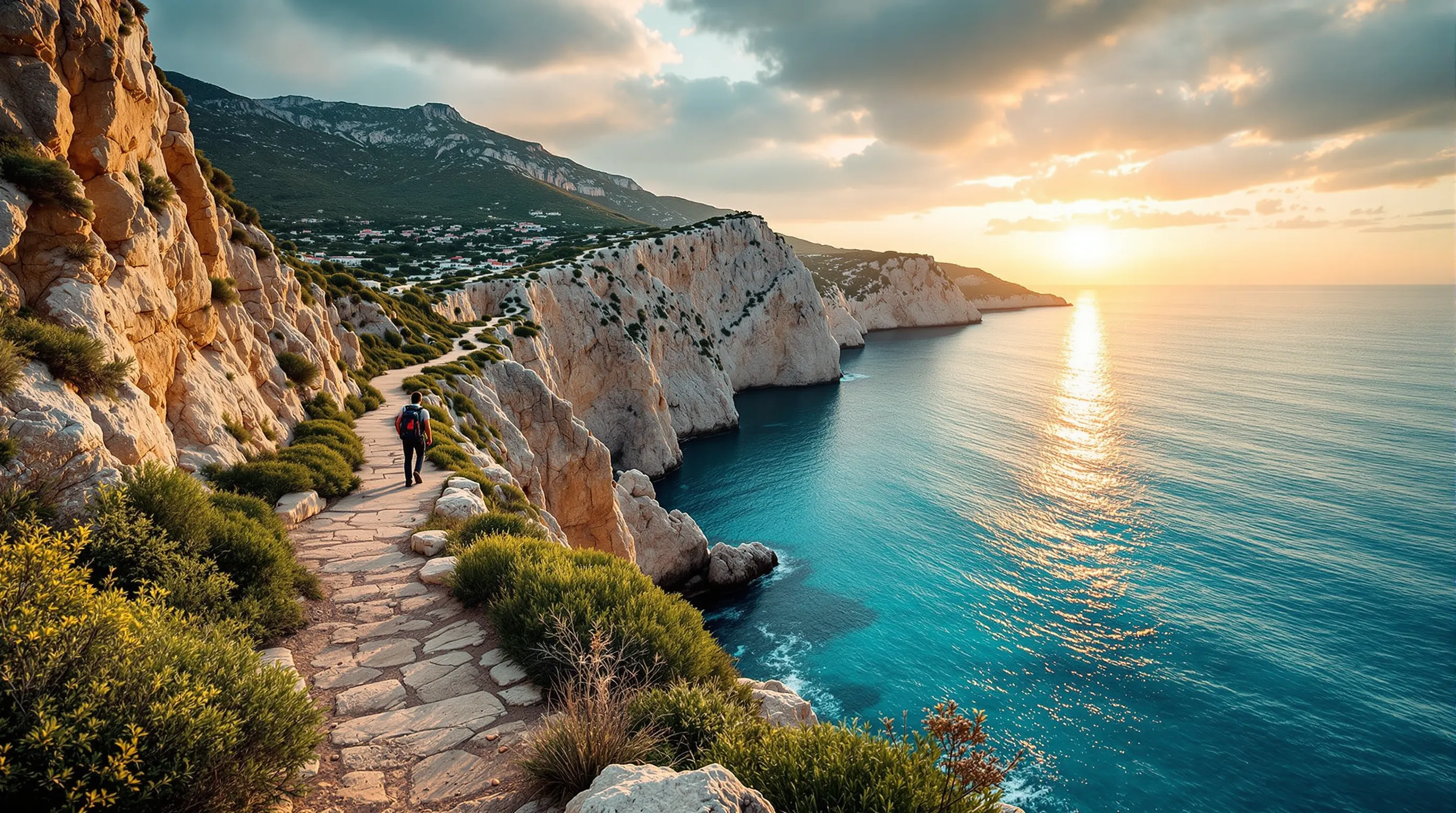
Mediterranean Coastal Path: 5 Secrets Local Hikers Don't Share
The first time I walked the customs officers' path between Cassis and La Ciotat, a flock of Scopoli's shearwaters skimmed the ridge just above me, while the mistral howled fiercely enough to strip the Aleppo pines bare. That's Mediterranean coastal hiking for you: brutal, mineral terrain, a sea that shifts colour with every calanque, and wildlife you only spot by walking slowly. In fifteen years observing marine ecosystems across Provence, Corsica and Puglia, I've learned that these coastal paths reveal far more than scenic views: they tell the story of geology, wind, and sometimes even the quiet presence of dolphins offshore.
A unique geological and biological heritage along the coast
The Mediterranean coastal path isn't just a walking route: it's an open-air lesson in limestone rock, the red sandstone of the Esterel, and the crystalline schists of the Maures. Between Marseille and Cassis, the Calanques National Park brings together white cliffs, pine woods that have survived past wildfires, and garrigue scrubland scented with rosemary and rock rose. This karst landscape shelters rare biodiversity: peregrine falcons nesting on sheer cliff faces, yellow-legged gulls, and occasionally migrating Scopoli's shearwaters off Cap Croisette. Beneath the waves, Posidonia seagrass meadows, visible from certain viewpoints on a calm day, form the true backbone of the Mediterranean ecosystem, sheltering juvenile groupers and seahorses. Further east, in Corsica, the coastal path from Bonifacio to Porto-Vecchio winds through myrtle and mastic scrub, with direct views over the Strait of Bonifacio, a regular corridor for bottlenose dolphins. Walking these ridges is a way of understanding why the Mediterranean, despite its modest size, holds such an exceptional density of marine and terrestrial species, fragile in the face of summer tourist numbers.
Posidonia, the invisible sentinel seen from the trail
From the paths overlooking the Sormiou or Morgiou calanques, you'll often spot dark patches beneath the surface: these are Posidonia seagrass meadows, an endemic plant rather than an alga. They produce oxygen, capture carbon, and shelter the biodiversity that feeds the entire Mediterranean food chain, right up to the dolphins that sometimes come hunting near the rocky drop-offs just a few hundred metres from shore.
Where to walk: the iconic stretches of the coastal path
Three areas account for most of the accessible, well-marked routes. In Provence, the GR2013 and the Calanques trail link Marseille (Callelongue calanque) to Cassis via Sormiou, Morgiou and En-Vau, roughly 18 demanding kilometres reserved for experienced walkers. On the Côte Bleue, between Carry-le-Rouet and Sausset-les-Pins, the path is gentler and family-friendly, with swimming coves at every turn. In Corsica, the coastal path from Bonifacio to Piantarella (around 12km) gives direct access to the Strait of Bonifacio, one of the best land-based spots for observing bottlenose dolphins in the western Mediterranean. Further west, the Sentier des Douaniers in the Albères mountains, between Banyuls-sur-Mer and Collioure, combines terraced vineyards with red cliffs along the Côte Vermeille. For access, head for the car parks at Callelongue or La Gardiole in Cassis, though these are often full by 9am in summer; maritime shuttles or local buses help avoid traffic congestion and reduce pressure on these Natura 2000-protected areas.
The Cassis-La Ciotat stretch, between cliffs and hidden coves
This roughly 14km route skirts Cap Canaille, the highest maritime cliff in mainland Europe, before dropping down towards the coves at Le Mugel. Total elevation gain exceeds 700 metres, with some sections exposed to strong wind. Access is from Cassis harbour or La Ciotat train station, making it possible to walk the route one-way without doubling back to the start.
When to go: weather, crowds and the best windows
April to June and September to October offer the best balance of mild temperatures, blooming garrigue and manageable crowds. In summer, temperatures regularly climb above 30°C on shadeless, rocky trails, and access to the Calanques is regulated by the National Park, with daily visitor caps and mandatory bookings for certain sectors between June and September. The mistral, the region's dominant wind, can blow ferociously at any time of year and make some ridge sections hazardous; park authorities sometimes close trails when fire risk is high, particularly from July to September. In Corsica, spring brings the maquis into flower and the sea is still fresh but wonderfully clear, ideal for spotting dolphins from higher ground. Winter remains walkable on most stretches, with beautifully low light for photography, though some coastal paths close temporarily after heavy storms due to the risk of landslides. Always check trail conditions and fire restrictions with local tourist offices before setting off, as regulations shift year to year depending on drought conditions.
Getting ready: fitness level, duration and essential kit
Most stretches of the Mediterranean coastal path are classed as proper hiking rather than a gentle family stroll: rocky ground, sloping traverses, and sections in the Calanques fitted with handrails or chains. Reckon on an average of 3 to 4km/h given the terrain, considerably slower than on flat ground. For a 15-20km stage, allow 6 to 8 hours including swim stops. Non-negotiable kit includes hiking boots with a good grip, at least 2 litres of water per person per day since refill points are scarce, full sun protection, and a dry bag if you plan to swim along the way. A charged phone with an offline map downloaded is essential, as there's no signal in many of the more sheltered calanques. Experienced walkers often split these routes into 2-3 day stages, staying in a gîte or campsite near the coast, which also allows for early morning wildlife watching, the best time to spot dolphins or seabirds active before the heat sets in.
Hiking the coast with children
Certain stretches, such as the Côte Bleue between Carry-le-Rouet and Sausset-les-Pins, suit families well thanks to gentle gradients and frequent swimming coves. Stick to short stages of 5 to 8km, set off early to avoid the midday heat, and pack a snorkel and mask: children love spotting fish in the shallow, clear waters of these wind-sheltered coves.
Practical tips and responsible tourism
The budget for a coastal hike varies depending on accommodation, whether a gîte, campsite or mountain hut, and on whether you use maritime shuttles or buses to avoid driving; book these transport options and access to regulated calanques several weeks ahead during peak season. If your route passes through a dolphin-watching area, particularly around Bonifacio or off the Côte Bleue, be sure to observe the approach distances recommended by international agreements such as ACCOBAMS, which also apply to any boats you might encounter or use alongside your walk: keeping a safe distance, no chasing, reduced speed. Choose excursion operators certified High Quality Whale Watching, a guarantee of responsible, well-managed observation practices. On land, stay strictly on marked trails to protect the garrigue and birds of prey nesting sites, take all your rubbish home with you, and avoid picking protected flora such as certain endemic orchids. Respecting temporary closures due to fire risk isn't optional, it's a collective necessity, as these Mediterranean ecosystems are among the most vulnerable in Europe to climate change.
Frequently asked questions
What's the best Mediterranean coastal path for beginners?
The Côte Bleue between Carry-le-Rouet and Sausset-les-Pins is ideal for beginners: gentle terrain, regular swimming coves and easy access by train from Marseille. Expect 5 to 8km per stage, manageable in half a day, with far less elevation gain than the classic Calanques routes.
Can you spot dolphins from the coastal path?
Yes, particularly from the heights above Bonifacio in Corsica or off the Côte Bleue, where bottlenose dolphins and striped dolphins sometimes venture close to shore. Sightings are opportunistic and depend on weather, time of day and season; a calm morning is the most promising time.
Do you need to book to hike in the Calanques National Park?
Yes, between June and September, access to several calanques such as Sugiton or Sormiou requires online booking with a limited daily quota. This measure protects the vegetation and manages visitor numbers. Book several days ahead, as slots fill up quickly during peak tourist season.
What's the best time to hike without extreme heat or crowds?
April-June and September-October strike the best balance: moderate temperatures, garrigue in bloom during spring, still-warm sea in autumn, and noticeably fewer crowds than July-August. The mistral can blow at any time of year, so check the forecast before tackling exposed stretches.
What kit should you bring for a day's coastal hike?
Hiking boots with good grip, a minimum of 2 litres of water per person, a hat and sun cream, a downloaded offline map since signal is often absent in the more sheltered calanques, and possibly a snorkel and mask if your route passes coves suited to swimming and underwater viewing.
The Mediterranean coastal path offers far more than a simple walking route: it's an immersion in a rare ecosystem, taking in limestone cliffs, Posidonia seagrass meadows and the occasional passing dolphin offshore. Planning your route carefully, choosing the right season, and respecting rules designed to protect the environment all guarantee an experience that's as rewarding as it is responsible. To learn more about the marine wildlife you might encounter along the way, and to arrange a well-managed, respectful cetacean-watching trip, dauphin-mediterranee.com remains a valuable resource before setting out to explore this remarkable stretch of coast.
Read also
What Mediterranean Fishermen Are Doing to Save Fish and Dolphins
Discover responsible fishing in the Mediterranean: protected species, committed ...

Sète and the Thau Lagoon: what the lagoon reveals about the Mediterranean
Discover Sète and the Thau Lagoon: oyster farming, lagoon wildlife, coastal trai...
Monaco and the Sea: What Experts Watch for Offshore Before Spotting a Dolphin
Monaco and the sea: discover how to spot dolphins and whales offshore, between r...
Microplastics in the Mediterranean: What the Seabed Reveals
Microplastics in the Mediterranean: origins, impact on cetaceans and practical s...