Microplastics in the Mediterranean: What's Hiding in Our Turquoise Waters
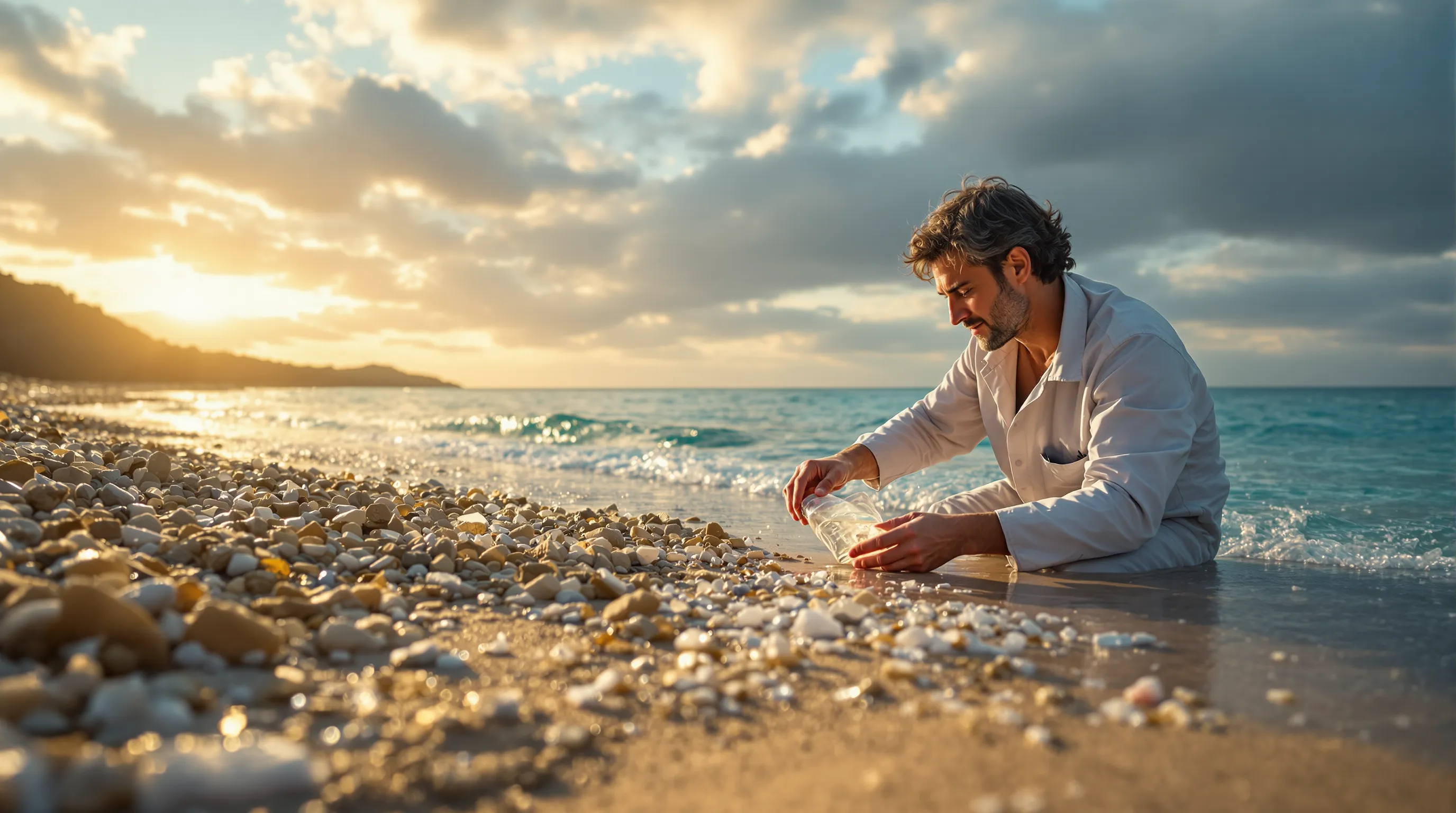
The first time I trailed a manta net behind my boat off Port-Cros, I was expecting plankton. Instead, I hauled up dozens of plastic fragments smaller than a grain of rice. That day, back in 2019, I realised the Mediterranean, an almost enclosed sea that concentrates a disproportionate share of the world's plastic waste, was hiding an invisible problem beneath its turquoise waters. Microplastics, those particles under 5 millimetres, are now found in the stomachs of dolphins, whales and even in the salt we consume. Understanding this phenomenon also means learning to better observe and protect the sea we love to visit.
What are microplastics, and why is the Mediterranean particularly affected?
Microplastics come from two sources: the breakdown of larger waste such as bags or bottles under the effect of sun and waves, and microbeads released from synthetic textiles, cosmetics and tyres. The Mediterranean, with its extremely slow water renewal rate (roughly 80 to 100 years for a full cycle via the Strait of Gibraltar), acts like a trap. Currents concentrate these particles in areas such as the Gulf of Lion, the Ligurian Sea and the Algero-Provençal basin. Scientific surveys carried out by Ifremer and the CNRS over the past decade or so show surface concentrations among the highest in the world, comparable to certain areas of the North Pacific. I've personally taken part in sampling trips off Fréjus and Toulon, where the nets regularly pulled up blue textile fibres and polystyrene fragments. These particles are invisible to the naked eye from a boat, which makes the issue tricky to communicate to visitors. Yet they enter the food chain from zooplankton upwards, moving on to fish, then to the cetaceans and seabirds that frequent the Pelagos Sanctuary, the protected zone between Provence, Monaco, Liguria and Corsica where fin whales, sperm whales and striped dolphins live.
The Pelagos Sanctuary, an area under close watch
Established in 1999 by France, Monaco and Italy, the Pelagos Sanctuary covers roughly 87,500 km² and is home to eight regularly sighted cetacean species. Monitoring programmes run by groups such as GIS3M or WWF France analyse the presence of microplastics in plankton and in the fatty tissue of stranded cetaceans. Results reveal widespread contamination, even among fin whales that feed by filtration dozens of kilometres offshore. This protected area nonetheless remains a fantastic place to watch wildlife whilst contributing, through onboard charities, to citizen science programmes.
Where to see the hotspots and ground-level initiatives in action
Several points along the French Mediterranean coast let you get to grips with the issue whilst enjoying active tourism. In Marseille, the Calanques National Park runs awareness trips where visitors help collect larger litter, the precursor to microplastics, on the beaches of Sormiou and Morgiou. In Six-Fours-les-Plages and La Ciotat, local charities such as Mer Terre offer workshops sorting and identifying washed-up waste, complete with educational breakdowns of how it decomposes. In Corsica, the Cargèse area and the Scandola Nature Reserve offer viewpoints where researchers from the University of Corte carry out regular sampling, sometimes open to accompanied groups. Near Port-Vendres and Collioure, the Gulf of Lion Marine Nature Park has run a dedicated microplastics monitoring programme since 2019, in partnership with local fishing activities. For visitors keen to spot cetaceans whilst learning about this issue, boat trips departing from Sanary-sur-Mer, Cassis or Antibes, run by operators holding the High Quality Whale Watching certification, now include an educational section on the plastic pollution observed at sea.
Ports committed to reducing plastic waste
Some Mediterranean ports, including Golfe-Juan, Saint-Raphaël and Bandol, have set up systems to collect floating litter directly within the harbour basins, limiting its breakdown into microplastics. These installations, often visible from the quaysides, come with explanatory signage. Visiting these ports offers a hands-on understanding of how waste travels from land to sea, and of the technical solutions already in place locally.
When to plan an awareness trip or wildlife-watching outing
The best time to combine cetacean watching with microplastics awareness runs from April to October in the western Mediterranean, with fin whale and dolphin sightings peaking between June and September as the waters warm and concentrate the plankton they feed on. Unfortunately, this is also when floating plastic waste becomes more visibly concentrated at the surface, driven by summer tourism combined with light winds that limit its dispersal. Spring, in April and May, offers calmer sea conditions and fewer tourists, ideal for less crowded participatory science trips. Autumn, in September and October, remains an excellent window too: the sea is still warm, cetaceans are well present within the Pelagos Sanctuary, and local charities often run their major annual clean-up campaigns before winter sets in. Avoid July and August if you're after an in-depth educational experience, as trips tend to be shorter and more focused on sightings than on environmental teaching. The winter months, from November to March, are less suitable due to unpredictable weather and the halt of most commercial boat trips, although some coastal scientific monitoring continues year-round.
How to organise a worthwhile and respectful experience
A trip combining cetacean watching with microplastics awareness requires little specific gear, but good preparation. Bring covering clothing and a cap, as glare off the sea is strong even on overcast days, plus a reusable water bottle rather than a plastic one, a small but symbolic gesture on board. These trips typically last two to four hours for standard watching, up to a full day for participatory programmes including sampling and workshops. No particular fitness level is required, though seasickness can strike: choose operators with stable vessels and check weather conditions before setting off. For families, several operators in Hyères, Cannes or Bandol adapt their explanations for children using hands-on teaching materials, such as samples of degraded plastic. It's best to book directly with certified charities or operators, checking their commitment to responsible watching charters. Some programmes, particularly those linked to the Pelagos Sanctuary, even let you take part in genuine scientific surveys supervised by marine biologists, a far richer experience than a standard tourist trip.
The minimum kit to bring
Beyond suitable clothing, bring binoculars for distant sightings, a camera with a zoom lens rather than a drone, which is often banned near cetaceans, and above all, patience. Reputable operators generally supply sampling equipment for microplastics workshops, such as sieves and sample bottles. Avoid carrying anything that might fall overboard, and ask about the zero-waste policy on board, an increasingly common feature among certified operators.
Practical tips and responsible tourism
Prices for this kind of trip vary depending on duration, whether the activity is participatory, and the operator's reputation: a short watching trip generally costs less than a full day including scientific workshops and provided sampling equipment. Always favour operators certified High Quality Whale Watching, an ACCOBAMS label that guarantees strict approach distances, generally at least 100 metres for large cetaceans, along with reduced speed on approach and a ban on ever encircling or chasing a group. Book ahead during peak season, as places on boats involved in scientific programmes are limited. On a personal level, a few simple habits multiply the positive impact: cutting single-use plastic before you even set off, choosing cosmetics free of microbeads, and reporting any sightings of floating litter to operators or via citizen apps like those used by WWF. Keeping quiet on board during sightings, never throwing anything overboard even if biodegradable, and financially supporting local clean-up charities are all concrete, lasting commitments to genuinely responsible whale-watching tourism.
Frequently asked questions
What exactly is a microplastic?
A microplastic is a plastic particle under 5 millimetres in size, either created by the breakdown of larger waste under the effect of sun and waves, or manufactured directly at that size, such as cosmetic microbeads or synthetic textile fibres released during washing.
Are Mediterranean dolphins really affected by microplastics?
Yes, studies carried out on cetaceans stranded within the Pelagos Sanctuary have detected microplastics in their digestive and fatty tissue. The exact impact on their health is still being studied, but widespread contamination of the marine food chain, from plankton right up to top predators, is now well documented.
Can tourists take part in scientific microplastics programmes?
Yes, several charities such as Mer Terre in the PACA region, or organisations linked to GIS3M, run participatory trips open to the public, including water sampling, sorting of washed-up debris and guided awareness sessions led by marine biologists, generally between April and October.
What's the minimum distance to keep from dolphins or whales?
ACCOBAMS regulations and the High Quality Whale Watching certification recommend a minimum distance of around 100 metres for large cetaceans, a side-on and gradual approach, reduced speed, and a strict ban on encircling or separating a group, particularly when calves are present.
Where can you actually see the impact of microplastics along the Mediterranean coast?
The beaches of the Calanques National Park near Marseille, the coastline around Six-Fours-les-Plages, and the areas within the Gulf of Lion Marine Nature Park near Port-Vendres all offer guided viewpoints and workshops where you can directly identify washed-up plastic fragments and textile fibres.
Microplastics remain invisible from the deck of a boat, yet their presence within the Pelagos Sanctuary is a reminder that the Mediterranean's turquoise beauty hides a very real fragility. Watching a fin whale or a striped dolphin today also carries a responsibility: choosing committed operators, cutting your own plastic footprint, and supporting the scientific programmes documenting this phenomenon. At dolphin-mediterranee.com, we hand-pick certified trips and local initiatives that combine respectful wildlife watching with genuine commitment to the sea we all share.
Read also
Fin Whales in the Mediterranean: 7 Truths About This Giant That Fascinates Scientists
Discover the fin whale in the Mediterranean: the Pelagos Sanctuary, best times t...
The Legendary Mediterranean Route: What a Well-Planned Coastal Road Trip Reveals
Discover the complete itinerary for a French Mediterranean coastal road trip: st...
Sète and the Thau Lagoon: secrets of a territory between sea and lagoon
Discover Sète and the Thau lagoon: harbours, oysters, coves and marine wildlife....
Common Dolphins of the Mediterranean: 7 Secrets Local Sailors Don't Tell You
Discover where and when to spot common dolphins in the Mediterranean, their real...