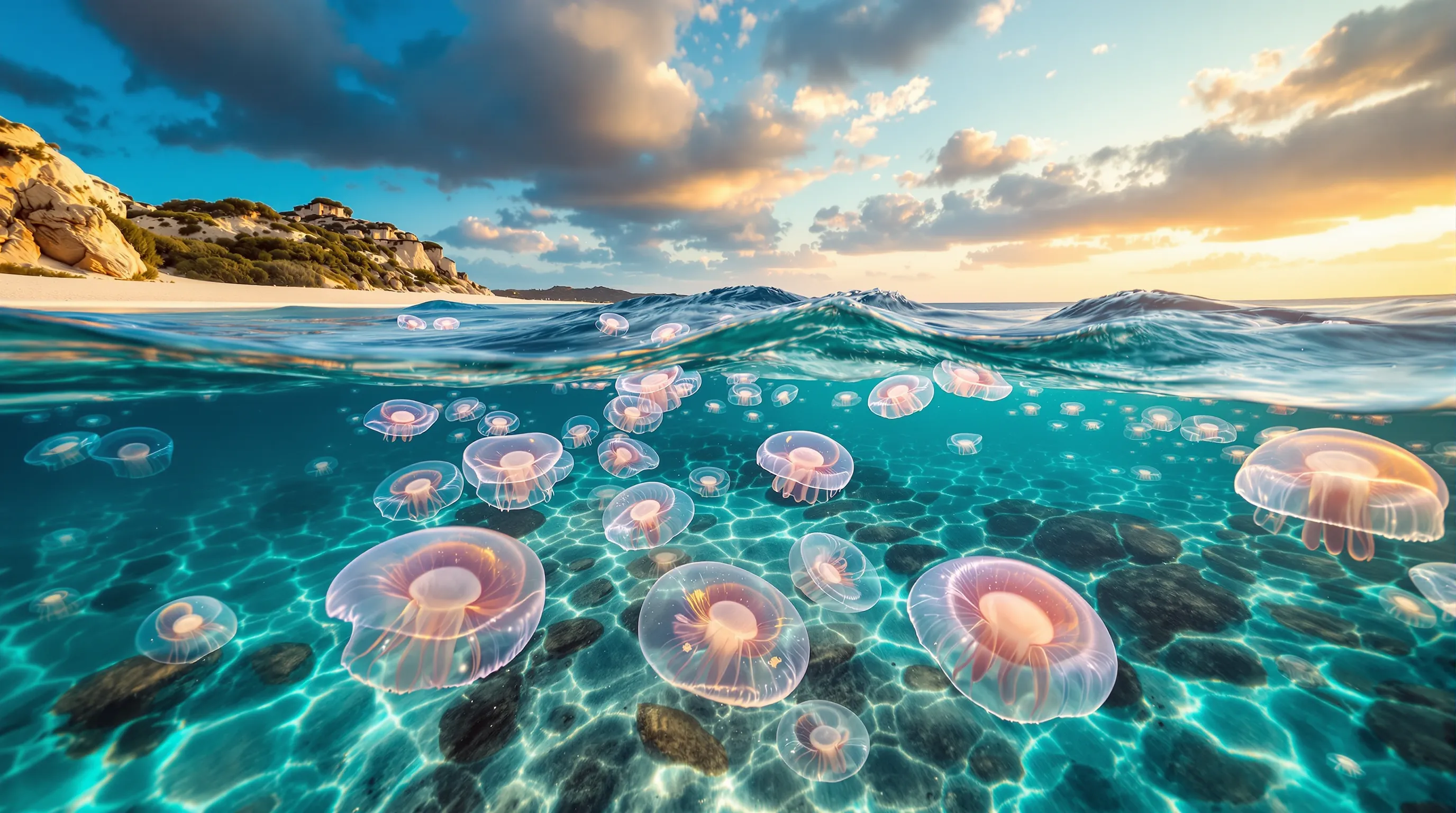
7 Things You Didn't Know About Mediterranean Jellyfish Before Your Holiday
Each summer, over 200 million tourists discover Mediterranean waters, yet 15% of them suffer jellyfish stings. These fascinating creatures, present for 500 million years, are colonising our shores with increasing intensity. Pelagia noctiluca, Rhizostoma pulmo or Aurelia aurita: understanding these species becomes essential for enjoying your holidays peacefully. Between climate change and overfishing, jellyfish populations are exploding, turning certain beaches into real challenges for savvy swimmers.
Main Mediterranean Jellyfish Species
The Mediterranean is home to around fifteen jellyfish species, but four dominate coastal waters. Pelagia noctiluca, nicknamed the 'mauve stinger', measures 10cm and causes the most painful stings with its 10-metre tentacles. Rhizostoma pulmo, a blue-white giant reaching 60cm, remains generally harmless despite its impressive size. Aurelia aurita, translucent and common, causes mild but frequent irritation. Finally, Chrysaora hysoscella, recognisable by its brown stripes, appears sporadically but causes intense burns. These species follow complex reproduction cycles influenced by water temperature, marine currents and plankton food availability, explaining their spectacular periodic invasions.
How to Identify a Dangerous Jellyfish
Observe colour and size: transparent or whitish jellyfish are generally less stinging than coloured specimens. Long, visible tentacles signal high danger. Be wary of jellyfish washed up on sand - they remain stinging for several hours after death.
High-Risk Periods and Areas in the Mediterranean
Jellyfish invasions follow a predictable calendar: peak between July and September when temperatures exceed 24°C. The western Italian coast, Gulf of Lion and Balearics record the highest densities, sometimes reaching 500 individuals per cubic metre. Easterly winds massively push these populations towards beaches, creating spectacular 'blooms'. Exceptional years like 2013 or 2018 saw beaches closed for weeks. Port areas and enclosed bays concentrate more jellyfish than coasts exposed to currents. Weather monitoring becomes crucial: check specialist bulletins before each swim, particularly after storms which alternately disperse and concentrate these organisms according to prevailing winds.
First Aid and Sting Treatment
If stung, exit the water immediately without rubbing the affected area. Gently remove visible tentacles with tweezers, never with bare hands. Rinse thoroughly with warm seawater (never fresh water which activates nematocysts). Apply white vinegar for 30 seconds to neutralise remaining stinging cells. Cold provides temporary relief: ice cubes in cloth for maximum 10 minutes. Oral anti-inflammatories reduce swelling and pain. Seek medical attention quickly if experiencing breathing difficulties, nausea or if pain persists beyond 24 hours. Severe allergic reactions require immediate hospitalisation: some individuals develop potentially fatal anaphylactic shock.
Mistakes to Absolutely Avoid
Never rub with sand, don't apply alcohol or ammonia which worsen burns. Urine, contrary to popular belief, intensifies pain. Avoid fresh water and ice directly on skin. Don't scratch blisters which may become secondarily infected.
Practical Tips for Peaceful Holidays
Choose destinations according to specialist forecasts: apps like 'Jellyfish Forecast' or marine monitoring websites provide real-time alerts. Favour supervised beaches with equipped first aid stations. Wear light wetsuits or UV-protective clothing which effectively protect against contact. Plan swimming early morning or late afternoon when photosensitive jellyfish descend to depth. Rocky areas and coves present less risk than sandy beaches. Pack a first aid kit with white vinegar, anti-inflammatories and cold compresses. Travel insurance generally covers jellyfish sting treatment - check your cover before departure to avoid nasty financial surprises.
Frequently asked questions
When are there most jellyfish in the Mediterranean?
Jellyfish invasions peak between July and September, particularly when water temperature exceeds 24°C. Easterly winds favour their concentration near shores. Check marine weather bulletins before each swim to anticipate their massive presence.
Are Mediterranean jellyfish dangerous to humans?
Most Mediterranean species cause painful but rarely serious irritation. Only Pelagia noctiluca causes intense burns sometimes requiring medical care. Severe allergic reactions remain exceptional but can be fatal in sensitive individuals.
How can I avoid jellyfish stings on holiday?
Wear light protective clothing, swim early morning or late evening, avoid enclosed bays after storms. Monitor local alerts and choose beaches with medical supervision. UV suits offer effective protection without hindering swimming.
Understanding Mediterranean jellyfish transforms your approach to seaside holidays. This knowledge enables you to choose the right periods, destinations and precautions to enjoy turquoise waters peacefully. To discover other Mediterranean wonders safely, explore our expert guides on dauphin-mediterranee.com and plan your next coastal escapes with confidence.
Read also
How These Travellers Are Transforming Their Mediterranean Holidays Into Ecological Missions
Discover how to practice responsible tourism in the Mediterranean: eco-diving, w...
These 20-metre giants hiding in our Mediterranean waters will amaze you
Discover the secrets of sperm whales in the Mediterranean: observation zones, fa...
What you didn't know about fin whales, the Mediterranean giants that captivate
Discover fin whales, the world's second-largest marine mammals, thriving in Medi...
Why Mediterranean Fishermen Jealously Guard These 7 Ancestral Recipes
Discover the culinary secrets of the Mediterranean coast: traditional fish recip...