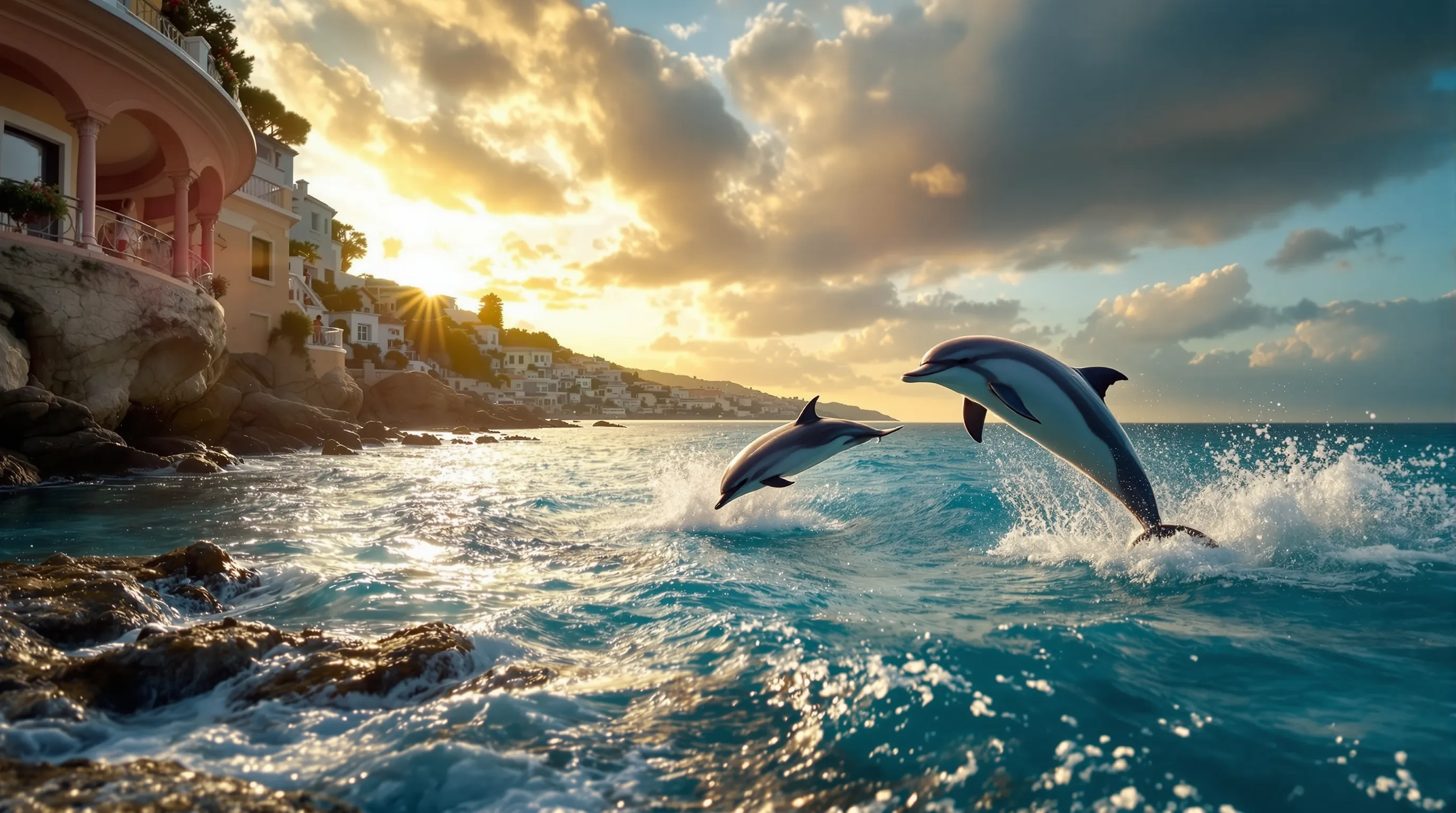
How Wildlife Cruises from Nice Reveal Hidden Mediterranean Treasures
Off the coast of Nice lies the Pelagos Sanctuary, a protected marine area spanning 87,500 km² and home to 25 species of marine mammals. This exceptional zone, established in 1999 by France, Monaco and Italy, boasts the highest concentration of cetaceans in the Mediterranean. Wildlife cruises departing from Nice harbour offer opportunities to observe striped dolphins, sperm whales, and pilot whales in their natural habitat. More than 15,000 passengers embark annually on these eco-responsible excursions guided by marine biologists.
The Pelagos Sanctuary: A Unique Global Ecosystem
The Pelagos Sanctuary owes its exceptional richness to particular oceanographic conditions. The Ligurian-Provençal-Catalan current creates upwelling that brings nutrients from the depths, encouraging plankton development. This food abundance attracts krill and small fish, forming the base of the marine food chain. Underwater canyons, veritable biological motorways, channel these resources towards the surface. The area features depths reaching 2,600 metres just 30 kilometres from shore. This close proximity between land and deep sea is rare in the Mediterranean and explains the exceptional concentration of large pelagic species within easy reach of Nice.
Flagship Species You Can Observe
Fifteen cetacean species regularly frequent the sanctuary waters. Striped dolphins, spotted on 85% of trips, travel in groups of 10 to 30 individuals. Sperm whales, present year-round, dive up to 1,000 metres to hunt squid. Cuvier's beaked whales, long-finned pilot whales and Risso's dolphins complete this exceptional biodiversity accessible from Nice.
Trip Details and Wildlife Watching Guarantees
Wildlife excursions last between 2.5 and 6 hours depending on chosen packages. Departures operate from Nice's Port Lympia aboard stabilised catamarans accommodating 12 to 50 passengers maximum. A marine biologist guide accompanies each excursion, using hydrophones to detect cetacean communications. Success rates for sightings reach 95% between April and October, the optimal period when seas are calm and visibility excellent. Operators follow the Pelagos Charter: slow approach maintaining 100 metres minimum distance, engines at idle speed, observation limited to 15 minutes per animal group to minimise disturbance.
Professional Observation Techniques and Equipment
Vessels are equipped with professional scientific kit: stabilised marine binoculars, directional hydrophones to capture cetacean echolocation, sonar for seabed mapping. Guides use GPS applications to document each sighting and contribute to scientific databases. Observation takes place from elevated platforms offering 360° panoramic views. Audio systems allow passengers to hear dolphin and whale vocalisations. Collaboration with CEFE-CNRS research centres and the University of Nice contributes to Mediterranean marine mammal population monitoring programmes.
Naturalist Guide Training
All guides hold degrees in marine biology or oceanography. They undergo continuous training in species identification, respectful approach techniques and Pelagos Sanctuary regulations. This expertise guarantees precise scientific explanations and ethical approaches to wild marine wildlife observation.
Practical Tips to Optimise Your Experience
Prices range from £30 for a 2.5-hour trip to £75 for a full day including meals. Book 48 hours in advance during peak season (July-August). The best observation conditions occur between 9am and 11am when seas are calm and animals active. Pack biodegradable sun cream, hat, windproof jacket and preventive seasickness tablets. Trips are cancelled in seas above Force 4 (1.25m swell). Full refunds are guaranteed for weather-related cancellations. Choose small groups (12-20 people) for better observation quality and reduced wildlife impact.
Frequently asked questions
What's the best time to observe cetaceans from Nice?
The optimal period runs from April to October with peaks in May-June and September. Weather conditions are then favourable with calm seas and excellent visibility. Success rates reach 95% during this period, compared to 70% in winter when conditions are more challenging.
How much does a wildlife cruise from Nice cost and what's included?
Prices vary from £30 for 2.5 hours to £75 for a full day. The price includes marine biologist accompaniment, binocular loan, hydrophone use and contribution to research programmes. Longer trips generally include onboard meals and refreshments.
How does a dolphin and whale watching trip actually work?
Departure from Port Lympia, navigation to observation zone (30-45 minutes), active searching with hydrophones and visual watch, respectful animal approach following Pelagos Charter, guided observation by marine biologist, return journey with scientific debriefing. Total duration: 2.5 to 6 hours depending on package.
Wildlife cruises from Nice offer a privileged window into one of the Mediterranean's richest marine ecosystems. This unique experience combines wonder with marine conservation awareness. To book your respectful cetacean watching trip, check available programmes and contribute to preserving this exceptional natural heritage.
Read also
7 secrets captains reveal for whale watching in the Mediterranean
Discover where and when to spot whales in the Mediterranean with exclusive tips ...
5 Secret Cruises Locals Keep to Themselves on the French Riviera
Discover 5 confidential cruises on the French Riviera that only insiders know ab...
What Marine Biologists Reveal During Mediterranean Sea Trips
Discover Mediterranean secrets with marine biologists: dolphin watching, underwa...
What Divers Keep Secret About Mediterranean Snorkelling Spots
Discover the 10 Mediterranean snorkelling spots that experts jealously guard. Cr...