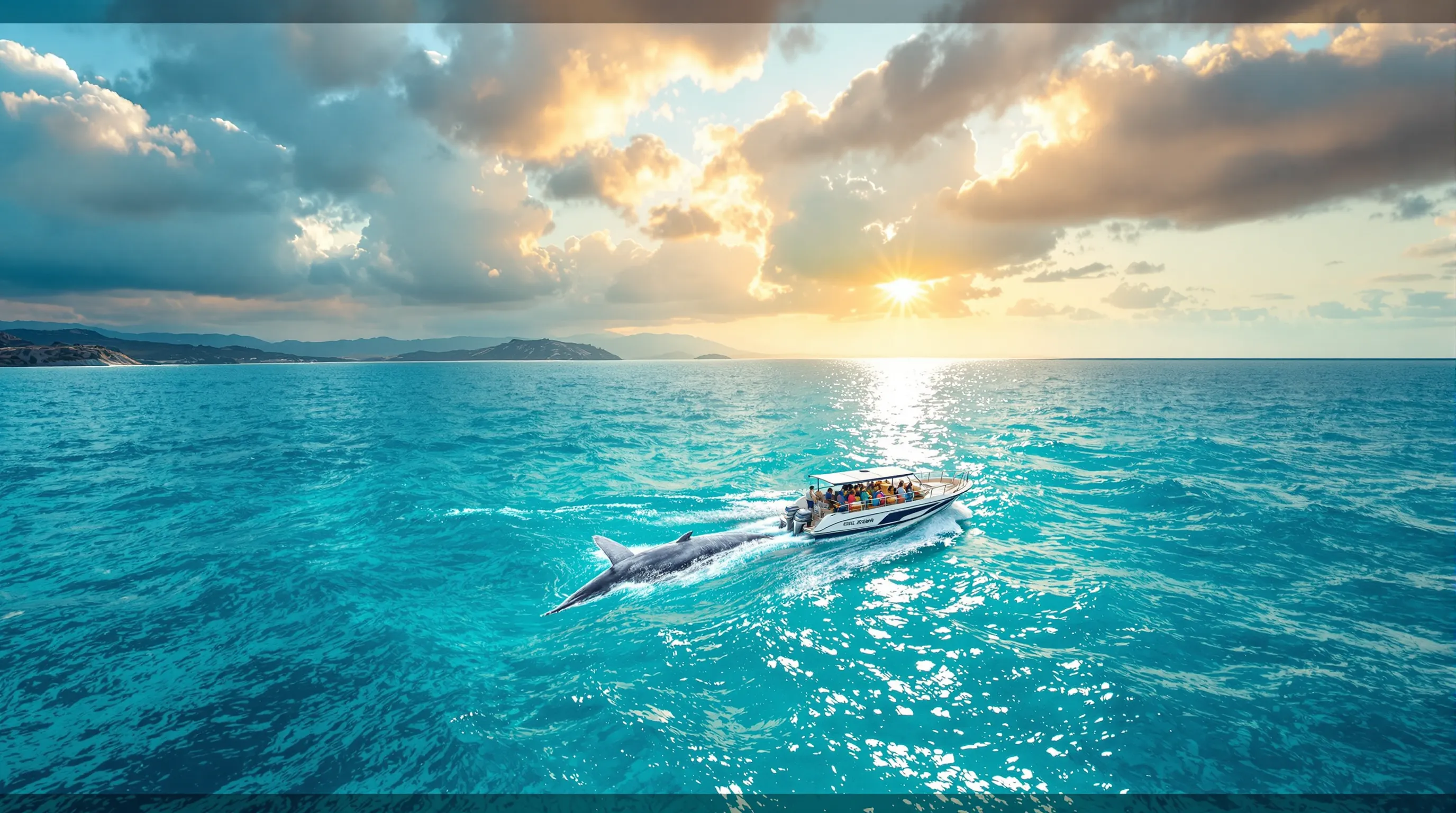
7 secrets captains reveal for whale watching in the Mediterranean
The Mediterranean is home to a permanent population of 8,500 fin whales, making this enclosed sea one of Europe's finest spots for cetacean watching. The international Pelagos Sanctuary, spanning 87,500 km², protects 12 whale species between France, Monaco and Italy. Each year, over 150,000 visitors embark from French Riviera ports to experience this unique adventure. The deep waters of the Roya submarine canyon offer exceptional viewing conditions, with a 95% success rate between June and September.
The best viewing spots revealed by professionals
The Roya Canyon, 12 nautical miles from Nice, ranks as the number one spot according to experienced skippers. This 2,500-metre deep abyssal trench concentrates the krill that fin whales feed upon. From Antibes, the 1,000-metre depth zone offers 90% observation chances during peak season. The Sanremo sector has the advantage of being accessible in just 45 minutes' sailing. Monégasque waters, protected by the Albert II Foundation, guarantee respectful encounters with sperm whales and pilot whales. Port-Cros and its surroundings allow observation of humpback whales during their autumn migration. Professionals particularly recommend the area between 43°30'N and 7°30'E to maximise success chances.
Roya Canyon: the essential hotspot
Located at the intersection of French and Italian waters, this submarine canyon plunges dramatically to over 2,000 metres. Cold water upwellings rich in nutrients create a unique ecosystem where fin whales, sperm whales and striped dolphins thrive. Morning excursions offer the best viewing conditions with generally calmer seas.
Optimal calendar: when to plan your excursion
The period from May to October offers ideal conditions with constant cetacean presence. June and July present peak activity with daily fin whale sightings. Sperm whales frequent the area from June to September, with maximum presence in August. September remains exceptional for observing pilot whales in family pods. Favourable weather conditions (winds below 15 knots) concentrate on this summer period. Morning departures between 8am and 10am maximise chances thanks to frequently glassy seas. Avoid July-August weekends when recreational boat traffic may disturb the animals. May and October offer an excellent compromise between cetacean presence and peaceful observations, with reduced rates of 20 to 30%.
Observable species and behaviours to recognise
The fin whale, a 20-metre giant, is recognisable by its cone-shaped blow and backwards-curved dorsal fin. It typically performs 3 to 5 breaths before diving for 8 to 15 minutes. The sperm whale, identifiable by its characteristic oblique blow, can remain submerged for 45 minutes whilst hunting giant squid. Striped dolphins move in groups of 20 to 200 individuals, offering unforgettable acrobatic displays. Pilot whales, recognisable by their bulbous heads, swim in tight family formations. Risso's dolphin, rarer, is distinguished by its light grey colour and scarring. Long-finned pilot whales frequent deep waters, often accompanied by striped dolphins. Each species presents specific warning signs allowing anticipation of their surface appearance.
Decoding cetacean approach signals
Seabirds make excellent indicators: gannets and Cory's shearwaters signal the presence of fish shoals attractive to cetaceans. Observing water spouts or disturbances in the distance often heralds the arrival of a dolphin pod. Skippers also watch for variations in water colour, revealing currents rich in plankton.
Practical tips for a successful outing
Budget between £40 and £55 for a 3.5-hour excursion from French ports, £30 to £45 from Italy. Book 48 hours in advance during peak season to guarantee your spot on the finest vessels. Choose boats with 12 passengers maximum for optimal comfort and respectful approaches. Bring sun cream, a hat, warm clothing and sea-sickness remedies even in fine weather. 8x32 binoculars prove essential for spotting distant blows. Select a seat amidships to minimise motion. Hydrophones allow listening to cetacean songs, considerably enriching the experience. Respect regulatory distances of minimum 100 metres. 4-hour excursions generally include refreshments and drinks. Check weather conditions 24 hours beforehand: swells above 1.5m seriously compromise observations.
Frequently asked questions
What's the best time to see whales in the Mediterranean?
From May to October, with peak sightings in June-July. Fin whales are present year-round, but summer offers the finest weather conditions. September remains excellent for pilot whales, whilst sperm whales mainly frequent the area from June to September.
Which French port should I depart from for whale watching?
Nice, Antibes, Cannes and Saint-Raphaël offer regular excursions to the Pelagos Sanctuary. Nice provides the most direct access to Roya Canyon (45 minutes' sailing). Antibes presents a good compromise with numerous professional operators. Avoid ports too far away that unnecessarily extend sailing time.
How much does a Mediterranean whale watching excursion cost from France?
Between £40 and £55 for a 3.5-hour excursion from French ports. Prices vary by season (20% cheaper in May-June), boat size and included services. Budget £30 to £45 from Italian ports like Sanremo. Private excursions start at £350 for 8 people.
Whale watching in the Mediterranean represents a unique experience accessible to all. The Pelagos Sanctuary offers exceptional sighting guarantees with strict respect for marine wildlife. To discover other marvels of Mediterranean cetaceans, explore our specialised guides on dauphin-mediterranee.com and plan your next encounter with these ocean giants.
Read also
5 Secret Cruises Locals Keep to Themselves on the French Riviera
Discover 5 confidential cruises on the French Riviera that only insiders know ab...
What Marine Biologists Reveal During Mediterranean Sea Trips
Discover Mediterranean secrets with marine biologists: dolphin watching, underwa...
What Divers Keep Secret About Mediterranean Snorkelling Spots
Discover the 10 Mediterranean snorkelling spots that experts jealously guard. Cr...
7 Truths About Mediterranean Sharks That Divers Keep Quiet
Discover the truth about Mediterranean sharks: real species, risks, and location...