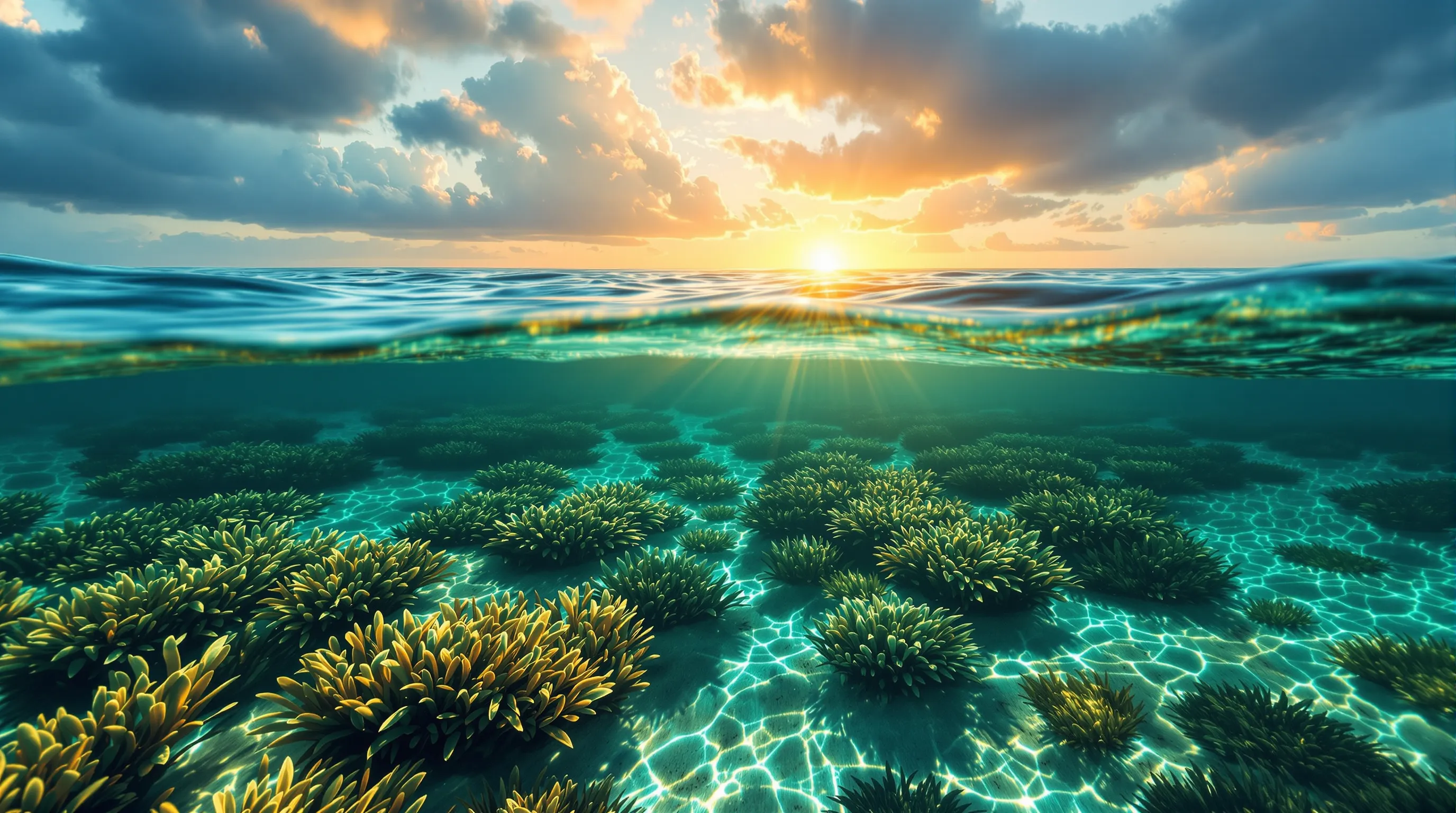
Why These Underwater Meadows Transform the Mediterranean into a Blue Oasis
Posidonia seagrass meadows cover 38,000 km² across the Mediterranean, an area equivalent to Switzerland. These underwater prairies, often overlooked, produce 20 litres of oxygen per day per square metre, outperforming terrestrial forests. Over 100,000 years old, they constitute the most productive ecosystem in our sea. Yet 34% of these meadows have vanished since 1960, victims of climate change and human activities. Understanding their vital role transforms our vision of the Mediterranean and reveals why their protection determines the future of our coastlines.
A Millennial Ecosystem with Outstanding Performance
Posidonia (Posidonia oceanica) forms unique underwater meadows exclusive to the Mediterranean. These marine plants—not algae—possess roots, stems and leaves like terrestrial vegetation. They grow 1 to 6 cm annually, creating rhizomes that can reach 15 metres in thickness. A meadow produces up to 14 tonnes of oxygen per hectare yearly, 2.5 times more than an oak forest. These prairies shelter 400 plant species and 1,000 animal species, representing 25% of Mediterranean biodiversity. Their carbon storage capacity reaches 650 tonnes per hectare, making them genuine natural carbon sinks.
Record-Breaking Environmental Performance
Each square metre of Posidonia filters 150 litres of seawater daily, removing particles and pollutants. Dead leaves form natural barriers protecting beaches from erosion. This natural rampart can reach 2 metres in height and withstand the most violent winter storms.
Coastal Protection and Climate Regulation
Posidonia meadows act as natural shock absorbers, reducing wave force by 70%. Their rhizomes stabilise seabeds to a depth of 40 metres, preventing coastal erosion. Without this protection, 15% of Mediterranean beaches would disappear within 20 years. The prairies also regulate marine temperature, creating cool zones essential during heatwaves. By absorbing 83kg of CO2 per square metre annually, they actively participate in combating climate change. Their presence maintains temperatures 2°C cooler locally, offering refuge to numerous species threatened by warming. This natural thermoregulation directly influences coastal meteorology.
Marine Nursery and Exceptional Biodiversity
80% of Mediterranean commercial fish depend on these meadows for reproduction. These prairies serve as nurseries for 400 fish species, including grouper, sea bream and sea bass. Their 120cm-long leaves provide shelter and food for countless invertebrates. One hectare of meadow houses up to 350,000 different organisms. Seahorses, emblems of these ecosystems, cling to leaves whilst hunting their prey. These prairies produce 3 tonnes of organic matter per hectare annually, feeding the entire Mediterranean food web. Their disappearance would cause the collapse of the marine food chain, directly affecting fishing and the Mediterranean coastal economy.
Protected Emblematic Species
Noble pen shells, giant molluscs reaching 120cm, live exclusively in these meadows. These shellfish, unfortunately facing extinction, play a crucial role as natural filters. Sea turtles, dolphins and grouper use these prairies as prime hunting grounds.
Practical Tips for Observing and Protecting
Observing meadows requires mask and snorkel in shallow waters of 3 to 15 metres. The best periods extend from May to October, with optimal visibility in June-September. Avoid wild anchoring: one anchor strike destroys 5 square metres of century-old prairie. Choose ecological moorings or permanent buoys installed by councils. Respect the 300-metre distance with motor boats in protected zones. When diving, maintain perfect buoyancy to avoid damaging these fragile ecosystems. Participate in citizen science by reporting observations on apps like iNaturalist. Choose sun creams without nanoparticles, harmful to these marine plants sensitive to chemical pollution.
Frequently asked questions
Where can one observe Posidonia meadows in the Mediterranean?
The meadows are visible in clear waters from 3 to 40 metres depth. The finest spots include the Calanques near Marseille, Port-Cros, the French Riviera, Corsica, the Balearics and the Catalan coast. Avoid polluted harbour areas.
Why are Posidonia meadows threatened with extinction?
Climate change, wild anchoring, pollution and coastal development destroy 5% of meadows annually. Sewage discharge and eutrophication favour competing algae. Ocean acidification also weakens these century-old vulnerable ecosystems.
How do Posidonia meadows protect beaches from erosion?
Dead leaves form natural barriers on beaches, absorbing wave energy. Underground rhizomes stabilise marine sediments. This dual protection reduces coastal erosion by 80%, naturally preserving the Mediterranean coastline without artificial intervention.
Posidonia meadows reveal all the hidden wealth of the Mediterranean. These underwater prairies, the true blue lungs of our sea, determine the future of our coasts and their biodiversity. Their urgent protection requires collective awareness and simple gestures during our sea outings. Discover other Mediterranean marvels on mediterranean-dolphin.com and participate in preserving this exceptional natural heritage.
Read also
Secret Corsican marine spots that even locals keep hidden will take your breath away
Discover Corsica's secret marine spots that even locals prefer to keep to themse...
What Expert Divers Do to Explore Mediterranean Wrecks
Discover the secret techniques expert divers use to safely explore Mediterranean...
These 7 Diving Secrets in the Calanques That Marseille Locals Keep Hidden
Discover the hidden diving spots of Marseille's Calanques, expert tips and under...
Why These 7 Mediterranean Harbours Will Transform Your Coastal Travel Experience
Discover 7 authentic Mediterranean harbours where maritime tradition and natural...