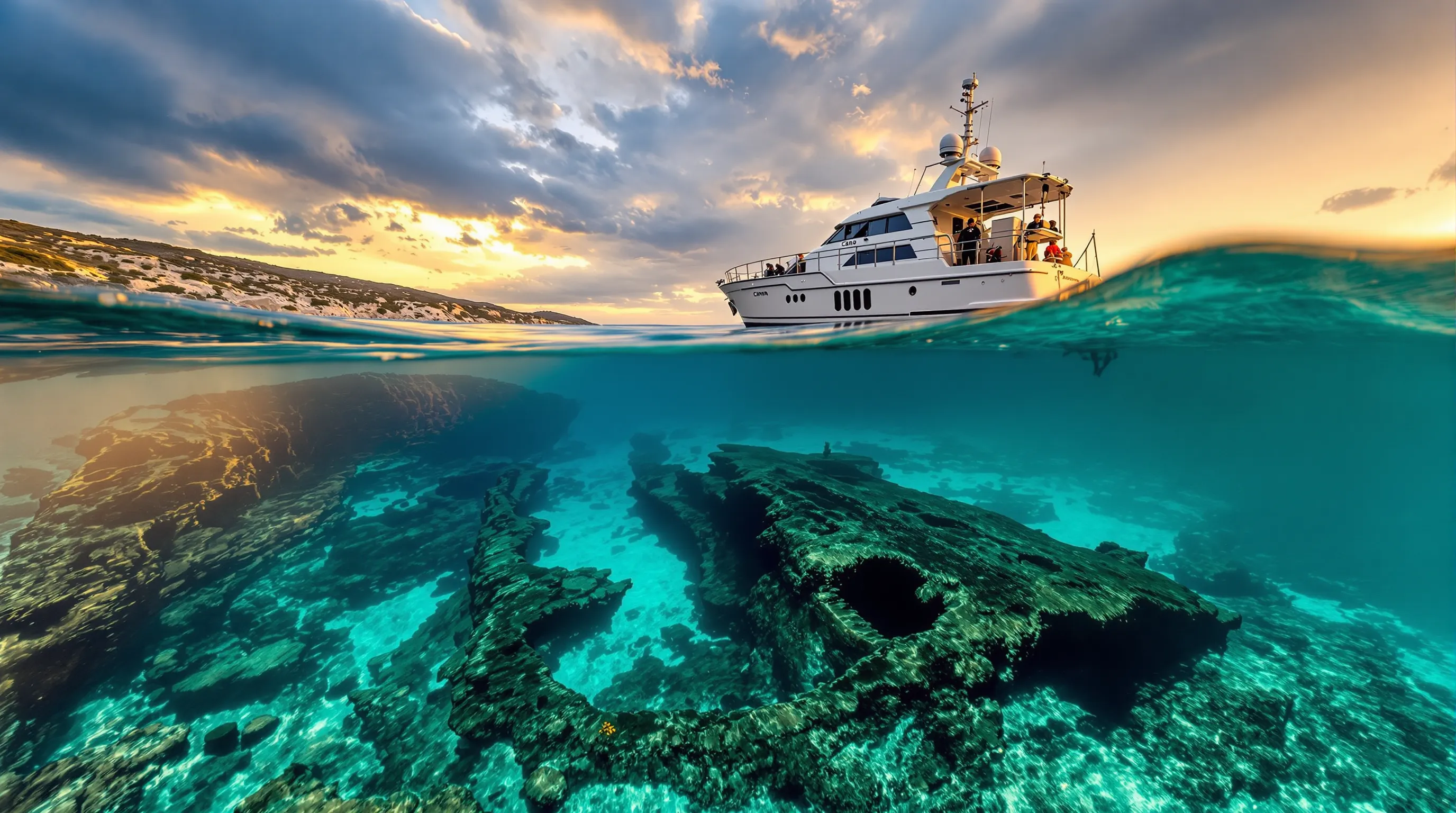
What Expert Divers Do to Explore Mediterranean Wrecks
The Mediterranean Sea harbours over 3,000 documented wrecks, genuine underwater museums that fascinate divers from around the globe. From Roman galleys to Second World War vessels, these exceptional sites offer a plunge into maritime history. Exploring these wrecks requires rigorous technical preparation and in-depth knowledge of local conditions. Between the French Riviera, Corsica and the Italian islands, discover how experts approach these extraordinary dives that transform each immersion into an authentic journey through time.
Essential Wrecks of the Western Mediterranean
The Donator off Port-Cros remains the quintessential legendary wreck, sunk in 1945 at 51 metres depth. Her intact structure allows complete exploration of the 78-metre cargo vessel. In Corsica, the wreck of La Superbe offers a striking spectacle at 40 metres, whilst the Togo near Toulon captivates with her imposing dimensions. The Italian coastline reveals treasures like the Elviscot wreck near Imperia. Each site presents specific challenges related to depth, currents and state of preservation. Experts favour a progressive approach, beginning with accessible wrecks before venturing onto the most technical sites.
Site Selection Criteria for Wreck Sites
Visibility constitutes the determining factor, varying between 10 and 40 metres depending on weather conditions. Marine currents, particularly intense near headlands and islands, dictate optimal diving windows. The state of preservation directly influences safety, with certain fragile structures requiring particular precautions during penetration.
Specialised Diving Techniques for Wreck Exploration
Wreck exploration demands perfect mastery of buoyancy control to avoid damaging fragile structures. Experienced divers use powerful torches of 3000 lumens minimum and redundant backup lights. The guide line technique remains indispensable for penetrations, allowing easy location of the exit even in reduced visibility. Computer planning with specialised software precisely calculates decompression stops according to depth and duration. Enriched gas mixtures such as Nitrox allow extended bottom times whilst reducing decompression stops. This technical approach transforms each exploration into a quasi-scientific mission.
Specialised Equipment and Safety Measures
Technical equipment must include two independent regulators and a buoyancy compensator with dual bladder system. Specialised dive computers automatically calculate decompression stops according to the gas mixture used. A knife and shears allow escape from potential ghost nets. A thick wetsuit of minimum 7mm protects against cold and cuts in narrow passageways. Reinforced gloves preserve hands during manipulations. This technical kit, representing an investment of £2,500 to £4,500, guarantees the autonomy and safety indispensable for these demanding dives that push the boundaries of recreational diving.
Emergency Protocols Specific to Wrecks
Each buddy pair establishes an emergency ascent plan with defined rendezvous points. Communication through light signals effectively replaces hand signals in the darkness of holds. A buoy signalling system allows surface alerting in case of problems, a crucial element during deep dives.
Practical Tips for Organising Your Wreck Dives
The ideal season extends from April to October, with optimal visibility in May and September. Specialist centres offer wreck packages from £240 to £380 for four guided dives. Advanced Open Water certification constitutes the minimum requirement, but specific technical training is strongly recommended. Trips are generally organised over two days to optimise decompression intervals between dives. Advance booking of minimum 15 days is essential during high season. Mediterranean weather conditions allow up to 200 diving days per year, with preferred slots early morning to avoid afternoon winds that degrade surface conditions.
Frequently asked questions
What certification level is required to dive Mediterranean wrecks?
Advanced Open Water Diver level constitutes the minimum requirement for most wrecks. However, deep sites like the Donator require Deep Diver certification and minimum 50 dives experience. Specialised Wreck Diver training is highly recommended to master safe penetration techniques.
How much does a Mediterranean wreck diving trip cost?
A guided wreck dive costs between £55 and £75 depending on the site and depth. Four-dive packages range from £240 to £380. Additional costs include specialised equipment hire (£35-50 per day) and potentially enriched gas mixtures (£12 supplement per cylinder).
What's the best time to dive Mediterranean wrecks?
The optimal period extends from May to September with maximum visibility reaching 40 metres. Spring offers cooler water but exceptional visibility. Autumn combines pleasant temperatures with stable weather conditions. Winter remains practicable but requires enhanced thermal protection.
Exploring Mediterranean wrecks represents the pinnacle of technical diving, combining maritime history with sporting challenge. These underwater cathedrals offer unique experiences to prepared and equipped divers. To discover the secrets of the Mediterranean's Grande Bleue and organise your next underwater adventures, consult the specialist resources at dauphin-mediterranee.com.
Read also

These 7 Diving Secrets in the Calanques That Marseille Locals Keep Hidden
Discover the hidden diving spots of Marseille's Calanques, expert tips and under...
Why These 7 Mediterranean Harbours Will Transform Your Coastal Travel Experience
Discover 7 authentic Mediterranean harbours where maritime tradition and natural...
What Expert Boaters Do in Antibes for Unique Nautical Thrills
Discover exclusive nautical activities in Antibes and its peninsula: diving, sai...

What Chefs Keep Secret About Mediterranean Coastal Culinary Treasures
Discover the secrets of Mediterranean coastal cuisine: ancient techniques, excep...