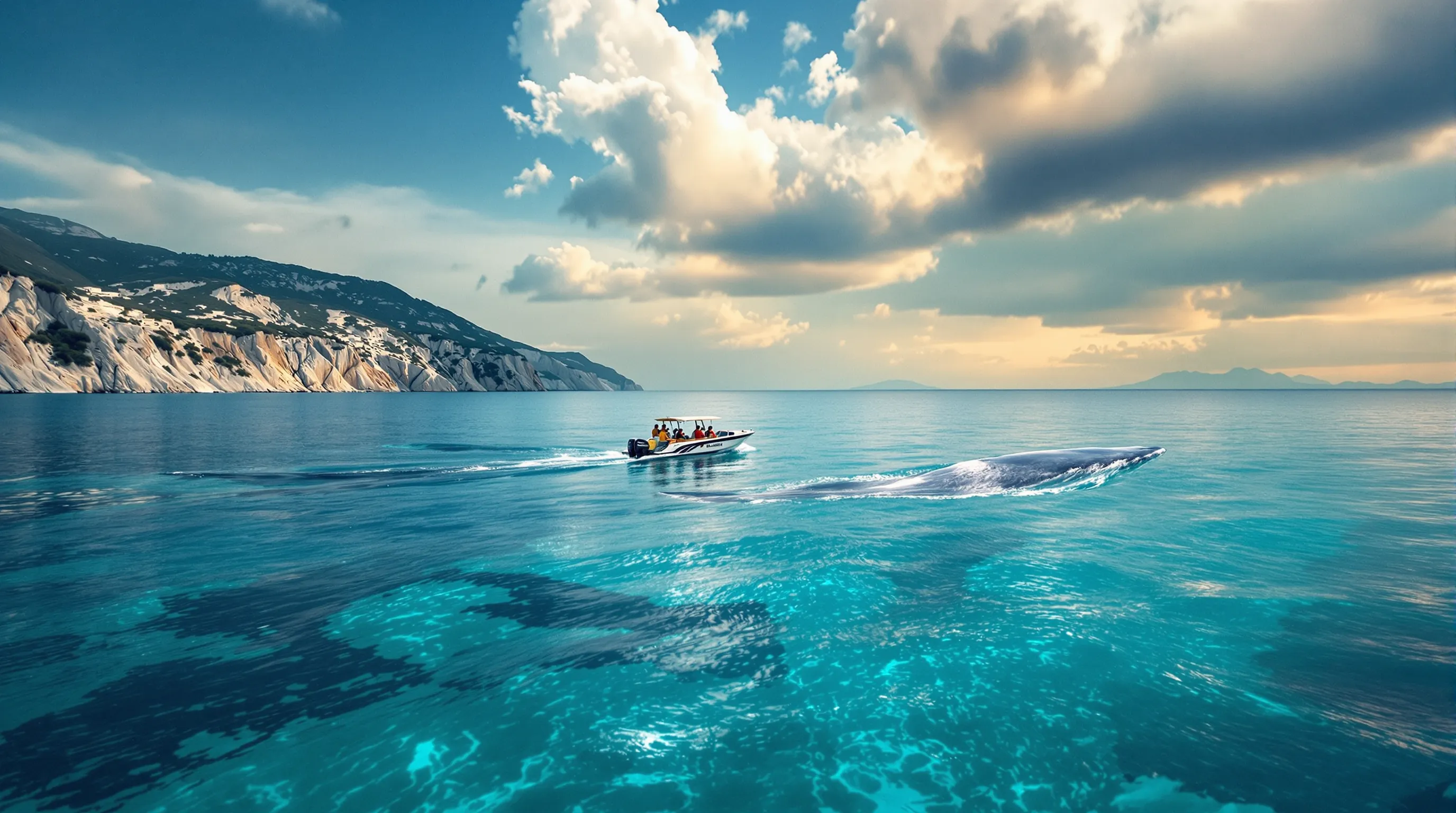
Pelagos Sanctuary: What This Secret Mediterranean Whale Refuge Reveals
The first time I saw a fin whale's blow burst from the water off Toulon, I understood why this stretch of the Mediterranean deserves special status. The Pelagos Sanctuary, established in 1999 between France, Monaco and Italy, protects nearly 87,500 km² of sea where eight species of cetaceans cross paths, from the small striped dolphin to the majestic fin whale, the second-largest animal on Earth after the blue whale. Few visitors realise that this very real, clearly mapped area can be reached from ports just half a day's boat ride away, provided you know the right season and the right operators.
What exactly is the Pelagos Sanctuary
The Pelagos Sanctuary is an international agreement signed in 1999 between France, Monaco and Italy, dedicated to protecting marine mammals in the north-western Mediterranean. It stretches from the Giens peninsula in the Var to Tuscany, taking in the Ligurian Sea and a broad band of the Gulf of Lion. This area boasts remarkable biodiversity thanks to the underwater canyon running along the coast, which generates upwellings of cold, nutrient-rich water, and therefore krill and small fish, the preferred food of fin whales, most commonly seen in summer. You might also spot sperm whales, bottlenose dolphins, striped dolphins, long-finned pilot whales and, more rarely, Cuvier's beaked whale, an elusive and poorly documented species. Sanctuary status doesn't mean the area is closed off to the public: it's a management framework that regulates shipping, scientific research and tourist observation to limit disturbance to the animals.
The eight iconic species to look out for
Fin whale, sperm whale, striped dolphin, bottlenose dolphin, Risso's dolphin, long-finned pilot whale, Cuvier's beaked whale and, occasionally, humpback whales passing through on migration. The fin whale remains the species most sought after by visitors, mainly spotted between June and September off Nice, Cannes or Toulon. Sperm whales, meanwhile, favour deeper waters and require longer trips, often departing from the Italian Riviera or Monaco.
Where to set sail to observe the sanctuary's cetaceans
Several French ports offer direct access to the Pelagos Sanctuary. Toulon and its harbour are a prime departure point, with organised trips heading out to sea where the continental shelf drops away sharply, creating favourable conditions for fin whales. Sanary-sur-Mer and Cassis also run excursions, often in partnership with onboard scientific associations. On the French Riviera, Nice, Antibes and Cannes provide quick access to areas frequented by striped dolphins and, in season, by fin whales that sometimes venture close to shore. Monaco, sitting centrally within the sanctuary, is home to several accredited operators running trips from half a day to a full day. On the Italian side, Genoa and Imperia give access to the heart of the Ligurian Sea, a historic sperm whale observation area. It's essential to choose an operator affiliated with the High Quality Whale Watching label, which guarantees respect for approach distances and appropriate navigation speeds. Trips generally depart early in the morning, when the sea is calmer and animals more active at the surface.
Toulon and its harbour, gateway to the open sea
From Toulon, boats reach areas where the depth quickly exceeds 1,000 metres within one to two hours, an essential condition for encountering fin whales and sperm whales. Local associations often bring along a scientific observer who explains the animals' behaviour and collects monitoring data. This is also where the majority of the region's accredited trips depart from, a mark of quality for anyone seeking a wildlife-respectful experience.
When to go for the best chance of a sighting
The ideal period for observing cetaceans in the Pelagos Sanctuary runs from May to October, peaking between June and September. It's during these months that fin whales return to feed in krill-rich waters, taking advantage of summer thermal stratification that concentrates plankton near the surface. August remains the busiest month for tourism, and therefore also the busiest in terms of boats out on the water, which can affect the quality of observation. June and September often offer a better compromise, with generally calmer seas, fewer crowds and still-stable weather. Striped dolphins and bottlenose dolphins are visible almost year-round, but their surface activity is more pronounced in spring and early autumn. Winter isn't suited to commercial trips, as the sea becomes rougher and operators significantly scale back their activity. You'll also need to factor in local weather: the mistral and easterly winds can lead to a planned trip being cancelled, which is why it's worth allowing several days' leeway if whale watching is the main focus of your stay.
How to organise your boat trip
A typical trip lasts between three hours and a full day, with the latter option significantly increasing the chances of encountering a fin whale or sperm whale. No particular fitness level is required, but you should have a reasonable tolerance for seasickness, as swell can be present even in fine weather. The kit to bring is simple: your own binoculars, windproof clothing even in summer, sunscreen, a cap and non-slip shoes. Children are generally accepted from around six or seven years old depending on the operator, as the length of the trip can be demanding for very young passengers. It's advisable to book several weeks ahead in high season, as spaces are limited on boats respecting the quality label's capacity rules. Some operators offer a free repeat trip if there's no sighting at all, a practice worth prioritising when choosing. Finally, bear in mind that whale watching remains an encounter with a genuinely wild, free animal: no trip can guarantee a sighting with absolute certainty, and that's precisely what makes it an authentic experience rather than a scheduled show.
Choosing the right accredited operator
Check that the boat displays the High Quality Whale Watching label, a guarantee of compliance with ACCOBAMS protocols on approach distances and navigation speed near the animals. Favour operators who bring along a naturalist or scientist, able to explain the behaviours observed. Recent reviews and an operator's track record in the area are good indicators of reliability and in-depth knowledge of the zones frequented by the sanctuary's cetaceans.
Practical tips and responsible tourism
The cost of a trip varies depending on duration, departure port and whether or not there's scientific accompaniment: a half-day trip remains more affordable than a full day out at sea, and prices naturally rise with distance from port and boat size. Always book directly online with operators who clearly display their environmental charter, and be wary of cut-price offers that run excessive numbers of trips without respecting rest periods for cetacean groups. ACCOBAMS regulations impose a minimum approach distance, reduced speed near the animals, and a ban on cutting across their path or encircling them. No reputable operator should ever force a close approach or feed the animals. At sea, stay as quiet as possible, avoid sudden movements and follow the skipper's instructions closely, as they alone are best placed to judge how to behave around a group of animals being observed. Take your rubbish home with you, avoid non-biodegradable sunscreens that pollute marine habitats, and favour local operators who reinvest part of their earnings into scientific research on the Pelagos Sanctuary's cetacean populations.
Frequently asked questions
What is the Pelagos Sanctuary in the Mediterranean
It's an international agreement signed in 1999 between France, Monaco and Italy to protect marine mammals across roughly 87,500 km² of the north-western Mediterranean Sea. It regulates shipping, research and tourist observation to limit disturbance to cetaceans, without banning access to the area, which remains open to regular boat traffic and responsible excursions.
What's the best time to see whales in the French Mediterranean
The most favourable period runs from June to September, with peak sightings in July and August when fin whales arrive to feed in krill-rich waters. June and September often offer calmer seas and fewer tourists, making them a good compromise for quality sightings.
Which port should I depart from to observe the Pelagos Sanctuary's cetaceans
Toulon, Sanary-sur-Mer, Nice, Cannes and Monaco are classic departure points on the French side. They provide access, within one to two hours of navigation, to deep-water areas frequented by fin whales, sperm whales and dolphins. On the Italian side, Genoa and Imperia allow you to explore the heart of the Ligurian Sea, a historic sperm whale observation area.
Is a whale sighting guaranteed on a whale-watching trip
No, no reputable operator can guarantee a sighting, as these are wild animals living freely. However, some accredited operators offer a free repeat trip if there's no encounter at all. Your chances improve with a longer trip, during high season, and with an experienced operator who knows the usual feeding grounds.
What minimum distance must a boat keep from a whale
ACCOBAMS regulations require a minimum approach distance and reduced speed near cetaceans, with no cutting across their path or encircling them ever permitted. The High Quality Whale Watching label guarantees strict compliance with these rules. It's advisable to only choose operators clearly displaying this certification before booking a trip.
The Pelagos Sanctuary embodies a rare success story: genuinely protecting cetaceans while keeping tourism accessible from ports such as Toulon, Nice or Monaco. Choosing an accredited operator, aiming for June to September, and respecting observation distances turns a simple boat trip into a memorable and responsible encounter with fin whales, sperm whales or dolphins. To plan your next outing and keep up with Mediterranean cetacean news, browse all our detailed guides at dauphin-mediterranee.com.
Read also

Why Dawn Changes Everything for Dolphin Watching in the Mediterranean
Discover the best time to see dolphins in the Mediterranean: expert tips, precis...

7 Things You Never Knew About Sunset Cruises on the French Riviera
Discover the best sunset cruises on the French Riviera: Marseille, Cannes, Nice....

Why Posidonia Seagrass Meadows Are Saving Mediterranean Marine Life
Discover how Posidonia seagrass meadows protect the Mediterranean: oxygen produc...

What Professional Photographers Reveal About Underwater Photography in the Mediterranean
Discover the secrets of professional underwater photographers for capturing Medi...