Why Dawn Changes Everything for Dolphin Watching in the Mediterranean
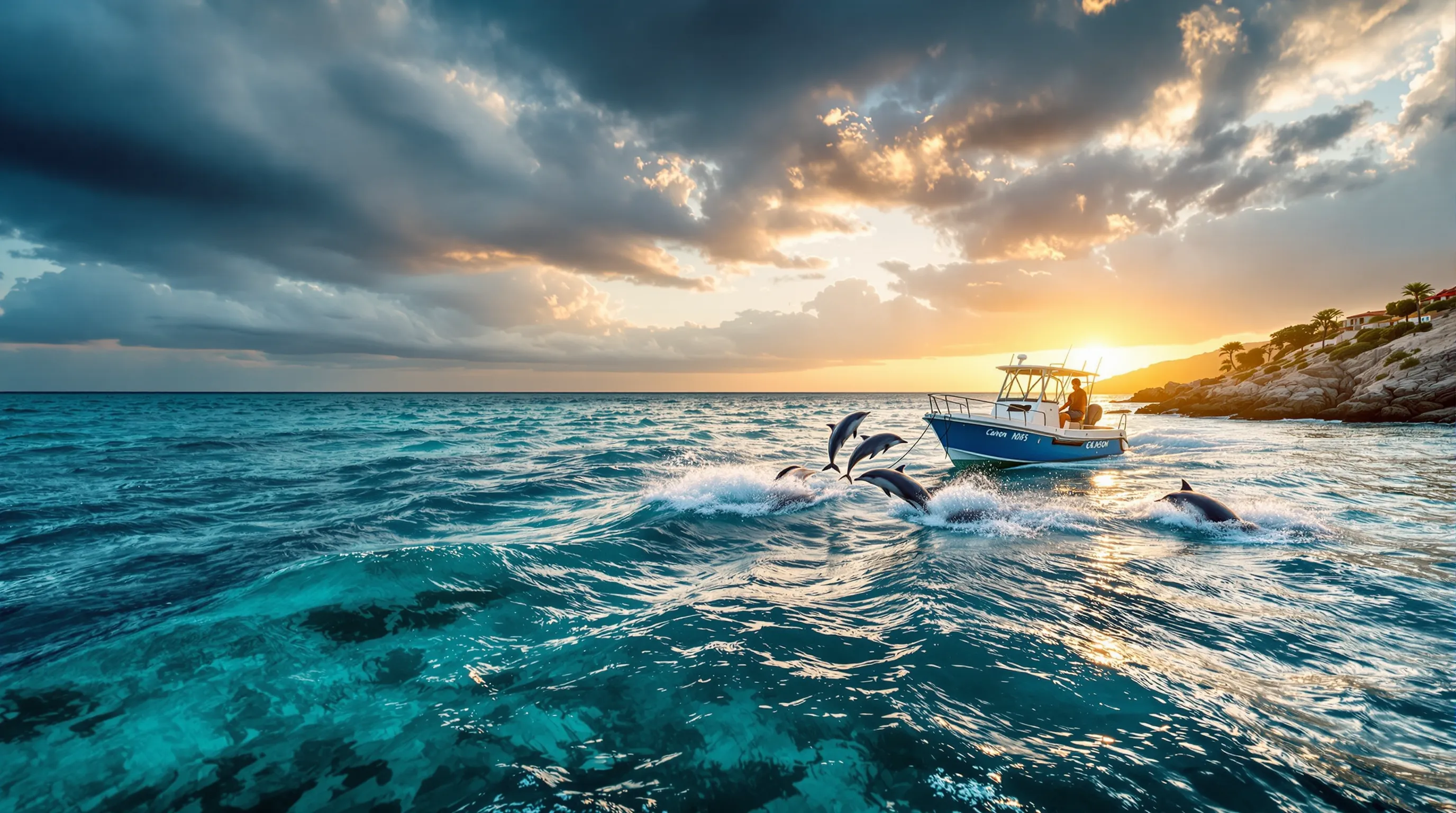
One June morning off the coast of Hyères, I watched a pod of striped dolphins surf the bow wave of the boat for a full twenty minutes, whereas the previous afternoon we'd crossed nothing but empty swells. This contrast is no fluke. In fifteen years observing Mediterranean cetaceans, I've learnt that the time you head out to sea radically changes your odds of an encounter. Dolphin physiology, water temperature and shipping traffic all combine to create precise observation windows, ones frequently overlooked by rushed visitors who book their trip mid-morning purely out of convenience.
Why dawn and dusk are the golden hours
Dolphins, whether the bottlenose dolphin (Tursiops truncatus) or the striped dolphin (Stenella coeruleoalba), hunt mainly when their prey rises close to the surface. Shoals of pelagic fish, particularly sardines and anchovies, move nearer the surface early in the morning and later in the day, when light is softer and water temperature more stable. Between 6am and 9am, the sea is also generally calmer, without thermal winds or chop, making it far easier to spot fins from a distance. I've observed this pattern repeatedly in the Pelagos Sanctuary, between Toulon and the Italian border, where pods of striped dolphins surface at first light to feed before boat traffic picks up. In the late afternoon, between 5pm and 7pm in summer, a second window opens up, driven by cooling temperatures and fish shoals returning towards the surface. By contrast, the midday-to-3pm slot, hotter and busier with leisure boats, remains statistically the least productive for sightings, although encounters are always possible, as dolphins are never entirely predictable.
The role of light and weather
A flat sea and low, raking morning light let you spot a fin or a blow from several hundred metres away, whereas the glare of midday sun on the water can blind an observer. A light chop below force 2 is manageable, but beyond that, spotting a dolphin's back becomes nearly impossible. Experienced guides always check wind forecasts before setting a departure time, favouring mornings free of mistral or tramontane winds, which are particularly common in the Gulf of Lion.
The best Mediterranean spots depending on departure time
The Pelagos Sanctuary, stretching from Provence to Tuscany via Corsica and northern Sardinia, remains the benchmark area for regular sightings of striped dolphins, as well as fin whales and sperm whales further offshore. From the ports of Sanary-sur-Mer, Bandol or Cassis, morning trips departing at 7am or 8am statistically offer more encounters than 2pm departures. In Corsica, the port of Bonifacio and the coastline of the Bouches de Bonifacio nature reserve are known for sightings of resident bottlenose dolphins, particularly active early in the morning near the rocky shallows where they hunt. Further west, in the Gulf of Lion, trips departing from Le Grau-du-Roi or Port-Camargue often target dolphins following mullet shoals near the mouth of the Rhône, a phenomenon observable at both dawn and dusk depending on the tides. In Italy, the Bay of Naples and the Tuscan archipelago offer similar windows, with reputable operators clearly favouring departures before 9am. These spots share a common feature: fewer boats at sea early in the morning means less acoustic disturbance, and therefore dolphins that are more visible at the surface, less skittish, and more likely to approach respectful boats of their own accord.
Practical access from the main ports
Most accredited operators offer staggered departures between 7am and 9am during peak season, with boarding fifteen to twenty minutes before departure. Booking the day before is essential in July and August, as morning slots sell out first. Parking right next to the harbour is rarely guaranteed in peak season in Cassis or Bonifacio, so allow an extra twenty minutes to park and reach the quay without rushing.
When to plan your trip: seasons and crowds
The period from May to September accounts for the bulk of organised trips in the Mediterranean, with peak dolphin activity often observed between June and August, when small pelagic fish are abundant and surface waters have warmed up. June, before the massive tourist influx of July and August, offers an appealing compromise: the sea is still calm, long days allow for morning departures as early as 6.30am, and boat traffic is more moderate. September also remains favourable, with water still warm and pleasure boat traffic noticeably reduced once the school holidays end. In winter, some operators keep running trips, particularly within the Pelagos Sanctuary where large cetaceans remain present year-round, but rougher sea conditions greatly reduce the number of reliable viewing windows, often limited to the rare wind-free day. Spring, from April to early June, is an interesting in-between period for visitors wanting to avoid the crowds while still enjoying reasonably mild weather. Whatever season you choose, morning trips remain the smart bet: sighting statistics compiled by several research organisations show a higher encounter rate before 10am compared with midday slots, across all seasons.
Planning your trip: duration, kit and fitness level required
A dolphin-watching trip typically lasts between two and four hours, including the return journey to the areas where dolphins are usually found, which can lie anywhere between three and fifteen nautical miles from port depending on the day. No particular fitness level is required for a standard boat trip, but anyone prone to seasickness should take preventive measures beforehand, though morning slots are thankfully often the calmest in terms of swell. For sea kayaking or paddleboarding enthusiasts, some operators run guided dawn trips from coves such as those on the Giens peninsula, though these activities require decent fitness and genuine confidence at sea. As for kit, bring a good pair of binoculars, a windproof layer even in summer as it can feel genuinely chilly on the water early in the morning, sun cream, a hat, and ideally a camera with at least a 200mm zoom if you want to capture the fins from a safe distance without disturbing the animals. A mild travel sickness remedy and water are also worth packing. Children aged six or seven and up can generally take part without any trouble, provided there's suitable supervision and the skipper's safety instructions are followed.
What to check before booking
Check that the operator holds a recognised accreditation such as High Quality Whale Watching, a mark of a respectful approach protocol and genuine scientific oversight. It's also worth asking about the average success rate of previous trips, something transparent operators are usually happy to share. A reputable operator will never hesitate to point out that no sighting is guaranteed, unlike some less scrupulous providers who promise a sure-fire encounter.
Practical tips and responsible tourism
The cost of a dolphin-watching trip varies according to duration, boat size, level of scientific supervision and season, with prices generally higher in July and August than during shoulder periods. It's advisable to book several days ahead during peak season, directly with operators who clearly display their commitment to ACCOBAMS regulations, the international agreement governing cetacean conservation in the Mediterranean. Among other things, this regulation sets a minimum approach distance, generally 100 metres, requires reduced speed near the animals, bans encircling them or cutting across their path, and limits continuous observation time around any given group. Choosing operators accredited as High Quality Whale Watching guarantees supervision by guides trained in cetacean biology, able to explain observed behaviour without putting the animals under stress. Steer well clear of any operator who chases dolphins or promises a 100% guaranteed sighting, often a sign of excessive pressure being placed on the groups encountered. Taking your rubbish back with you, avoiding any discharge into the sea, and teaching children on board about the fragility of this ecosystem all round out a genuinely responsible approach, essential to preserving these encounters for future generations.
Frequently asked questions
What is the best time to see dolphins in the Mediterranean?
The window between 6am and 9am generally offers the best chances, as dolphins actively hunt near the surface and the sea is calmer. Late afternoon, between 5pm and 7pm in summer, is a second worthwhile window, often overlooked by visitors.
Do you need to book a long way ahead for a morning trip?
Yes, morning slots are the most sought-after and sell out first, especially in July and August. Booking at least a week ahead during peak season is recommended, whereas in May, June or September, a few days' notice is usually enough.
Are dolphins visible year-round in the Mediterranean?
Yes, particularly within the Pelagos Sanctuary, where some populations are resident. However, winter sea conditions make sightings less predictable, and most organised trips run between May and September, when conditions are more favourable.
What is the minimum distance you should keep from dolphins?
ACCOBAMS regulations recommend a minimum distance of 100 metres, with no head-on approach or encircling of the group. Operators accredited as High Quality Whale Watching strictly follow these rules to limit stress on the animals.
Can you see dolphins without going on an organised trip?
Certain coastal spots such as Bonifacio or the Giens peninsula sometimes allow you to spot dolphins from the shore, particularly at dawn. That said, a guided boat trip remains far more reliable and respectful for genuine sightings out at sea.
Choosing the right time of day makes all the difference between a disappointing trip and an unforgettable encounter with Mediterranean dolphins. Dawn remains the gold standard, thanks to calm seas and active animals, while late afternoon offers a great alternative in summer. To plan your next trip, discover the best spots for your region, and choose an operator that respects cetaceans, find all our expert advice at dauphin-mediterranee.com.
Read also

7 Things You Never Knew About Sunset Cruises on the French Riviera
Discover the best sunset cruises on the French Riviera: Marseille, Cannes, Nice....

Why Posidonia Seagrass Meadows Are Saving Mediterranean Marine Life
Discover how Posidonia seagrass meadows protect the Mediterranean: oxygen produc...

What Professional Photographers Reveal About Underwater Photography in the Mediterranean
Discover the secrets of professional underwater photographers for capturing Medi...

These Mediterranean Sea Giants That Transform Your Outings into Unique Adventures
Discover pilot whales in the Mediterranean, these fascinating 6-metre cetaceans ...