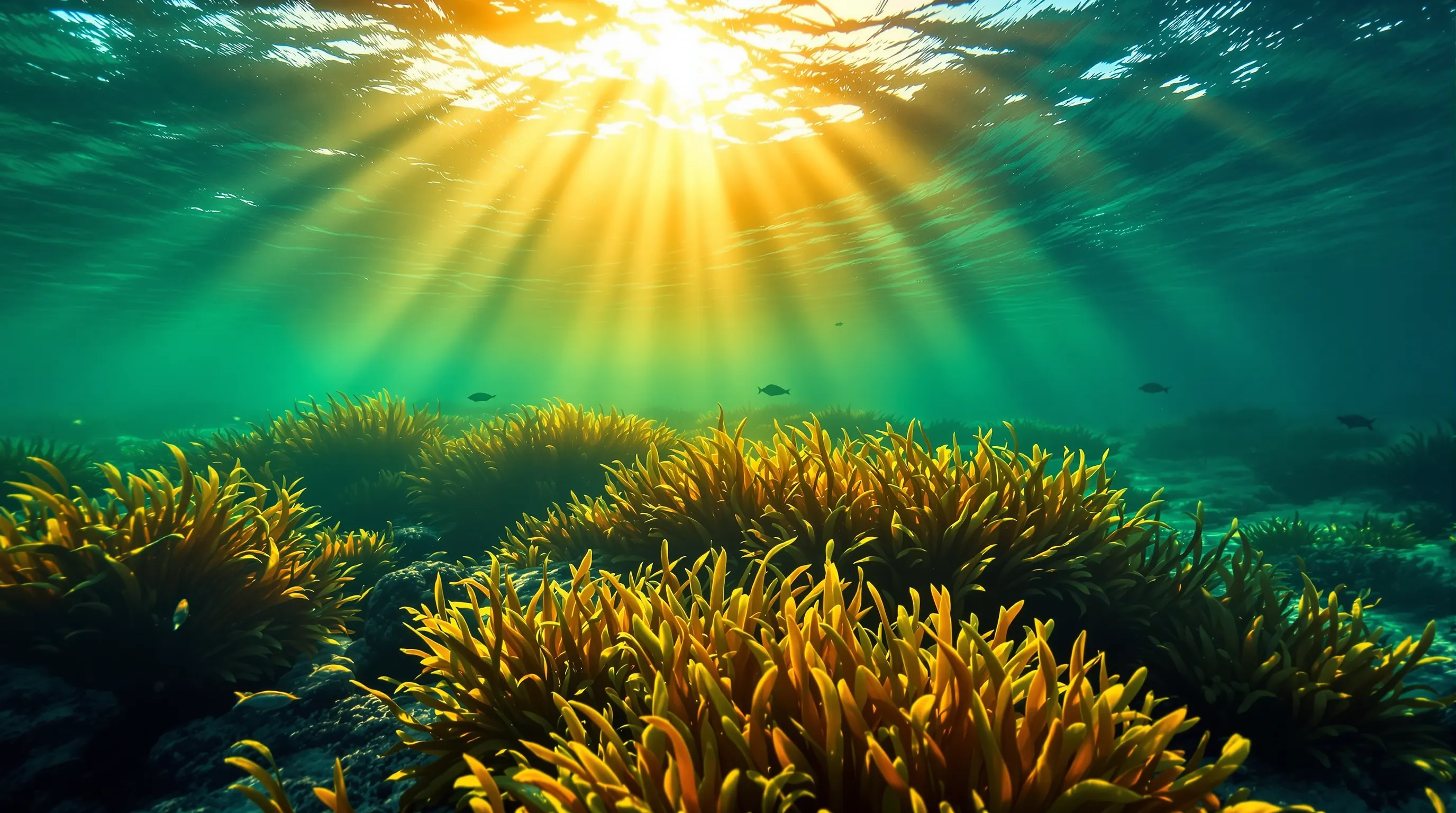
Why Posidonia Seagrass Meadows Are Saving Mediterranean Marine Life
Posidonia seagrass meadows cover over 38,000 hectares across French Mediterranean waters, producing 20 litres of oxygen daily per square metre. These underwater prairies, the veritable green lungs of our sea, harbour 25% of Mediterranean biodiversity within just 2% of its surface area. Designated as UNESCO World Heritage since 1999, Posidonia oceanica constitutes the Mediterranean's most productive ecosystem, filtering water whilst protecting our coastlines from erosion.
An Ancient Ecosystem with Extraordinary Ecological Powers
Posidonia forms meadows that can reach 8 metres in height and live for over 100,000 years, making it the planet's oldest living organism. Its leaves, ranging from 30 to 120cm in length, filter millions of litres of seawater daily, removing particles and bacteria. One hectare of meadow produces 20 tonnes of oxygen annually - equivalent to the consumption of 10 people. The rhizomes extend for several kilometres, forming natural barriers that reduce wave impact by 70%, thus protecting the Mediterranean coastline from marine erosion.
Record-Breaking Oxygen Production
Each square metre of posidonia releases 14 litres of oxygen into the water and 6 litres into the atmosphere daily. This capacity exceeds tropical rainforests by 35%, making these meadows the true blue lungs of the Mediterranean, essential for maintaining marine gas equilibrium.
A Sanctuary of Mediterranean Biodiversity
Over 1,000 animal species and 400 plant species depend directly on posidonia meadows. These underwater prairies serve as nurseries for 80% of Mediterranean commercial fish, including sea bream, sea bass, red mullet and white bream. Seahorses, giant fan mussels and groupers find refuge here, whilst loggerhead turtles feed exclusively within these habitats. Life density reaches 350 species per square metre, rivalling tropical coral reefs. This exceptional richness makes the meadows priority zones for marine conservation in the Mediterranean.
Threats and Protection of Underwater Prairies
Posidonia meadows are losing 5% of their surface area each decade, primarily due to unregulated anchoring, pollution and climate change. Pleasure boat anchors destroy century-old prairies in seconds - prairies that will take 100 years to regrow. Urban and agricultural pollution causes eutrophication, encouraging invasive algae that suffocate posidonia. Water warming of 2°C since 1980 weakens this species adapted to stable temperatures, causing mass mortality during summer marine heatwaves.
Strict Regulation in Force
Anchoring in seagrass meadows is prohibited and punishable by fines up to £130,000. Natura 2000 zones protect 60% of French prairies. Managers install ecological mooring buoys to preserve these fragile ecosystems essential to Mediterranean life.
Practical Tips for Discovering the Meadows
The best period for observing the meadows extends from May to October, when underwater visibility reaches 30 metres. Protected sites at Port-Cros, Scandola and Banyuls offer guided dives from £30. Book your outings 48 hours in advance during peak season. Complete equipment (mask, snorkel, fins) can be hired for £13/day. Choose certified dive centres that respect the seagrass meadow approach charter. Average budget: £43-68 for a snorkelling trip with naturalist guide, £103-128 for scuba diving at the finest French Mediterranean sites.
Frequently asked questions
Can you walk on posidonia seagrass meadows?
No, it is strictly forbidden to walk on, anchor or moor over the meadows. These fragile prairies take decades to regrow after destruction. Use mooring buoys or authorised sandy areas to preserve this ancient ecosystem essential to Mediterranean biodiversity.
Where can you see the most beautiful posidonia meadows in France?
Exceptional sites include Port-Cros National Park, Scandola Reserve in Corsica, Banyuls-sur-Mer and the Hyères Islands. These protected zones offer optimal visibility and preserved meadows. Book a guided outing to discover this unique biodiversity safely.
Why is posidonia so important for the Mediterranean?
Posidonia produces 20 litres of oxygen per m²/day, filters water, harbours 25% of Mediterranean biodiversity and protects coastlines from erosion. Without these meadows, the Mediterranean would lose its unique marine richness. This is why UNESCO has classified them as world heritage of humanity.
Posidonia seagrass meadows embody the exceptional natural wealth of the Mediterranean - vital ecosystems that must be preserved at all costs. Discover these underwater marvels during your next holidays whilst respecting their fragility. To organise your responsible exploration of Mediterranean biodiversity, visit dauphin-mediterranee.com and dive into the heart of these ancient blue lungs.
Read also

What Professional Photographers Reveal About Underwater Photography in the Mediterranean
Discover the secrets of professional underwater photographers for capturing Medi...
These Mediterranean Sea Giants That Transform Your Outings into Unique Adventures
Discover pilot whales in the Mediterranean, these fascinating 6-metre cetaceans ...
7 Mediterranean Starfish Secrets That Marine Biologists Jealously Guard
Discover the fascinating secrets of Mediterranean starfish and sea urchins. 7 su...
What Posidonia Seagrass Meadows Hide Beneath Mediterranean Waters
Discover why Posidonia seagrass meadows are vital to the Mediterranean: oxygen p...