What to Do in Nice by the Sea: The Local Guide Rushed Tourists Miss
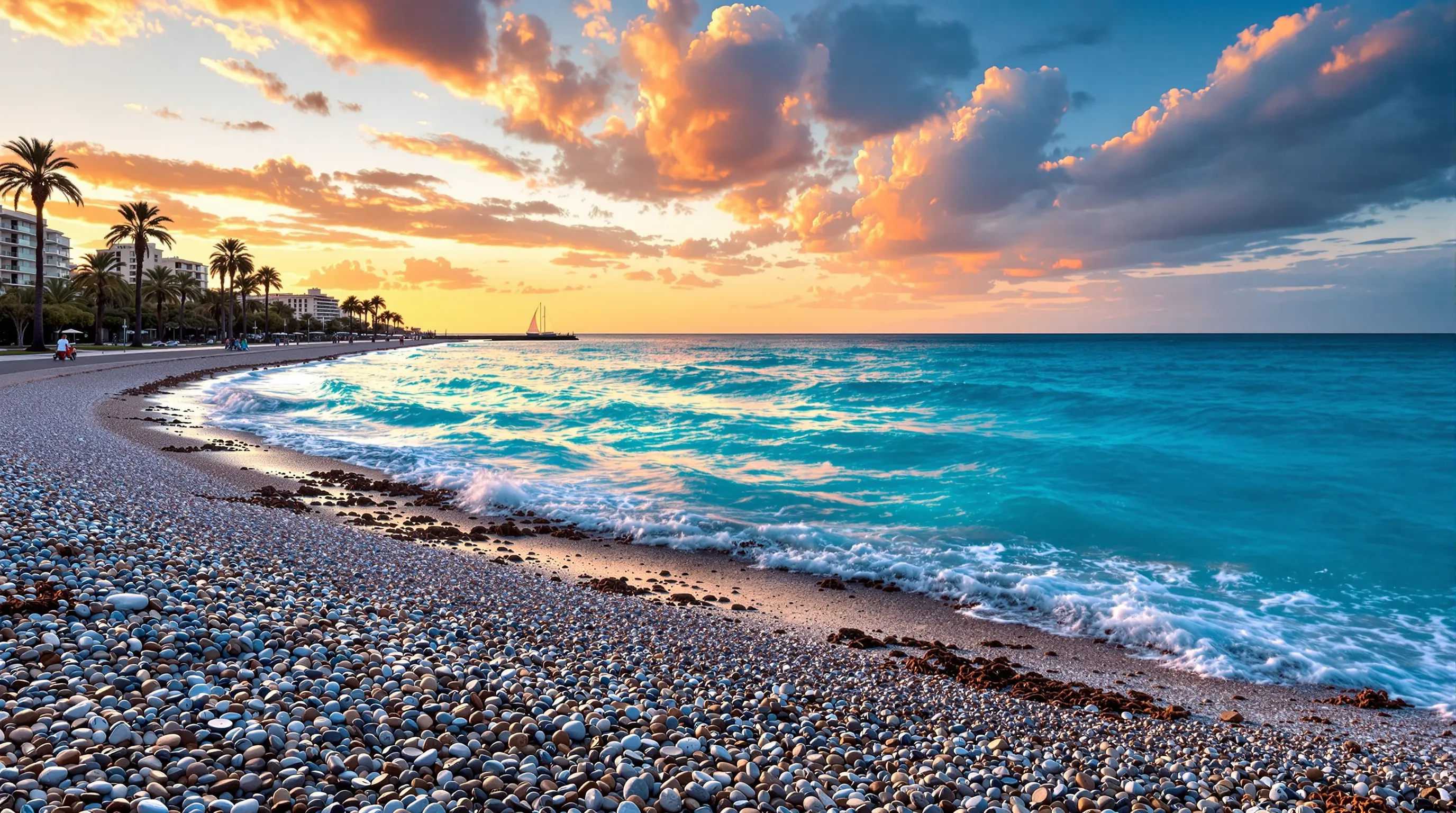
The first time I spotted dolphins from a boat off the coast of Nice, I understood why this city deserves far more than a quick snap on the Promenade des Anglais. Nice by the sea means a Bay of Angels that plunges straight into the Pelagos Sanctuary, one of the richest areas in the Mediterranean for whales and dolphins. Between the pebbles at Château Beach, the coves of Mont Boron and boat departures out into the deep blue, the city hides a genuine marine playground. Here's my local guide, designed for those who want to experience Nice from the water, not just admire it from the beach.
The beaches and coves you shouldn't miss
Nice boasts around twenty beaches, but they're far from all alike. Centenaire Beach, near the harbour, is appealingly quiet outside peak season. Further along, Réserve Beach, at the foot of Mont Boron, offers clearer water thanks to its sheltered position. For those after peace and quiet, head to Villefranche-sur-Mer, just ten minutes away by train, where the deep bay attracts turquoise waters worthy of the Greek islands. The coastal path between Nice and Cap Ferrat leads to coves only accessible on foot, such as those below the Mont Boron corniche, frequented by great cormorants and, occasionally, migrating shearwaters. These rocky areas are also home to sea urchins and Posidonia seagrass beds, essential to the local marine balance. Beware of summer overcrowding: July and August turn certain spots into packed zones by as early as 10am.
The Bay of Angels: where city meets nature
The Bay of Angels isn't just a poetic name. This broad coastal indentation, stretching from Nice to Antibes, forms a transition zone between shallow coastal waters and the continental slope that drops away sharply towards the Pelagos Sanctuary. It's this particular seabed topography that explains the regular presence of striped dolphins just a few kilometres from Nice's beaches, a fairly rare phenomenon for a major Mediterranean city.
Where to head out to sea from Nice
Nice's harbour, at the foot of the Château, remains the main departure point for sea excursions. Several operators with High Quality Whale Watching accreditation run trips towards the Pelagos Sanctuary, the international protected area stretching between France, Monaco and Italy as far as Sardinia. Here you'll mainly encounter striped dolphins, occasionally pilot whales, and more rarely sperm whales in summer within the underwater canyons offshore. Villefranche-sur-Mer harbour, with its deep bay, also offers departures for similar trips, often with shorter waits than in Nice itself. For kayakers, the Cap Ferrat Marine Reserve, a 25-minute drive away, provides a protected setting to observe Posidonia seagrass meadows without disturbing wildlife. Paddleboards are easy to hire along the seafront, but I'd rather recommend the coves of the Sainte-Hospice inlet, better sheltered from the wind.
The Pelagos Sanctuary, just offshore
Few tourists realise that Nice borders directly onto the Pelagos Sanctuary, established in 1999 by France, Italy and Monaco to protect Mediterranean cetaceans. This 87,500 km² zone is home to around twenty species, including bottlenose dolphins, fin whales and sperm whales. From Nice, expect roughly 45 minutes to an hour's sailing to reach the areas most frequented by these animals, particularly towards the continental slope where the depth increases sharply.
When to visit to make the most of the sea in Nice
Nice's climate allows for sea-based activities almost year-round, though each season has its own perks. From May to June, the sea starts warming up, crowds remain moderate, and observation trips benefit from often calm waters, ideal for spotting the blows of surfacing cetaceans. July and August offer the best underwater visibility but also the heaviest crowds, with packed beaches and queues for boat trips. September remains my favourite month for spotting marine wildlife: the water's still warm, tourists thin out, and dolphins stay active near the coast before their autumn movements. Winter, from November to March, appeals mainly to those keen on coastal walks and open, uncluttered views, with sea trips rarer but still possible in good weather. The Mistral and easterly winds can disrupt sailing at any time of year, so it's worth building some flexibility into your trip if a sea excursion is your main goal.
How to plan your seaside day in Nice
Half a day is enough to explore the beaches in the city centre, but allow a full day if you want to combine beach time, the coastal path and a boat trip. For whale and dolphin watching, allow between 2.5 and 4 hours of sailing, with an early morning departure usually offering calmer seas. No particular fitness level is required for a standard boat trip, but sea kayaking demands a reasonable level of fitness, especially around Cap Ferrat where currents can catch you off guard. As for kit, bring mineral sunscreen (less harmful to Posidonia seagrass), water shoes for rocky coves, and binoculars if you're heading out to spot wildlife. Coastal paths, such as the Cap de Nice trail, don't require technical gear, just sturdy walking shoes. For families, the supervised beaches in the city centre remain the most practical option, while wilder coves call for a bit more independence.
Essential kit for a successful trip
Whatever the sea trip, always pack a light jacket even in summer: the sea breeze cools things down quickly once you're offshore. 8x42 binoculars are an excellent compromise for spotting cetaceans without lugging around bulky professional equipment. As for sun protection, go for creams without oxybenzone, which harm fragile marine ecosystems such as the Posidonia meadows found extensively between Nice and Cap Ferrat.
Practical tips and responsible tourism
The cost of a sea trip from Nice varies considerably depending on the season, duration and type of boat chosen: a group excursion generally costs less than a private one, and prices climb during peak season. Always book ahead in summer, as spaces fill up fast with High Quality Whale Watching accredited operators, a label that guarantees respectful approach practices are followed. ACCOBAMS regulations require a minimum approach distance to cetaceans, generally around 100 metres, reduced speed when approaching, and a ban on feeding or swimming with the animals. Always choose operators displaying this label or an equivalent charter: it guarantees respectful behaviour that limits stress on dolphin populations, already under considerable pressure from maritime traffic in the Mediterranean. On the beaches, avoid walking on the Posidonia seagrass visible in shallow water, as it shelters vital biodiversity and regenerates extremely slowly. Finally, always take your rubbish home with you; the Bay of Angels is a living ecosystem, not a backdrop.
Frequently asked questions
Can you see dolphins from the beach in Nice?
It's rare but not impossible, especially in spring and September when the sea is calm. Sightings from the coast remain occasional: for a genuine chance of seeing them, a boat trip out to the Pelagos Sanctuary, around 45 minutes from the harbour, is your best bet.
What's the best beach in Nice for a peaceful swim?
Réserve Beach, at the foot of Mont Boron, is more sheltered and less crowded than the central beaches. Villefranche-sur-Mer, just ten minutes away by train, also offers clearer water and a calmer atmosphere, particularly outside July and August.
How long does a whale and dolphin watching trip from Nice last?
Generally allow between 2.5 and 4 hours of sailing, including departure. Mornings often bring calmer seas, which is favourable for spotting blows and breaches. Always check that the operator complies with ACCOBAMS regulatory distances.
Do you need to book in advance for a boat trip from Nice?
Yes, particularly in July and August when spaces fill up quickly with accredited operators. In the low season, May, June and September, booking a few days ahead is usually sufficient, with more flexibility on timings.
Is the coastal path around Nice suitable for everyone?
The Cap de Nice trail doesn't require any particular technical ability, just sturdy walking shoes. Some stretches remain rocky and narrow, so it's best avoided with young children or during hot weather without adequate sun protection.
Nice by the sea reveals far more than a postcard image: a living bay, connected to the Pelagos Sanctuary and to exceptional marine biodiversity, just minutes from the city centre. Between sheltered beaches, coastal paths and responsible trips out to sea, every season offers its own way of discovering this Mediterranean, which deserves to be protected. To plan a respectful and well-informed sea trip, dauphin-mediterranee.com offers up-to-date resources and advice for observing cetaceans in the best possible conditions, without ever losing sight of what matters most: their peace and quiet, above all.
Read also

Saint-Tropez differently: the secret coves tourists never find
Discover Saint-Tropez differently: wild coves, hidden inlets and boat trips away...

Motorhoming the Mediterranean: the secret spots most van-lifers never find
Motorhome touring on the Mediterranean coast: authentic spots, nature-friendly s...

Mediterranean Road Trip: The Locals' Secret for Spotting Dolphins and Coves
French Mediterranean coast road trip itinerary: stops, dolphin-watching spots, s...

Sunset on the French Riviera: Marina's Favourite Spots to Avoid the Crowds
Discover the most beautiful sunset spots on the French Riviera: hidden coves, co...