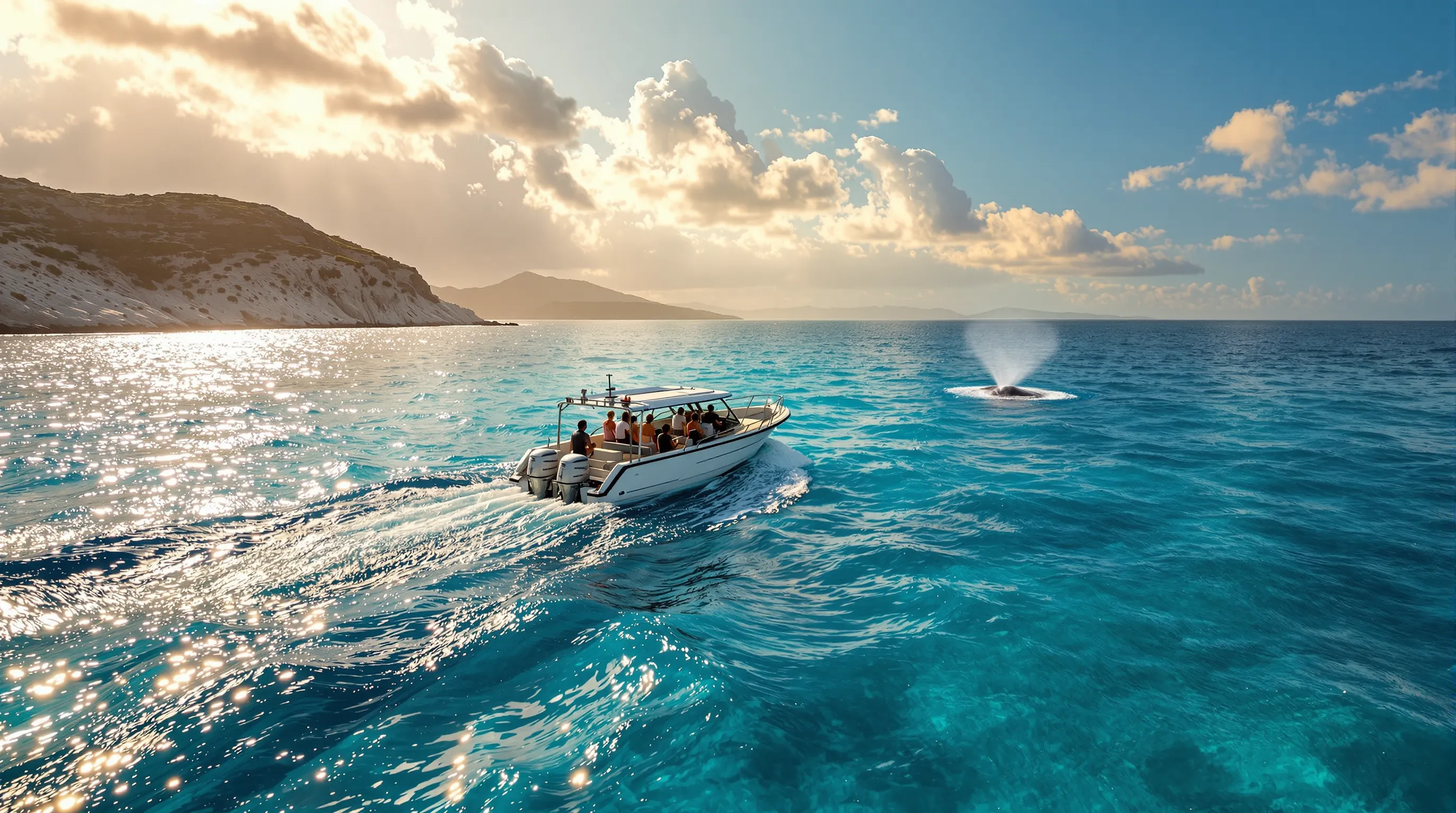
What Experts Know About Whale Watching in the Mediterranean
The Mediterranean is home to 21 cetacean species, including 8 permanent resident species. The International Pelagos Sanctuary, established in 1999, protects 87,500 km² of waters between France, Monaco and Italy. This area concentrates the highest density of marine mammals in the western Mediterranean, with over 8,500 individuals recorded. Exceptional oceanographic conditions, particularly the upwelling of nutrient-rich deep waters, create a unique ecosystem where sperm whales, fin whales and dolphins coexist in crystal-clear waters.
Iconic Species of the Pelagos Sanctuary
The fin whale, world's second largest whale at 20 metres, regularly frequents these waters from May to October. With an estimated population of 3,500 individuals, they follow the continental slope to feed on krill and small fish. Sperm whales, recognisable by their characteristic angled blow, dive to depths of 2,000 metres. Their dives average 45 minutes. Striped dolphins, the most common species with 25,000 individuals, travel in groups of 50 to 100. Pilot whales, nicknamed whale pilots, form tight-knit family pods.
Prime Observation Behaviours
Dolphin breaching is primarily observed between 2pm and 5pm, their peak activity period. Fin whales perform breathing sequences of 3 to 7 blows before deep diving. Sperm whales signal their presence with spectacular tail flukes before diving. These natural behaviours offer exceptional photographic opportunities for patient observers.
Prime Observation Areas and Accessibility
The Roya-Bévéra canyon, 12 nautical miles from Nice, accounts for 80% of sperm whale sightings. Reaching depths of 2,500 metres, this area offers an 85% success rate between June and September. Off Sanremo, fin whales frequent the Ligurian-Provençal front where warm waters meet cold upwellings. Monaco offers trips from Port Hercule with 90 minutes' sailing. Antibes and Cannes organise 6-hour excursions with marine biologists on board. The Hyères Islands mark the sanctuary's eastern boundary, a prime area for morning dolphin watching.
Optimal Calendar by Species
May to July: massive arrival of fin whales following krill migration. Observation rates reaching 95% on certain days. June to September: maximum sperm whale presence, optimal surface temperature of 22°C to 25°C. Females with young frequent shallower waters. July-August: peak dolphin activity, intense breeding and socialising. September-October: final sightings before autumn migration, spectacular feeding behaviours. Ideal weather conditions with calm seas and excellent visibility. November to April: reduced presence but possible sightings of wintering species like Risso's dolphins.
Optimal Observation Times
Morning departures between 8am and 9am offer the best sea conditions and lighting. Return around 3pm avoids afternoon winds. Evening trips from 5pm to 8pm in summer allow observation of twilight feeding behaviours. Cetaceans are most active during these preferred time slots.
Practical Tips for a Successful Experience
Prices range from £39 to £73 per adult depending on duration and operator. Booking essential during high season, availability limited to maximum 12 passengers per trip. Recommended kit: SPF50 sun cream, polarised sunglasses, windproof jacket even in summer. Temperature drops 5°C offshore. Camera with minimum 200mm lens to capture behaviours at respectful distances. Seasickness medication advised, even in calm seas. Strict adherence to regulatory distances: minimum 100 metres from cetaceans. Pelagos Charter requires engine stop during close encounters.
Frequently asked questions
What's the best time to see whales in the Mediterranean?
The optimal season runs from May to September with peak activity in July-August. Fin whales arrive en masse in May following krill migration. 85% success rate guaranteed during this period in the Pelagos Sanctuary.
Where to join whale watching trips from the French Riviera?
Nice, Antibes, Cannes and Monaco offer regular trips to the Pelagos Sanctuary. Nice provides the shortest journey to observation zones (1.5 hours). Monaco guarantees premium trips with marine biologists on board.
How much does a Mediterranean whale watching trip cost?
Prices range from £39 to £73 per adult depending on duration (half-day to full day) and operator. Premium trips with meals and specialist guide reach £103. Child and group discounts frequently available.
Cetacean watching in the Mediterranean offers a unique experience at the heart of the Pelagos Sanctuary. Respecting species and choosing the right operator guarantees unforgettable encounters with exceptional marine wildlife. Discover our specialist excursions at dauphin-mediterranee.com to experience this extraordinary adventure in the best conditions of comfort and safety.
Read also

What Mediterranean Hikers Keep Secret About Their Favourite Coastal Paths
Discover the secrets of Mediterranean coastal paths: hidden spots, hiking techni...
5 secrets marine biologists keep about long-finned pilot whales
Discover the fascinating secrets of long-finned pilot whales in the Mediterranea...

7 secrets about fin whales that marine biologists finally reveal
Discover the 7 fascinating secrets of Mediterranean fin whales revealed by marin...

How Wildlife Cruises from Nice Reveal Hidden Mediterranean Treasures
Discover the secrets of wildlife cruises from Nice: dolphins, whales and the Pel...