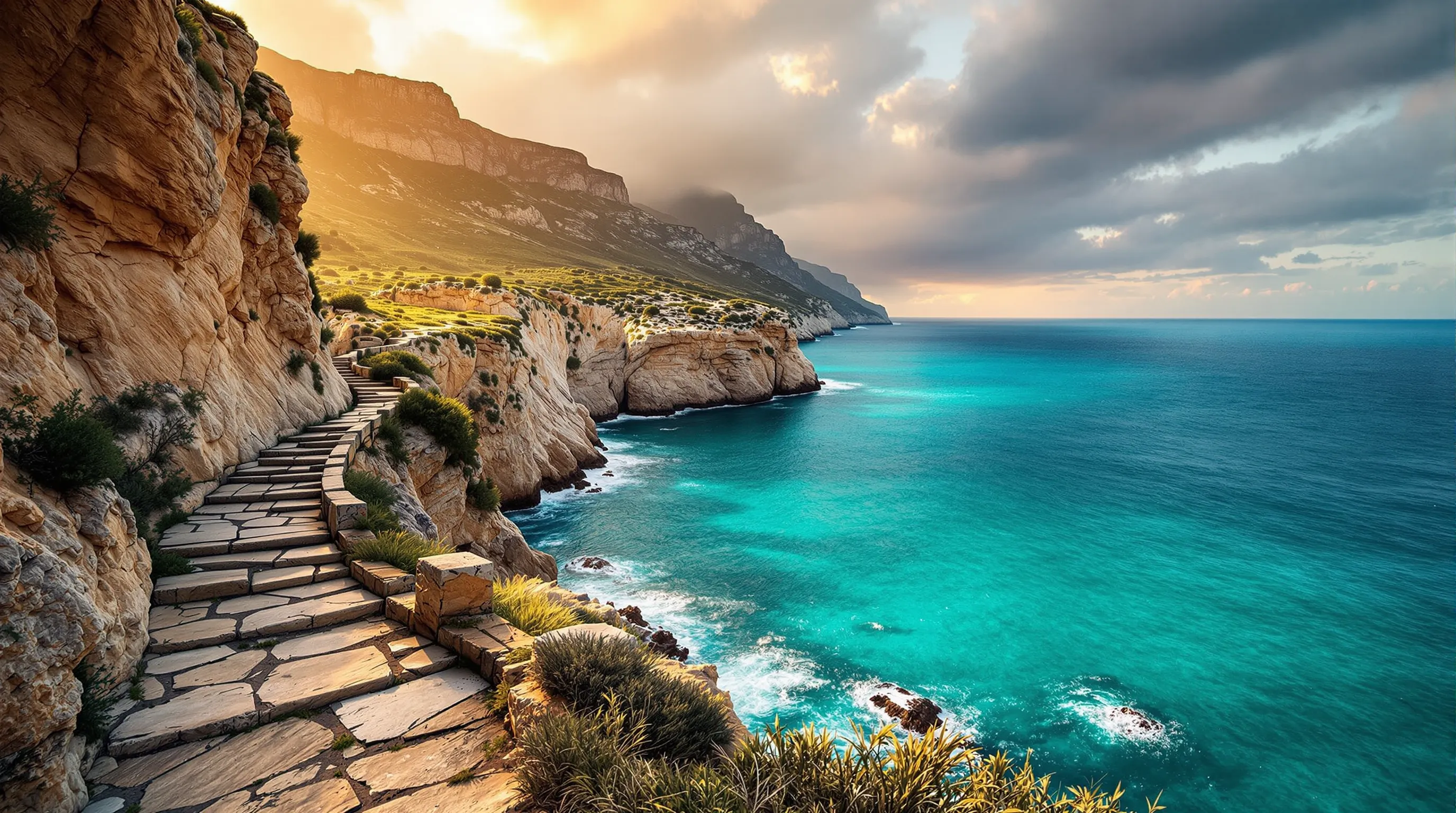
What Mediterranean Hikers Keep Secret About Their Favourite Coastal Paths
The Mediterranean coastal path stretches over 4,000 kilometres of coastline, offering exceptional panoramas between azure seas and limestone cliffs. These ancient pathways, some dating back to Roman times, reveal unsuspected natural treasures. From the French Riviera to the Eastern Pyrenees, each section unveils unique biodiversity with over 2,500 endemic plant species. Experienced hikers know particular techniques for tackling these sometimes steep paths, where elevation changes can reach 300 metres per kilometre.
Technical Secrets of Mediterranean Coastal Paths
Mediterranean coastal paths present unique challenges related to limestone terrain and salt spray. The rocky surface becomes particularly slippery after Mediterranean downpours, requiring specific boots with cleated soles. Experts recommend starting hikes before 8am in summer, when temperatures remain below 25°C. The sea breeze, known as the tramontane, can reach 80 km/h on exposed headlands, requiring adapted equipment. The particular geology of these coasts creates microclimates: it's often 5°C cooler near the sea than inland. These specific conditions explain why 73% of coastal hiking accidents occur between 11am and 4pm.
Specialised Coastline Equipment
Coastal hiking gear differs significantly from standard mountain equipment. Boots must resist salt corrosion and offer optimal grip on wet rock. A waterproof windbreaker is essential for protection from sea spray. Sunglasses with UV4 protection are mandatory as marine reflection intensifies rays by 40%. An insulated water bottle of minimum 1.5L compensates for accelerated dehydration from salt wind.
Exceptional Biodiversity of Mediterranean Coasts
The Mediterranean coastline shelters 32% of French plant species on just 4% of the national territory. Coastal garrigue presents remarkable adaptations: waxy leaves of kermes oak, deep roots of wild rosemary reaching 8 metres. Limestone cliffs host endemic species like the Marseille milk-vetch, found only along 12 kilometres of coast. The paths also cross nesting areas for 47 seabird species, including the threatened Audouin's gull. Between April and June, over 200 species of wild orchids bloom along coastal paths, creating a unique botanical spectacle in Europe.
Essential Sections and Difficulty Levels
The GR51 between Menton and Théoule-sur-Mer represents 200 kilometres of pure coastal beauty, rated difficulty 3/5 with cumulative elevation gain of 8,400 metres. The customs path through the Calanques extends 28 kilometres between Marseille and Cassis, accessible to average hikers in 2 days. The Vermillion Coast offers 25 kilometres of paths between Collioure and Cerbère, walkable year-round with difficulty 2/5. Cap Sicié near Toulon provides a 15-kilometre circuit, renowned for 360° views over the harbour and Hyères islands. Each section requires between 3 and 8 hours walking depending on fitness level and photo stops.
Optimal Periods by Area
The French Riviera is ideally hiked from September to May, avoiding summer heat and tourist crowds. Languedoc-Roussillon offers perfect conditions from October to April, with temperatures ranging between 12°C and 20°C. The Bouches-du-Rhône benefits from a microclimate allowing almost year-round hiking, except during violent mistral winds. The Mediterranean flowering period, March to June, transforms paths into exceptional natural gardens.
Practical Tips to Optimise Your Experience
Mediterranean coastal hiking requires specific preparation. The average budget amounts to £30 per person per day, including gîte accommodation and meals. Bookings should ideally be made 2 months before departure for April to October periods. The IGN Géoportail mobile app allows downloading detailed offline maps, essential on certain remote sections. Coastal refuges are often fully booked in high season: favour multiple bookings with flexible cancellation. A medical fitness certificate is recommended for routes over 3 days, given cardiovascular effort from constant elevation changes.
Frequently asked questions
What's the best time to hike the Mediterranean coastal path?
The ideal period extends from March to June and September to November. Temperatures range between 15°C and 25°C, avoiding summer heatwaves and winter winds. Spring flowering offers exceptional landscapes, whilst autumn guarantees sea still warm at 20°C for refreshing swims.
What specific equipment should I bring for Mediterranean coastal hiking?
Choose low-cut hiking boots with grip soles, salt-resistant. A waterproof windbreaker, UV4 sunglasses, hat and factor 50+ sun cream are essential. Carry minimum 2L water per person, as supply points are rare on certain remote coastal sections.
How can I reach coastal path starting points without a car in the South?
TER Provence-Alpes-Côte d'Azur trains serve 90% of major starting points. The Train des Merveilles connects Nice to Tende, providing access to Merveilles valley paths. Departmental bus routes complement rail services. Many tour operators offer organised transfers from stations to the most remote trailheads.
Mediterranean coastal paths reveal their secrets to prepared hikers. Between exceptional biodiversity and breathtaking landscapes, these ancient ways offer total immersion in wild coastal nature. To extend your Mediterranean discovery, explore our other guides on dauphin-mediterranee.com and plan your next coastal adventure with complete confidence.
Read also
5 secrets marine biologists keep about long-finned pilot whales
Discover the fascinating secrets of long-finned pilot whales in the Mediterranea...
7 secrets about fin whales that marine biologists finally reveal
Discover the 7 fascinating secrets of Mediterranean fin whales revealed by marin...
How Wildlife Cruises from Nice Reveal Hidden Mediterranean Treasures
Discover the secrets of wildlife cruises from Nice: dolphins, whales and the Pel...
7 secrets captains reveal for whale watching in the Mediterranean
Discover where and when to spot whales in the Mediterranean with exclusive tips ...