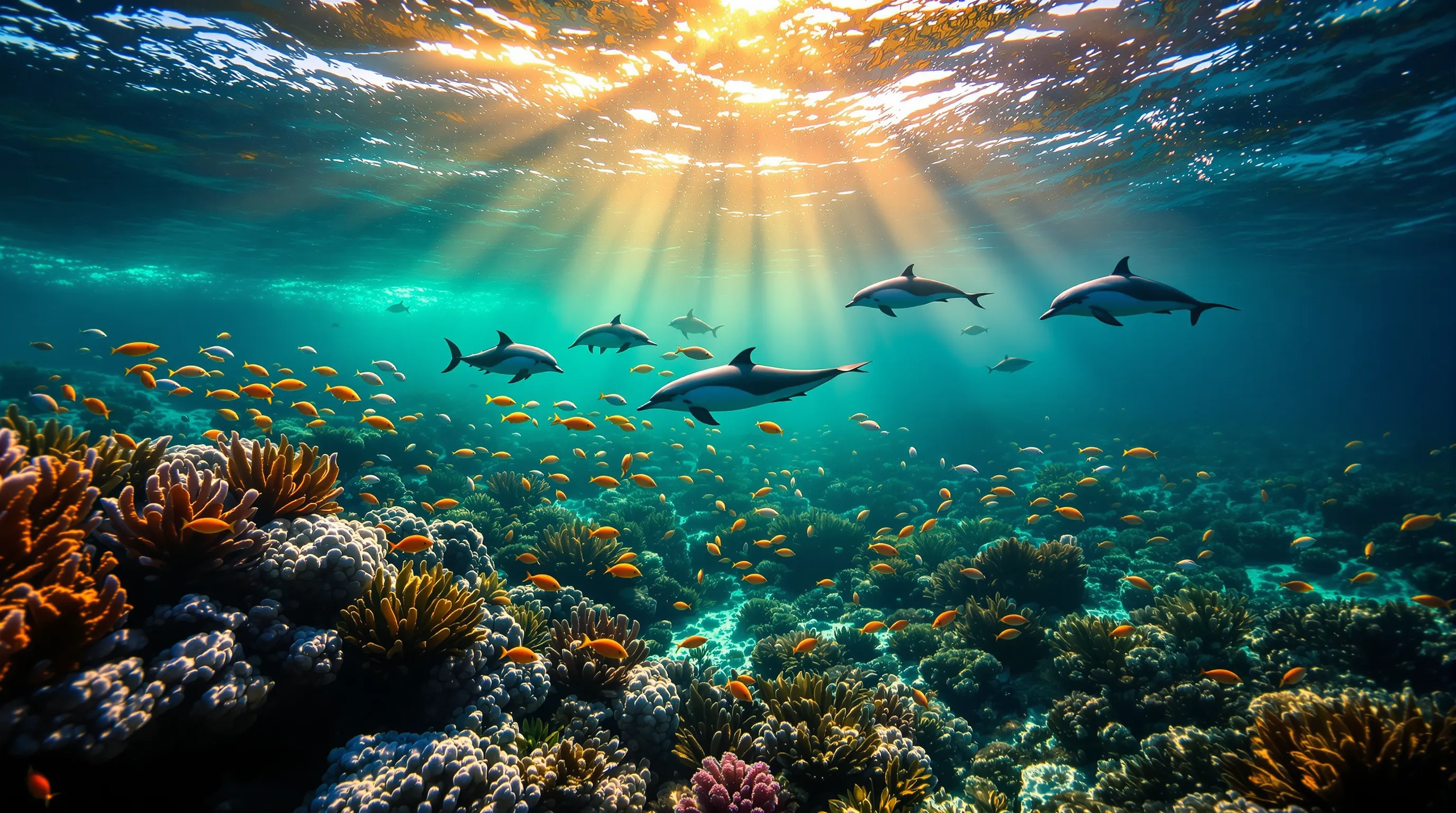
These 7 Mediterranean marine creatures will transform your view of the seabed
The Mediterranean is home to over 17,000 marine species, of which 25% are endemic. This semi-enclosed sea of 2.5 million km² concentrates exceptional biodiversity in just 0.7% of the world's oceans. From large pelagics to micro-organisms, each trophic level reveals remarkable adaptations. The crystal-clear waters offer visibility up to 60 metres, making it easy to observe this richness. With stable temperatures between 13°C and 28°C depending on the season, the Mediterranean constitutes a unique natural laboratory for understanding marine evolution.
Emblematic marine mammals
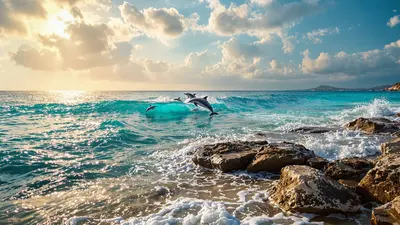
The Pelagos Sanctuary protects 87,500 km² between France, Italy and Monaco, concentrating 8 species of cetaceans. The bottlenose dolphin measures 2 to 4 metres and lives in groups of up to 15 individuals. Population estimated at 150,000 specimens in the Mediterranean. The striped dolphin, smaller (1.5-2m), forms super-pods of 1,000 individuals during summer migrations. Sperm whales frequent canyons deeper than 1,000m, diving up to 2,000m to hunt squid. Optimal observation period: May to September with 80% success rate from French and Italian coasts.
Prime observation areas
Cap Sicié and the Hyères Islands offer 90% chance of observation from May to October. Daily departures from Toulon at 9am and 2pm, duration 3 hours, price £38 per adult. Portofino Sanctuary guarantees encounters with bottlenose dolphins 8 times out of 10. Booking essential 48 hours in advance during high season.
Remarkable Mediterranean fish
The dusky grouper, reaching up to 1.5m and 65kg, colonises rocky drop-offs between 10 and 50m. Protected species since 1993, its population has quintupled reaching 200,000 individuals. Sex change at 15 years: female then male. The brown moray eel and two-banded seabream populate the Posidonia seagrass beds. Colourful wrasses clean parasites from large fish at fixed stations. Mediterranean barracuda form spectacular schools of 500 individuals near islands. Optimal temperature 22-26°C favours their activity from June to October.
Fundamental underwater ecosystems
Posidonia seagrass covers 38,000 km² in the Mediterranean, producing 20L of oxygen per m² daily. This endemic plant forms meadows up to 40m deep, sheltering 350 plant species and 400 animal species. Slow growth: 1cm per year vertically. Coralligenous habitats thrive between 30-120m, built by calcareous algae over 20,000 years. Biodiversity comparable to tropical reefs with 1,650 species recorded. Red and yellow gorgonians filter up to 24L of water per day, capturing plankton.
Climate change impact
Mediterranean temperature rises 3 times faster than global average: +1.27°C since 1982. Mass mortality of gorgonians at +26°C observed in 2003, 2006 and 2022. Posidonia retreats by 5% per decade. Tropical species colonising: 600 new species since 1970.
Practical tips for observation
Best period May-October with visibility 15-40m depending on conditions. Minimal equipment: mask, fins, 3mm wetsuit sufficient in summer. PADI-certified dive centres offer try-dives at £50, Open Water training £290. Booking July-August mandatory 1 week in advance. Mobile apps iNaturalist and Seek identify 90% of photographed species. Supervised snorkelling trips from beaches: Porquerolles (£13), Lavandou (£17), Cassis (£21). Respect 100m distance from marine mammals according to regulations.
Frequently asked questions
When to observe dolphins in the Mediterranean
The best period runs from May to September with 80% success rate. Morning trips between 8am-11am offer the best conditions. Pelagos Sanctuary between Nice and Genoa concentrates the most species. Avoid July-August for less tourist crowds.
Where to see groupers in French Mediterranean waters
Port-Cros National Park, Carry-le-Rouet Marine Reserve and the Embiez Islands host the highest densities. Diving between 15-30m recommended. Optimal period June-September with water at 22-26°C. Observation guaranteed with experienced local guide.
How to recognise Posidonia seagrass beds when diving
Green ribbon-like leaves 1m long, roots in sand between 5-35m depth. Different from algae by its organised meadow structure. Numerous colourful fish and seahorses characterise this protected habitat. Anchoring prohibited in these areas.
The Mediterranean reveals an unsuspected biodiversity to those who know how to observe it. Each dive unveils new species in millennial ecosystems. This fragile richness requires our active protection. Explore these wonders with dauphin-mediterranee.com for responsible observation trips and expert training that will transform your view of this exceptional sea.
Read also
What Naval Forces Are Really Doing to Save Mediterranean Dolphins
Discover the concrete actions taken to protect Mediterranean cetaceans. Marine s...
7 secret water activities that only locals know in Villefranche
Discover 7 secret water activities in Villefranche-sur-Mer that only residents k...
What Marine Biologists Reveal About Dolphin Encounters
Discover the truth about swimming with dolphins in the Mediterranean: prime loca...
What Experts Reveal About Swimming with Dolphins in the Mediterranean
Discover the truth about swimming with dolphins in the Mediterranean: where to s...