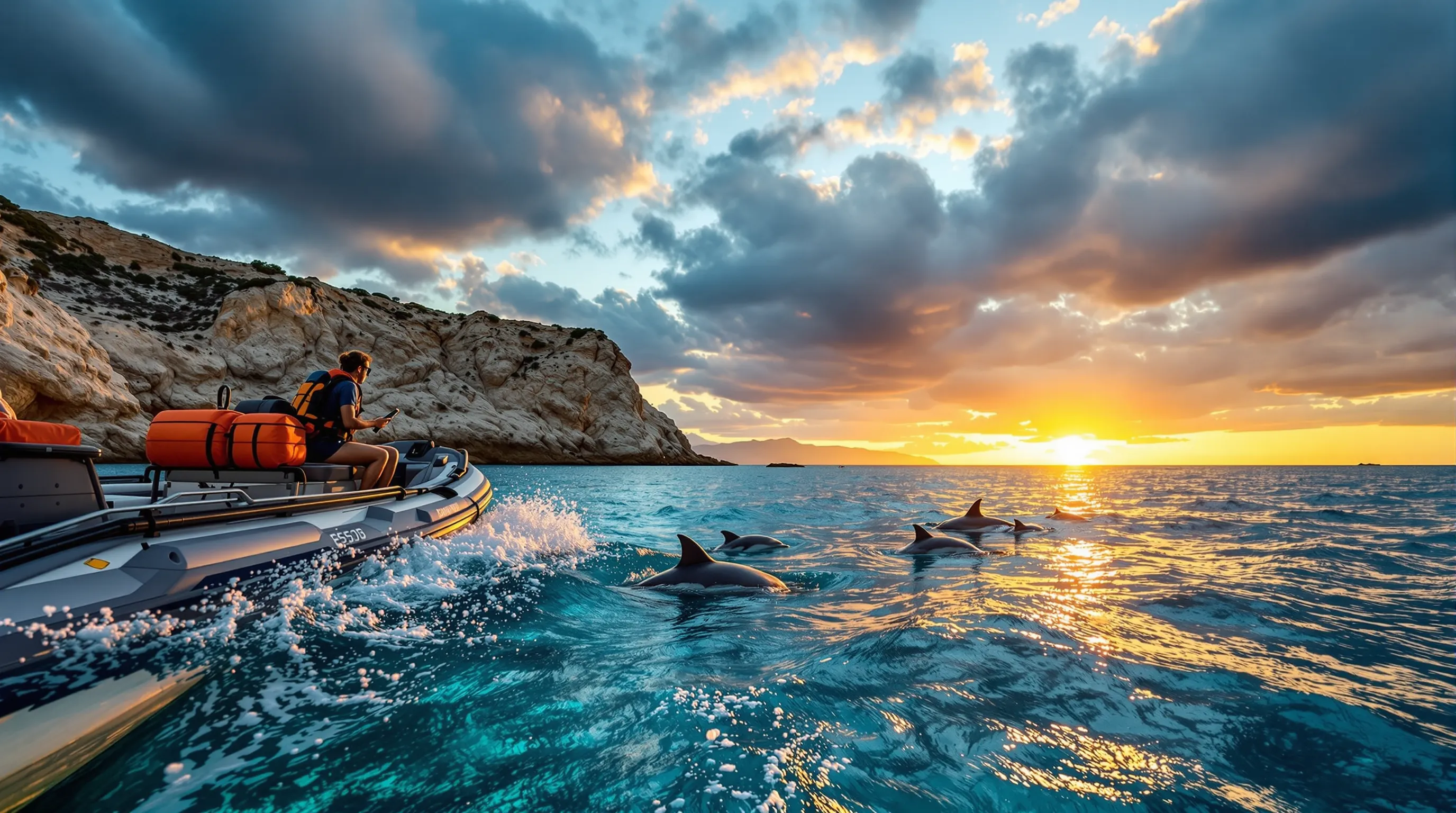
What Marine Biologists Reveal During Their Mediterranean Expeditions
Setting sail across the Mediterranean with a marine biologist transforms a simple boat trip into a genuine scientific voyage. These experts reveal the secrets of an ecosystem that harbours over 17,000 marine species—7% of global biodiversity within just 1% of the world's oceans. Each expedition becomes a living lesson where dolphins, whales, and fish reveal their fascinating behaviours. Participants discover phenomena invisible to untrained eyes and return with heightened environmental awareness.
Scientific expertise in service of marine observation
A marine biologist transforms every wildlife encounter into a unique learning experience. These professionals instantly identify the 32 cetacean species found in the Mediterranean, explain their seasonal migrations, and decode their behaviours. They use hydrophones to listen to humpback whale songs or dolphin echolocation clicks. Their expert eye spots the telltale signs of an upcoming sighting: hunting seabirds, changes in water colour, or plankton upwelling. This expertise guarantees authentic encounters and rigorous scientific explanations that considerably enrich the experience.
Scientific equipment on board
Expeditions are equipped with hydrophones, stabilised binoculars, precision GPS, and observation logbooks. These tools enable recording of marine vocalisations, distance measurements, and documentation of each encounter for scientific research. Participants handle this professional equipment under supervision.
Exceptional discoveries and privileged moments
Each expedition holds unique surprises: observing fin whales reaching 20 metres in length, encounters with striped dolphins moving in groups of 50 individuals, or discovering century-old loggerhead turtles. Biologists share fascinating insights: why dolphins surf bow waves, how whales communicate across kilometres, or the collective hunting strategies of bluefin tuna. These professionals also reveal climate change impacts observed directly in the field: arrival of tropical species, changes in feeding areas, or behavioural modifications. Average cost: £40-55 per adult for 3-4 hours of observation.
Contributing to citizen science
Participants become active contributors to marine research through citizen science programmes. Each observation is geo-located and transmitted to national databases such as Miraceti or GIS3M. Biologists train participants in cetacean photo-identification techniques, enabling individual animal recognition through natural markings. This citizen approach enriches knowledge about Mediterranean populations and their evolution. Collected data feeds into international scientific reports and contributes to conservation measures. This participatory dimension gives profound meaning to the excursion, transforming each participant into an ambassador for marine protection.
Concrete impact of observations
Data collected during expeditions has identified 3 new dolphin nursery areas and adjusted commercial shipping lanes. Each photograph and observation contributes directly to European marine conservation programmes and influences protection policies.
Practical tips to optimise your expedition
Book between April and October to maximise observations, with peak activity in May-June and September. Choose morning departures (8-9am) when seas are calm and animals more active. Budget to consider: £40-55 per adult, £30-40 for children, with group rates available. Bring sunglasses, sun cream, hat, and warm clothing for offshore conditions. Expeditions typically last 3-4 hours with a 90% observation success rate. Some operators offer free return trips if unsuccessful. Booking recommended 48 hours in advance during peak season, possible until the day before during quieter periods.
Frequently asked questions
What's the average duration of an expedition with a marine biologist?
Expeditions typically last 3-4 hours, including 2.5 hours of active marine observation. This optimal timing covers several observation zones whilst allowing time for detailed scientific explanations from the accompanying biologist.
Which species can you observe in the Mediterranean with a biologist?
In the Mediterranean, you can observe striped dolphins, bottlenose dolphins, fin whales, pilot whales, loggerhead turtles, and sperm whales. Biologists also identify seabirds, tuna, sunfish, and explain the planktonic ecosystem invisible to the naked eye.
How does the marine biologist enhance the observation experience?
Biologists use hydrophones to listen to cetaceans, explain observed behaviours, precisely identify each species, and share unique scientific anecdotes. They transform a tourist outing into a genuine educational expedition with 95% customer satisfaction.
An expedition with a marine biologist far exceeds simple tourist entertainment. This unique experience combines wonder with learning, environmental awareness with scientific contribution. Each observation becomes a privileged moment of connection with Mediterranean nature. Discover these exceptional expeditions and experience the Mediterranean differently.
Read also
Why Wildlife Cruises Transform Your Vision of the French Riviera
Discover wildlife cruises from Nice: dolphins, whales and Pelagos Sanctuary. Boo...
7 fascinating secrets of Mediterranean octopuses that even biologists are discovering
Discover the astonishing behaviours of octopuses along the Mediterranean coast. ...
What Marine Biologists Are Actually Discovering Off the Monaco Coast
Discover the secrets of Monaco's marine biodiversity: wildlife watching cruises,...
These Mediterranean creatures will transform your vision of the seafloor
Discover exceptional Mediterranean marine life: dolphins, groupers, Posidonia. C...