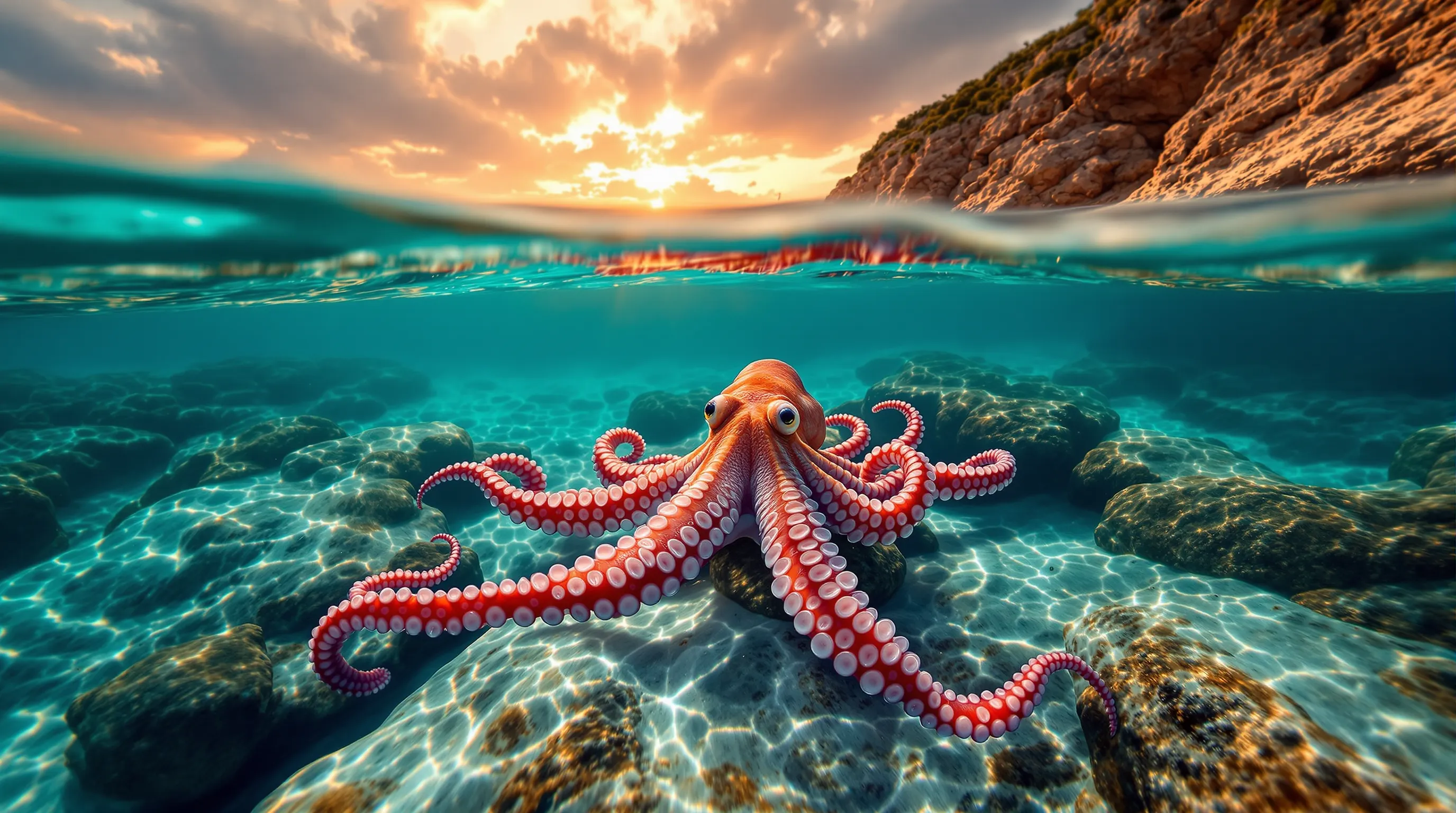
7 fascinating secrets of Mediterranean octopuses that even biologists are discovering
The crystal-clear waters of the Mediterranean are home to over 15 species of octopuses, creatures with extraordinary abilities. The common octopus (Octopus vulgaris) can change colour in 0.3 seconds and has three hearts beating at different rhythms. These cephalopods, found from the surface down to 200 metres depth, develop survival strategies so sophisticated they fascinate researchers worldwide. Their intelligence rivals that of higher vertebrates.
The surprising intelligence of Mediterranean cephalopods
Mediterranean octopuses demonstrate remarkable intelligence with 500 million neurons distributed between their brain and tentacles. They use tools, constructing shelters with shells and stones. The mimic octopus can imitate over 15 different species to escape predators. These creatures solve complex mazes and recognise human faces after just a few encounters. Their learning capacity through observation exceeds that of many marine mammals. Researchers have documented play behaviour amongst young specimens.
Cognitive abilities measured in the laboratory
Tests reveal that Mediterranean octopuses solve puzzles in under 60 seconds. They distinguish geometric shapes and memorise routes over several weeks. Their brains process visual information with 95% accuracy when identifying potential prey and predators.
Camouflage techniques and survival strategies
The chromatophore system of Mediterranean octopuses comprises up to 200 pigment cells per square millimetre, allowing for 16 million colour combinations. They simultaneously modify colour, texture, and body shape by synchronising three types of cells: chromatophores, iridophores, and leucophores. The blue-ringed octopus, rare in the Mediterranean, deploys its warning patterns within 2 seconds. These adaptations give them a 78% survival rate against predators in their natural habitat. Their skin faithfully reproduces surrounding corals, algae, and rocky substrates.
Reproduction and life cycle of local species
Mediterranean octopus reproduction follows a strict annual cycle, with peak activity between May and September when temperatures reach 18-24°C. Females lay between 100,000 and 500,000 eggs depending on species, which they guard for 4 to 8 weeks without feeding. The survival rate of planktonic larvae doesn't exceed 1%, but those reaching juvenile stage grow by 5% per week. Life expectancy varies from 12 to 24 months depending on environmental conditions and food availability in coastal areas.
Preferred breeding sites
Rocky bottoms between 5 and 50 metres constitute the main nurseries. Females choose north-facing crevices to benefit from oxygenated currents. These areas shelter 85% of observed spawning along the French Mediterranean coastline.
Practical advice for observation
Observing Mediterranean octopuses is ideally done between June and October, during morning dives between 7 and 10 AM. Rocky sites around the Calanques, Port-Cros, and the Hyères Islands offer 90% chance of encounters. Equip yourself with mask, snorkel, and minimum 3mm wetsuit. Maintain a 2-metre distance to avoid stress. Guided excursion prices range from £40 to £70 per person. Book 48 hours in advance during peak season. PADI-certified dive centres offer specialised marine biology training from £160.
Frequently asked questions
Where can you see octopuses in the French Mediterranean?
The best spots are found in the Calanques of Marseille, Port-Cros National Park, and the rocky bottoms of Banyuls-sur-Mer. The optimal period extends from June to October with 85% chance of observation during morning dives between 5 and 30 metres depth.
Are Mediterranean octopuses dangerous?
Mediterranean octopuses present no danger to humans. Only the blue-ringed octopus, very rare in our waters, possesses venom. Local species naturally flee human presence and only attack if they feel cornered in their refuge.
How do you distinguish an octopus whilst diving?
Octopus is the scientific term for these cephalopods. In the Mediterranean, Octopus vulgaris is recognised by its 8 tentacles, suction cups, and ability for instant camouflage on rocky bottoms. They're distinguished from other marine life by their intelligent behaviour and rapid colour changes.
Mediterranean octopuses reveal fascinating new secrets daily to scientists and passionate divers alike. Their exceptional intelligence and adaptive capabilities make them remarkable ambassadors of marine biodiversity. To discover these extraordinary creatures on environmentally respectful guided excursions, visit our marine observation programmes at dauphin-mediterranee.com.
Read also

What Marine Biologists Are Actually Discovering Off the Monaco Coast
Discover the secrets of Monaco's marine biodiversity: wildlife watching cruises,...

These Mediterranean creatures will transform your vision of the seafloor
Discover exceptional Mediterranean marine life: dolphins, groupers, Posidonia. C...

Why This Secret Agenda Will Transform Your Nautical Summer on the French Riviera
Discover the exclusive nautical agenda of the French Riviera: prestigious regatt...
What Divers Keep Secret About Villefranche-sur-Mer's Crystal-Clear Waters
Discover the secrets of water sports in Villefranche-sur-Mer. Diving, kayaking, ...