7 Secrets of Mediterranean Corals That Experienced Divers Know
Contrary to popular belief, the Mediterranean is home to over 600 coral species, some of which are unique worldwide. These colourful underwater gardens hide between 20 and 200 metres deep, forming ecosystems of unsuspected richness. From the iconic red gorgonian to giant bamboo corals, these millennial formations create spectacular underwater landscapes along French, Italian and Spanish coastlines. For passionate divers, these sites represent exceptional destinations, accessible year-round with proper exploration techniques.
Iconic Species You Must Observe
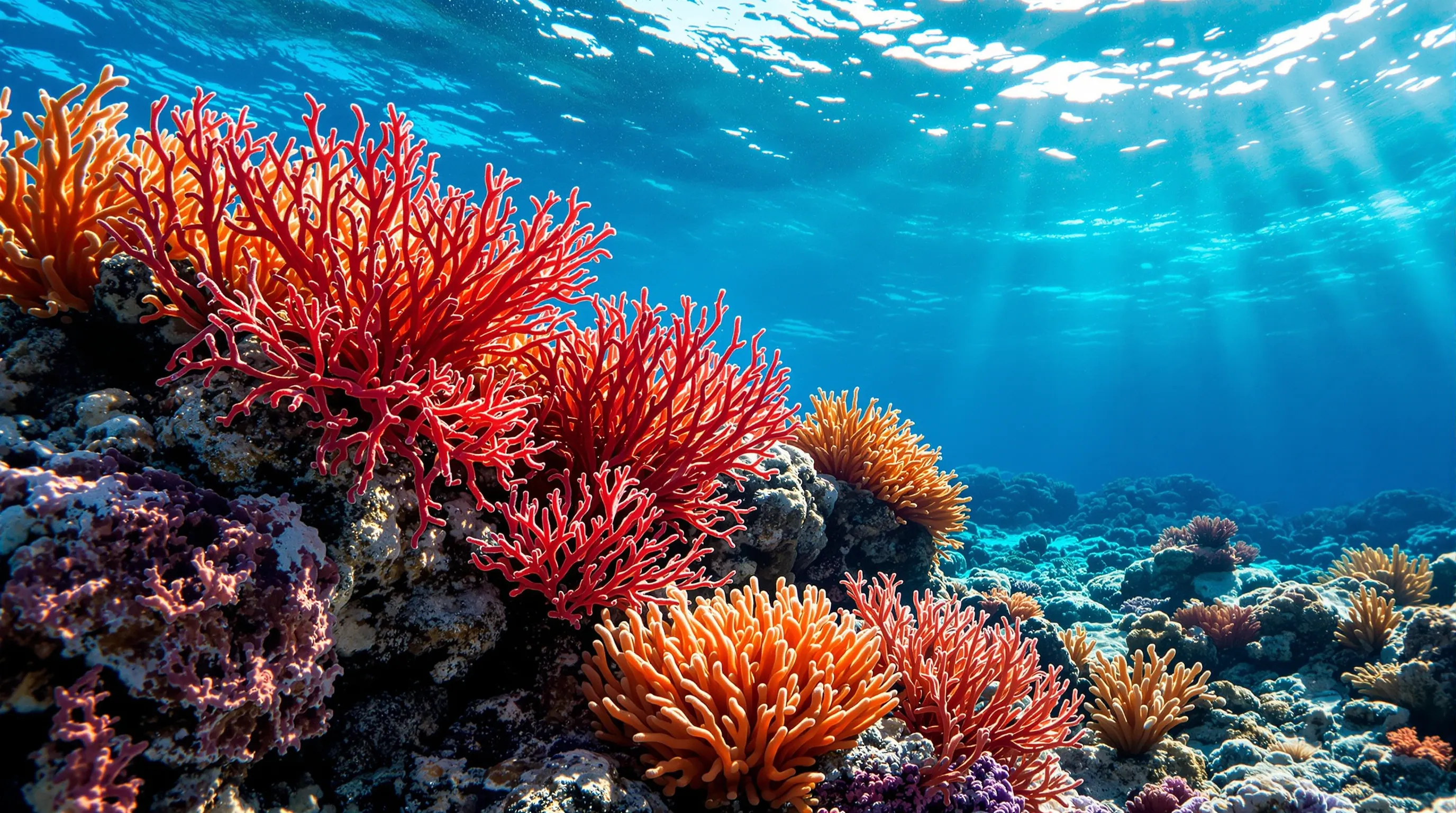
The red gorgonian (Paramuricea clavata) reigns supreme in Mediterranean waters, forming genuine underwater forests between 15 and 80 metres depth. These colonies can reach 2 metres in height and live for several decades. Orange coral (Astroides calycularis) carpets rocky walls with its fluorescent polyps, particularly visible at night. Rarer still, the Mediterranean bamboo coral (Isidella elongata) stands like an underwater tree, measuring up to 3 metres. These endemic species represent unique natural heritage, concentrated primarily in the marine protected areas of Port-Cros, Scandola and Cabrera.
Optimal Observation Periods
Summer offers the best visibility with waters at 24-26°C and clarity up to 40 metres. Corals deploy their polyps mainly at night or in overcast conditions. September-October allow observation of certain species' reproduction, a spectacular but exceptionally rare phenomenon to document in recreational diving.
Secret Spots for Advanced Divers
Cap Roux near Saint-Raphaël boasts the highest density of red gorgonians between 25 and 45 metres, accessible only to Advanced Open Water divers. The drop-offs of Bonifacio in Corsica reveal orange coral gardens across 80 metres of vertical relief. In Spain, the Medes Islands near L'Estartit offer 23 marked sites with exceptional coral biodiversity. The Carry-le-Rouet marine reserve conceals century-old coral formations in its semi-dark caves. These spots require rigorous planning: mandatory decompression, variable currents and precise navigation. Local dive centres offer specialised guided trips from May to October, with a maximum of 6 divers per guide to preserve these fragile ecosystems.
Diving Techniques and Specialised Equipment
Observing Mediterranean corals requires perfect buoyancy to avoid any destructive contact. Powerful lighting (minimum 3000 lumens) reveals true colours from 20 metres depth. Nitrox diving is recommended to extend bottom times on deep sites. 5mm wetsuits suffice in summer, 7mm in winter with mandatory hood. An underwater camera with flash allows documentation of these exceptional encounters. Drift diving requires a delayed SMB and meticulous current planning. Specialist guides use underwater slates to identify species without disturbing them.
Regulations and Conservation
Any collection is prohibited, with Mediterranean corals protected since 1992. Minimum observation distances are 1 metre for gorgonians, 50cm for other species. Night dives require special permits in marine reserves.
Practical Advice
Budget £40-55 per guided dive on coral sites, £300-380 for a 4-day diving break with 6 dives. The optimal season runs from May to October with temperatures of 18-26°C. Book 15 days in advance during high season, as places are limited on these protected sites. Advanced Open Water or equivalent certifications are required for most spots. Accommodation near dive centres costs £50-100 per night depending on season. Packages often include equipment, specialist guide and personalised logbook. Consider comprehensive dive insurance covering evacuations from depths up to 150 metres.
Frequently asked questions
Can you see Mediterranean corals whilst snorkelling?
Only orange corals are visible when snorkelling in the first few metres, notably at Port-Cros and the calanques. Red gorgonians require scuba diving as they typically live beyond 15 metres depth in the twilight zone of rocky drop-offs.
What's the best time to photograph Mediterranean corals?
September-October offer ideal conditions: water still warm at 22°C, excellent visibility up to 40 metres and maximum coral activity. Avoid July-August when tourist crowds can muddy the water and stress sensitive coral colonies.
Are Mediterranean corals threatened by climate change?
Yes, marine heatwaves in 2003 and 2022 caused 30% mortality among surface red gorgonians. These species are gradually migrating to deeper, cooler waters, altering the traditional Mediterranean ecosystem observed for decades.
These Mediterranean coral treasures offer passionate divers unforgettable encounters with unique natural heritage. Each immersion reveals the unsuspected richness of our coastlines, far from tropical clichés. To prepare your next underwater exploration and discover other wonders of the Mediterranean, consult our comprehensive guides on dauphin-mediterranee.com.
Read also
Why These Mediterranean Harbours Will Transform Your Travel Perspective
Discover the picturesque harbours of the Mediterranean coast that will make you ...
Secret Mediterranean Ports That Even Locals Don't Know About
Discover 12 hidden picturesque ports along the Mediterranean coast, away from to...
What Marine Biologists Are Hiding About the Mediterranean Fin Whale
Discover the secrets of Mediterranean fin whales, the world's second-largest mar...
7 fascinating secrets about sperm whales that only Mediterranean experts know
Discover Mediterranean sperm whale secrets revealed by experts. Unique behaviour...