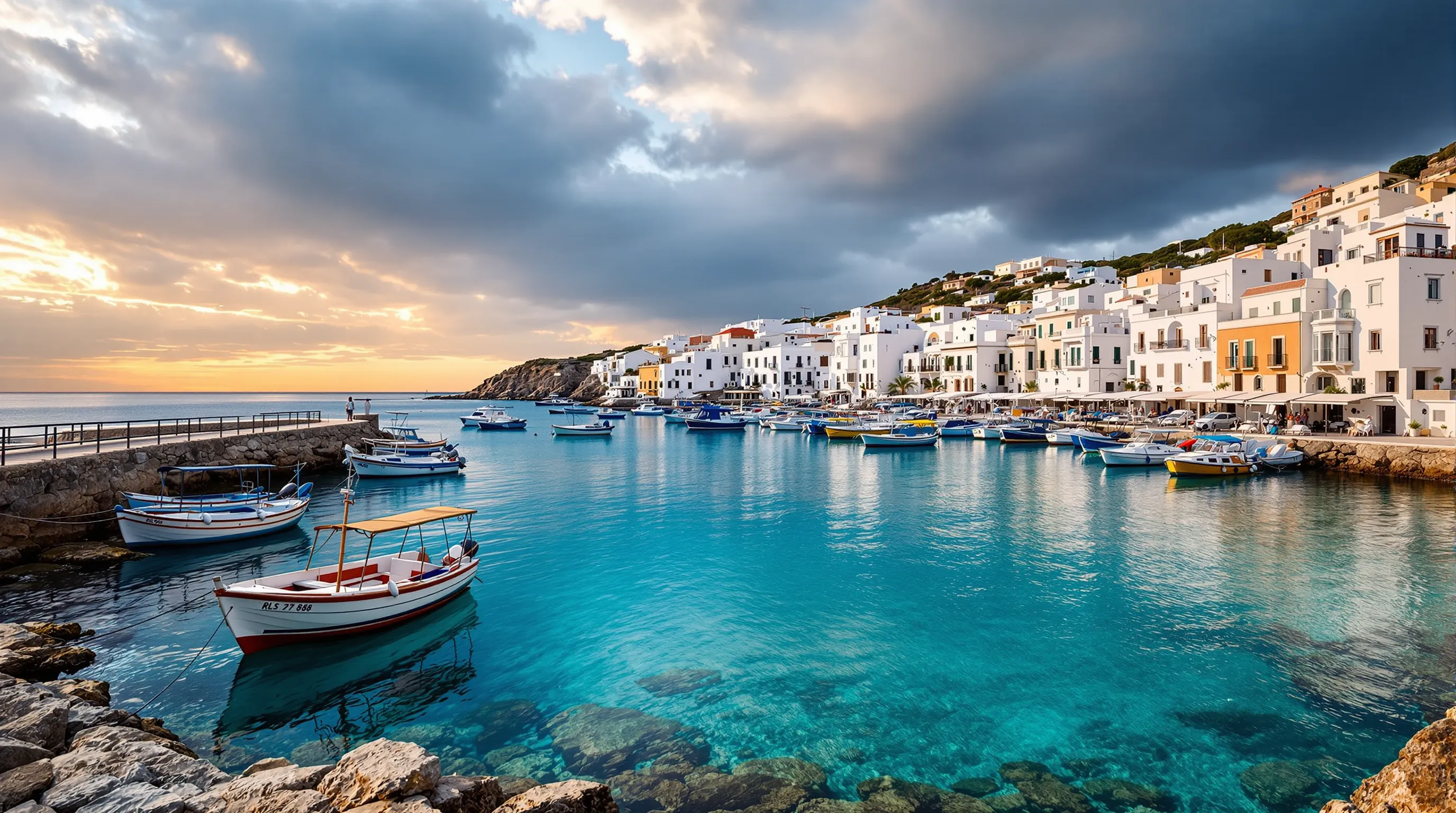
Why These Mediterranean Harbours Will Transform Your Travel Perspective
The Mediterranean basin is home to over 150 picturesque harbours that have preserved their millennial authenticity. From the French Riviera to the Greek islands, these maritime havens attract 15 million visitors annually with their preserved traditions and unique architecture. Between colourful houses clinging to clifftops, traditional fishing boats and family-run tavernas, these harbours offer complete immersion in the Mediterranean way of life. Their cobblestone alleys tell the story of civilisations that have shaped the cultural identity of this legendary sea.
Hidden Gems of the French Coast
Cassis, with its harbour nestled between the calanques, welcomes 800,000 visitors annually. Its colourful pointus create a living tableau against 400-metre-high limestone cliffs. Collioure, pearl of the Côte Vermeille, has inspired the greatest painters for a century with its 300 days of sunshine per year. The harbour maintains its fleet of 40 traditional Catalan boats, the barques catalanes with their lateen sails. Port-Vendres, a former Roman port, offers guided tours of its historic facilities dating from the 17th century. These destinations provide an authentic experience away from mass tourism, with family restaurants serving the day's catch directly on the quaysides.
Cassis and Its Maritime Traditions
Fishermen in Cassis perpetuate ancestral techniques, notably sea urchin fishing from December to April. The fish market, operating since 1850, daily offers 25 varieties of Mediterranean fish. Harbour tours reveal the history of shipyards that built 200 pointus between 1920 and 1980.
The Preserved Authenticity of Italian Harbours
Cinque Terre reveals five harbours suspended between sea and mountain, UNESCO-listed since 1997. Vernazza, a jewel of 1,000 inhabitants, preserves its 11th-century castle and natural marina carved into rock. The vineyard terraces annually produce 50,000 bottles of Sciacchetrà, the local dessert wine. Portofino, a former fishing village, maintains its charm with only 400 permanent residents. Its colourfully-façaded houses follow a strict colour code dating from the Middle Ages. Manarola offers hiking trails connecting the harbours in 5 hours' walking. These destinations provide unique gastronomic experiences, with specialities like Genoese pesto and artisanal focaccias prepared according to recipes passed down through four generations.
Secret Pearls of the Greek Islands
Naoussa, on Paros island, shelters a fleet of 120 traditional fishing boats, the kaïkis with their blue and white hulls. The 15th-century Venetian harbour preserves its original fortifications and octagonal lighthouse. Fiskardo, in Kefalonia, the only village spared by the 1953 earthquake, displays authentic 18th-century Venetian houses. Its family tavernas serve specialities like bourdeto, a fish stew with Corfiot spices. Hydra prohibits motor vehicles, preserving its bygone atmosphere with 300 donkeys providing transport. The shipyards still restore traditional schooners using centuries-old techniques. These harbours offer local cooking classes and traditional boat excursions to discover inaccessible coves.
Harbour Culinary Traditions
Each harbour develops its specialities linked to local fishing. In Naoussa, tavernas prepare kakavia, fish soup with wild vegetables. Family recipes, passed down orally, use exclusively the day's catch and aromatic herbs gathered from surrounding hills.
Practical Tips for Your Discovery
The best period extends from May to October, with average temperatures of 25°C and reduced crowds in June and September. Average budget: £70-100/day for a couple, including accommodation in family guesthouses, meals in local tavernas and activities. Bookings recommended 2 months in advance for high season. Local transport favours regional ferries, 40% cheaper than direct connections. Useful apps: Marine Traffic to follow harbour movements, and audio guides developed by local tourist offices. Essential equipment: non-slip shoes for wet quays, reinforced sun protection (factor 50+) and light clothing for sea breezes. Fish markets generally open at 6:30am, offering the authentic spectacle of fishermen returning.
Frequently asked questions
What's the best time to visit Mediterranean harbours?
May-June and September-October offer ideal weather (22-25°C), fewer crowds and 30% reduced rates. Local maritime festivals concentrate during this period, notably the sea festivals in September.
How can I reach the most isolated harbours without a car?
Regional ferries serve 85% of picturesque harbours. Local buses complete the network with daily connections. Apps like Rome2Rio calculate optimal multimodal routes for each destination.
What are the typical dishes to try in Mediterranean harbours?
Each harbour offers its specialities: bouillabaisse in Marseille, fritto misto in Italy, kakavia in Greece. Harbour tavernas serve the day's catch prepared according to century-old family recipes.
These authentic Mediterranean harbours offer complete immersion in coastal living. Their preserved traditions and local gastronomy create unforgettable memories. To extend this maritime discovery, explore the underwater wonders of the Mediterranean on dauphin-mediterranee.com and dive into the fascinating world of dolphins and whales that frequent these crystalline waters.
Read also
Secret Mediterranean Ports That Even Locals Don't Know About
Discover 12 hidden picturesque ports along the Mediterranean coast, away from to...
What Marine Biologists Are Hiding About the Mediterranean Fin Whale
Discover the secrets of Mediterranean fin whales, the world's second-largest mar...
7 fascinating secrets about sperm whales that only Mediterranean experts know
Discover Mediterranean sperm whale secrets revealed by experts. Unique behaviour...
5 Secret French Riviera Beaches Even Locals Don't Know About
Discover 5 secret beaches on the French Riviera away from the crowds. Wild coves...