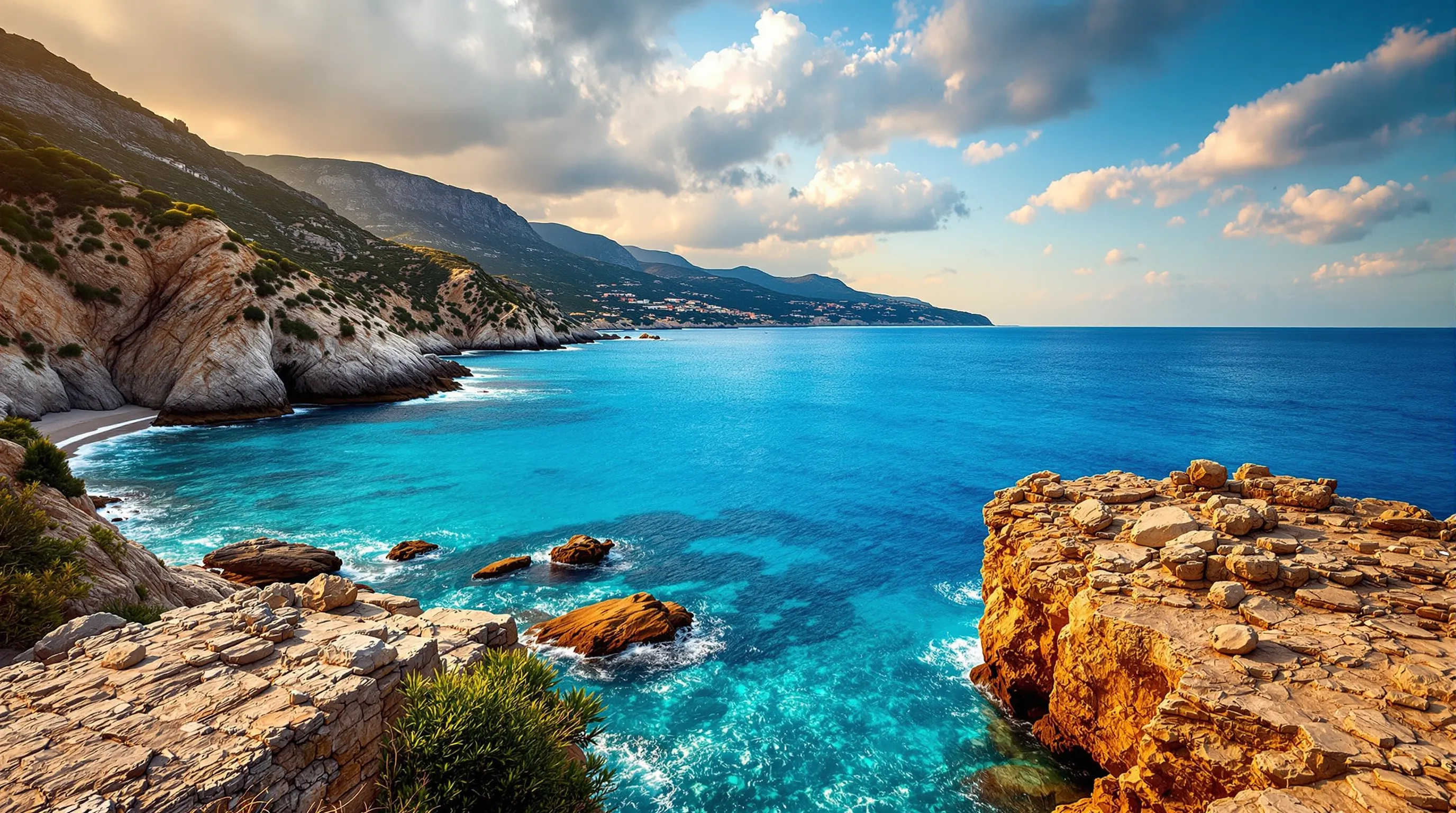
What Marine Biologists Are Hiding About the Mediterranean Fin Whale
The fin whale (Balaenoptera physalus) reigns over Mediterranean waters as a silent giant measuring 20 metres in length. The world's second-largest marine mammal after the blue whale, it can reach 70 tonnes and swim at 50 km/h. Approximately 3,500 individuals populate the western Mediterranean, particularly within the Pelagos Sanctuary between France, Monaco and Italy. These colossal creatures feed primarily on krill and small fish, filtering up to 70 tonnes of water daily. Their observation has become accessible to whale watching enthusiasts from the Provençal and Ligurian coasts.
Exceptional Anatomy of the Mediterranean Giant
The fin whale displays a unique asymmetry in the animal kingdom: its right lower jaw is white whilst the left remains dark. This distinctive feature facilitates hunting in krill shoals. Its ventral grooves, numbering 50 to 100, extend from throat to navel and allow spectacular dilation during feeding. The dorsal fin, positioned two-thirds along the body, measures 60cm in height. Their baleen plates, natural filters of 70cm, retain prey whilst water drains away. The 200kg heart pumps 5,000 litres of blood, supplying a 7kg brain. Their lungs contain 3,000 litres of air, enabling 15-minute dives to 200 metres depth.
Sophisticated Communication System
Fin whales emit low-frequency sounds between 15-25 Hz, inaudible to human ears. These songs carry 500km underwater and serve to communicate between distant individuals. Males produce repetitive sequences lasting 15-20 seconds, probably linked to reproduction. This long-distance communication enables them to coordinate movements and locate nutrient-rich zones within the vast Mediterranean expanse.
Habitat and Behaviour in the Mediterranean
The Pelagos Sanctuary, established in 1999, protects 87,500 km² of international waters where these giants roam. Fin whales primarily frequent upwelling zones rich in nutrients, notably off the French Riviera and Italian Riviera. They follow marine currents and krill migrations, their principal food source. In summer, they rise to surface waters for intensive feeding, consuming up to 2 tonnes of food daily. Their migratory routes take them from Spanish waters to Corsican coasts, following thermal gradients. Females give birth to 6-metre calves after 11 months' gestation, typically in winter in the warmer waters of the western basin.
Threats and Conservation of Fin Whales
Intensive maritime traffic represents the primary threat with 200,000 vessels annually crossing their feeding zones. Collisions kill 5-10 individuals per year according to ACCOBAMS. Engine noise pollution disrupts their sophisticated long-distance communication system. Ghost fishing nets regularly trap these mammals, causing fatal injuries. Climate change alters plankton distribution, forcing fin whales to adapt their feeding routes. Microplastics accumulate in their systems via the food chain. Research programmes use satellite tags to track their movements and adapt commercial shipping corridors. Public awareness through ecotourism generates essential funding for their protection.
Concrete Protection Measures
The REPCET project equips ferries with acoustic sensors detecting cetacean presence at 10km range. Ship operators can thus reduce speed or modify routes. Temporary protection zones are created during summer feeding peaks. Conservation groups collect observation data from recreational boaters via mobile apps, creating effective collaborative monitoring of these fragile populations.
Practical Tips for Observing Fin Whales
The optimal period runs from June to September when fin whales surface to feed. Departures from Antibes, Cannes, Nice or Sanremo offer 80% observation chances per trip. Allow 4-6 hours at sea and £35-70 per adult depending on operator. Optimal conditions include calm seas (swell <1m) and visibility exceeding 5km. Depart early morning (8-9am) when winds are light. Fin whales remain 5-15 minutes at surface between dives, providing excellent photographic opportunities. Bring biodegradable sun cream, 8x32 minimum binoculars, and warm clothing as temperatures drop 5°C offshore. Book 48 hours ahead in peak season and check marine weather forecasts.
Frequently asked questions
What size is a Mediterranean fin whale?
Mediterranean fin whales measure 18-20 metres for females and 17-19 metres for males, weighing between 40-70 tonnes. They are slightly smaller than their Atlantic cousins but remain the world's second-largest marine mammals after blue whales.
Where can I see fin whales from the French Riviera?
The best departure points are Antibes, Cannes, Nice and Monaco. Fin whales frequent Pelagos Sanctuary waters 20-40km offshore, in depths of 1,000-2,500 metres. Whale watching excursions reach these areas in 1.5-2 hours' sailing.
How much does a Mediterranean whale watching trip cost to see fin whales?
Prices range from £35 to £70 per adult depending on duration (4-8 hours) and operator. Half-day trips cost £35-50, full days £55-70. Children's discounts typically 30-50%. Some operators offer money-back guarantees if no cetaceans are sighted.
The Mediterranean fin whale captivates through its majesty and adaptation to a unique environment. These 20-metre giants embody the richness of our Mediterranean marine ecosystems. Their responsible observation contributes to their protection whilst offering unforgettable experiences. Plan your encounter with these marine colossi and discover our specialist guides' expertise on dauphin-mediterranee.com.
Read also
7 fascinating secrets about sperm whales that only Mediterranean experts know
Discover Mediterranean sperm whale secrets revealed by experts. Unique behaviour...
5 Secret French Riviera Beaches Even Locals Don't Know About
Discover 5 secret beaches on the French Riviera away from the crowds. Wild coves...
How Locals Secretly Explore the Calanques by Kayak and Paddleboard
Discover the secret techniques used by Provençal locals to explore the calanques...
Why Mediterranean Shipwrecks Transform Your Diving Passion
Discover the secrets of Mediterranean shipwreck diving: exceptional sites, fasci...