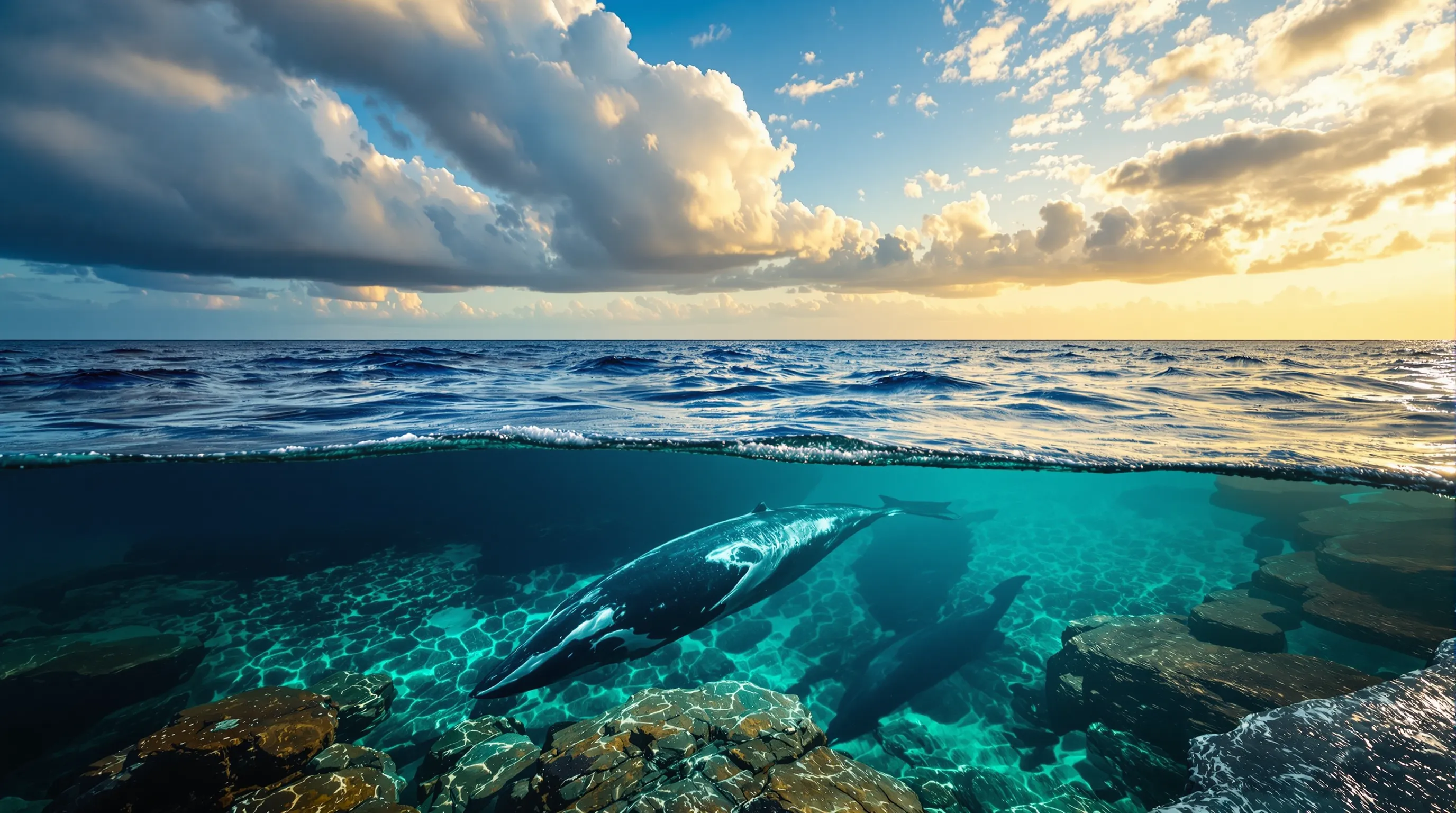
7 fascinating secrets about sperm whales that only Mediterranean experts know
Sperm whales have roamed Mediterranean waters for millennia, yet their presence remains largely unknown to the general public. These deep-sea giants, reaching up to 18 metres in length, particularly frequent diving zones between 1,000 and 3,000 metres deep. Contrary to popular belief, the Mediterranean hosts a resident population of approximately 2,500 individuals, primarily concentrated within the Pelagos Sanctuary. Experts reveal unique behaviours in this population, including specialised hunting techniques and surprising migration routes that transform our understanding of these majestic marine mammals.
A unique Mediterranean population unlike anywhere else
The Mediterranean sperm whale population exhibits unique characteristics that distinguish it from their oceanic cousins. These cetaceans evolve within a semi-enclosed basin of 2.5 million km², developing specific behavioural adaptations. Females and their calves form stable social groups of 10 to 15 individuals, remaining faithful to the same feeding grounds for generations. Adult males, solitary creatures, can reach up to 18 metres compared to 12 metres for females. Their diet consists of 90% deep-sea squid, notably Histioteuthis bonnellii, an endemic Mediterranean species. These sperm whales regularly dive to depths exceeding 2,000 metres, exploiting the richness of submarine canyons that characterise Mediterranean seabeds.
Remarkable physiological adaptations
Mediterranean sperm whales have developed lung capacity 15% superior to their Atlantic cousins, enabling 90-minute dives. Their muscular myoglobin levels are also 20% higher, optimising oxygen storage for these forays into Mediterranean abyssal depths particularly rich in prey.
Prime viewing zones and optimal seasons
The Pelagos Sanctuary, an 87,500 km² maritime triangle between France, Monaco and Italy, concentrates 80% of Mediterranean sperm whale observations. The Rech du Lacaze-Duthiers canyons off Banyuls and the Cassidaigne canyon near Cassis offer exceptional encounter rates of 70% between May and September. The optimal period extends from June to October, when coastal upwellings enrich waters with nutrients, attracting deep-sea squid. Morning excursions between 7am and 11am maximise viewing chances, as sperm whales surface after their nocturnal hunting dives. Ideal weather conditions include winds below 15 knots and moderate swells. Professionals use hydrophones to detect their characteristic echolocation clicks, audible up to 10km away.
Social behaviour and complex communication
Mediterranean sperm whales develop acoustic dialects specific to each family clan, composed of rhythmic click sequences called codas. Each matriarchal group possesses a repertoire of 20 to 30 different codas, passed from mother to daughter across generations. Scientists have identified 12 distinct dialects in the Mediterranean, some shared with Atlantic populations, others entirely unique. These mammals practise alloparenting, where females without calves collectively care for group youngsters. Breeding males visit family groups between July and September, travelling up to 50km daily to locate receptive females. Their sophisticated communication system also includes physical contact, rubbing and collective play observed primarily during summer gatherings in offshore deep waters.
Remarkable collective intelligence
Mediterranean sperm whales demonstrate exceptional cooperation during deep-water hunting. Females coordinate their dives in groups of 4 to 6 individuals, creating acoustic barriers to herd squid shoals. This collective strategy increases their capture efficiency by 40%.
Practical tips for responsible observation
Sperm whale watching requires a budget of £35 to £70 per person for 4 to 6-hour excursions departing from specialist ports like Port-Vendres, Sanary-sur-Mer or Imperia. Book 48 hours in advance during peak season and choose certified High Quality Whale Watching operators respecting responsible approach guidelines. Pack warm clothing even in summer, as temperatures drop by 5°C offshore, and bring sun protection and seasickness remedies. The best periods run from May to September with peaks in July-August. Choose vessels with maximum 12 passengers for an optimal experience. Naturalist guides use prediction software based on bathymetry, water temperature and currents to maximise your encounter chances. Respect minimum distances of 100 metres and switch off engines during observations.
Frequently asked questions
What's the best time to observe sperm whales in the Mediterranean?
The optimal season runs from May to September, peaking between June and August. Morning excursions between 7am and 11am offer the best viewing chances, when sperm whales surface after their nocturnal deep-water hunting dives.
Where can I see sperm whales from the French Mediterranean coast?
The Pelagos Sanctuary offers the best opportunities, particularly departing from Port-Vendres, Banyuls-sur-Mer and Sanary-sur-Mer. The Lacaze-Duthiers and Cassidaigne submarine canyons concentrate 70% of sightings with trips organised by certified professionals.
How much does a Mediterranean sperm whale watching trip cost?
Prices range from £35 to £70 per person for 4 to 6-hour excursions, depending on operator and season. Choose certified High Quality Whale Watching providers, limiting groups to 12 passengers maximum and respecting regulatory approach distances of 100 metres.
Mediterranean sperm whales reveal treasures of behavioural sophistication and unique adaptation. These deep-sea giants offer nature enthusiasts unforgettable encounters whilst respecting their environment. To deepen your knowledge of Mediterranean cetaceans and organise your next observations, visit dauphin-mediterranee.com and discover the fascinating world of these exceptional marine mammals.
Read also
5 Secret French Riviera Beaches Even Locals Don't Know About
Discover 5 secret beaches on the French Riviera away from the crowds. Wild coves...
How Locals Secretly Explore the Calanques by Kayak and Paddleboard
Discover the secret techniques used by Provençal locals to explore the calanques...
Why Mediterranean Shipwrecks Transform Your Diving Passion
Discover the secrets of Mediterranean shipwreck diving: exceptional sites, fasci...

These 7 Mediterranean marine creatures will transform your view of the seabed
Discover exceptional Mediterranean marine wildlife: dolphins, groupers, seagrass...