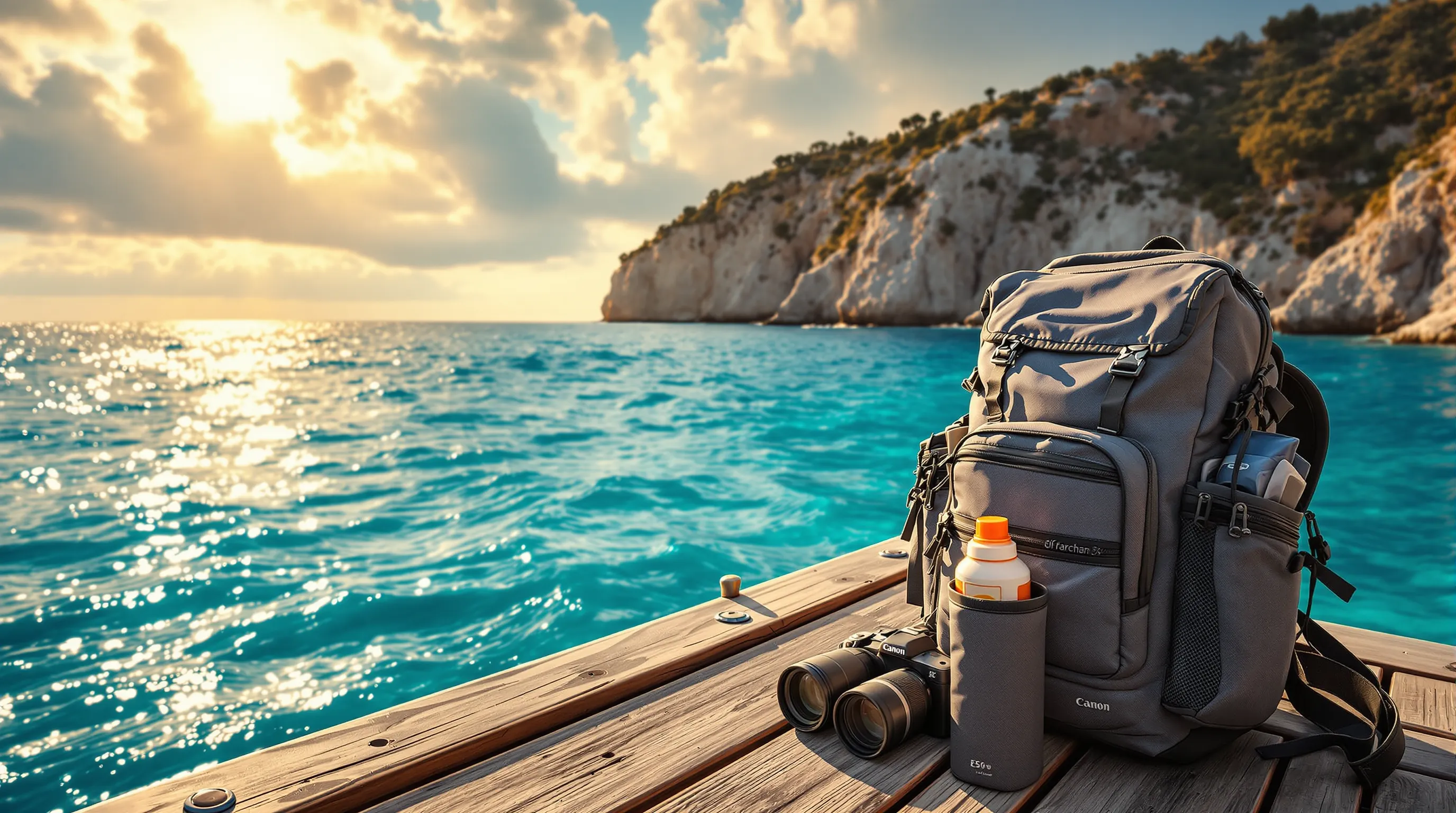
Boat Trip Bag: What Marina Always Brings Aboard
The first time I set sail from Sanary-sur-Mer for a striped dolphin monitoring mission, I'd forgotten my sunscreen. The result: a proper sunburn within three hours, despite a hazy sky. In the fifteen years I've spent sailing the waters between Toulon and the Ligurian coast, I've refined my packing list. A poorly prepared bag can ruin a trip, and sometimes make it dangerous. Here, item by item, is what a proper sea bag contains, why, and what whale-watching professionals always tuck into theirs before casting off.
Sun protection and clothing: your first line of defence
At sea, the sun hits twice: directly and by reflecting off the water, which increases UV exposure by 10 to 25% compared to being on dry land. I've seen passengers get burnt within the first hour off Six-Fours-les-Plages, even when the sky looked overcast. The rule: SPF 50 minimum, water-resistant sunscreen, applied before boarding and topped up every two hours. The mistral and offshore breeze create a false sense of coolness that masks the damage being done. As for clothing, I always go for layers: a technical t-shirt, a light fleece, a waterproof windbreaker. Even in high summer, off the Îles d'Hyères or the Gulf of Saint-Tropez, the temperature drops noticeably once the boat picks up to 15 knots. A cap or a hat with a chin strap is essential, as are polarised sunglasses, which cut glare and make it much easier to spot dolphin fins beneath the surface. I always pack closed, non-slip shoes too — never flip-flops on a wet deck.
Why technical layers change everything
Cotton clothing absorbs moisture and cools the body once wet, which can bring on mild hypothermia even at 20°C. I recommend synthetic fabrics or merino wool, which dry quickly and still insulate when damp. A foldable poncho or waterproof jacket takes up no space in the bag but can save a trip from being ruined by sea spray, which kicks in as soon as the boat passes 20 knots or crosses a cargo ship's wake off Marseille.
Observation gear: actually seeing what's happening at sea
A pair of binoculars makes all the difference between glimpsing a distant blow and identifying a Cuvier's beaked whale near the Cassidaigne canyon, within the Pelagos Sanctuary. I'd suggest 7x50 or 8x42 magnification, which stays steadier on a boat than a 10x. A camera with a zoom equivalent to at least 300mm lets you document sightings without disturbing the animals: ACCOBAMS regulations require a minimum approach distance of 100 metres for cetaceans, and a powerful zoom more than makes up for that safety distance. A notebook and pencil, in a moisture-resistant format, are handy for jotting down the time, observed behaviour, and number of individuals: this data, later passed on to networks like GIS3M, feeds into scientific research across the Mediterranean. Finally, a waterproof bag or dry pouch protects your phone, papers and lenses from salt spray, which corrodes electronics faster than you'd think.
Binoculars and zoom: what gear to prioritise
On a moving boat, stability matters more than raw magnification. 7x50 binoculars offer a wide field of view, ideal for scanning the horizon for blows or fins. For photography, a 100-400mm lens remains manageable handheld. Avoid bulky tripods: most trips on a rigid-hulled inflatable or catamaran don't allow you to stabilise them properly anyway.
When to go: seasons, weather and crowds in the Mediterranean
The ideal window for spotting dolphins and whales in the western Mediterranean runs from May to October, with a peak between June and September thanks to calmer seas and better visibility. The fin whale, the second-largest marine animal after the blue whale, frequents the Pelagos Sanctuary between July and September, when plankton concentrates there. Striped and bottlenose dolphins, year-round residents off Toulon, the Var coast and the Italian Riviera, are easier to spot when the sea is calmer, under 2 on the Beaufort scale. The mistral and tramontane winds make trips trickier from October to April, with frequent cancellations. April-May and September-October offer a good compromise: still-gentle seas, fewer boats, and often better prices. July and August see the highest footfall at ports like Bandol, Sanary and La Ciotat, with multiple departures a day. I'd recommend checking the marine forecast 48 hours ahead, particularly sea state and wind strength via the Met Office's inshore waters forecast, as a trip in rough seas drastically reduces your chances of sightings and your comfort on board.
Planning your trip: duration, fitness level and logistics
A watching trip usually lasts between two and a half hours and half a day depending on the operator, with some offering full-day expeditions further out into the Pelagos Sanctuary. No particular fitness level is required, but anyone prone to seasickness should take precautions: an anti-nausea tablet an hour before departure, a seat towards the back of the boat where movement is less pronounced, and eyes fixed on the horizon rather than a screen. I always bring a reusable water bottle and a few energy snacks, as the fresh air and rocking motion sharpen the appetite, and dehydration creeps up faster than on land. A waterproof 20-30 litre rucksack is more than enough to hold spare clothes, optical gear and a first-aid pouch with plasters, antiseptic and seasickness tablets. Book your spot several days ahead during high season, as High Quality Whale Watching-labelled trips have limited capacity to protect the animals' peace and quiet. Also check the cancellation policy in case of poor weather, which is common — and understandable — on this wind-exposed coastline.
The first-aid kit: often overlooked
Seasickness tablets, plasters, skin antiseptic and a lightweight emergency blanket are all useful additions to your bag. On a boat, access to medical help takes time even close to shore. I always pack an antihistamine in case of an unexpected reaction, and I make a point of flagging any known allergies to the crew before departure — a simple precaution that offers peace of mind and avoids nasty surprises out at sea.
Practical tips and responsible tourism
The cost of a boat trip varies depending on the length, the type of vessel — rigid inflatable, sailing boat or catamaran — and the operator's accreditation. Trips labelled High Quality Whale Watching, committed to a code of good practice, sometimes charge slightly more, reflecting smaller group sizes and crews trained in cetacean behaviour. Book directly online with local operators based in Sanary, Bandol, Toulon or La Ciotat, checking that they've signed up to a marine wildlife charter. ACCOBAMS regulations, which apply across the Mediterranean, require a minimum approach distance of 100 metres for cetaceans and ban any sudden manoeuvres, chasing, or attempts to swim with the animals. A good crew cuts the engine or slows down as soon as a pod is spotted and lets the animals decide whether to approach. Only bring reusable containers, never let any waste end up in the sea, and choose a reef-safe sunscreen free from oxybenzone and octinoxate — substances known to damage marine ecosystems and harm the zooplankton that many observed species feed on.
Frequently asked questions
What are the essentials to never forget in your bag?
SPF 50 sunscreen, a cap, polarised sunglasses, a waterproof windbreaker, binoculars and a reusable water bottle. Add a waterproof pouch to protect your phone and documents from sea spray, plus an anti-nausea tablet if you're prone to seasickness. These cover most of the unexpected situations you'll encounter on the Mediterranean.
Do you need a specific camera to watch dolphins?
A zoom of at least 300mm is recommended for photographing without disturbing the animals, given the regulatory minimum distance of 100 metres. A recent smartphone with optical zoom is fine for casual snaps, but a camera with a dedicated lens captures far more detail, such as the distinctive markings of striped dolphins.
What should you do if you get seasick during the trip?
Take an anti-nausea tablet an hour before departure, sit towards the back of the boat where the rocking is less pronounced, and keep your eyes on the horizon rather than on a screen or a book. Avoid a heavy meal before boarding and stay out in the fresh air rather than in an enclosed cabin.
What's the best time of year to spot cetaceans in the Mediterranean?
From May to October, with a peak between June and September when the sea is calmer and fin whales are present in the Pelagos Sanctuary. Striped and bottlenose dolphins, year-round residents, are easier to spot in calmer seas, particularly off Toulon, Sanary or Bandol.
How can you recognise a wildlife-friendly boat trip?
Check whether the operator holds the High Quality Whale Watching label, a mark of a strict charter on approach distances and boat speed. A reputable crew cuts the engine near the animals, never chases a pod, and limits the number of boats gathering around the same individual.
A well-prepared bag turns a simple outing into a genuine observation experience — relaxed and respectful of the marine environment. Sunscreen, binoculars, technical clothing and a small first-aid kit are enough to handle whatever the open sea throws at you. What matters most is choosing an operator committed to responsible practices, one that respects the regulatory distances from cetaceans. To plan your next Mediterranean boat trip and find the best times for sightings, check out our full guides at dauphin-mediterranee.com.
Read also

The Aresquiers: 5 secrets of a wild coastline few tourists know about
Discover the Aresquiers, a wild gem of the Languedoc coast: lagoons, salt marshe...

Calanques between Marseille and Cassis: the secret few visitors know about
Discover the most beautiful calanques between Marseille and Cassis: Sormiou, Sug...

Spotting Dolphins Without a Boat: The Secret Coastal Spots Few People Know
Discover where to spot dolphins from the coast in the Mediterranean: rocky headl...

Scandola in Corsica: what this unique Unesco-listed reserve reveals
Discover how to visit the Scandola nature reserve in Corsica: boat access, best ...