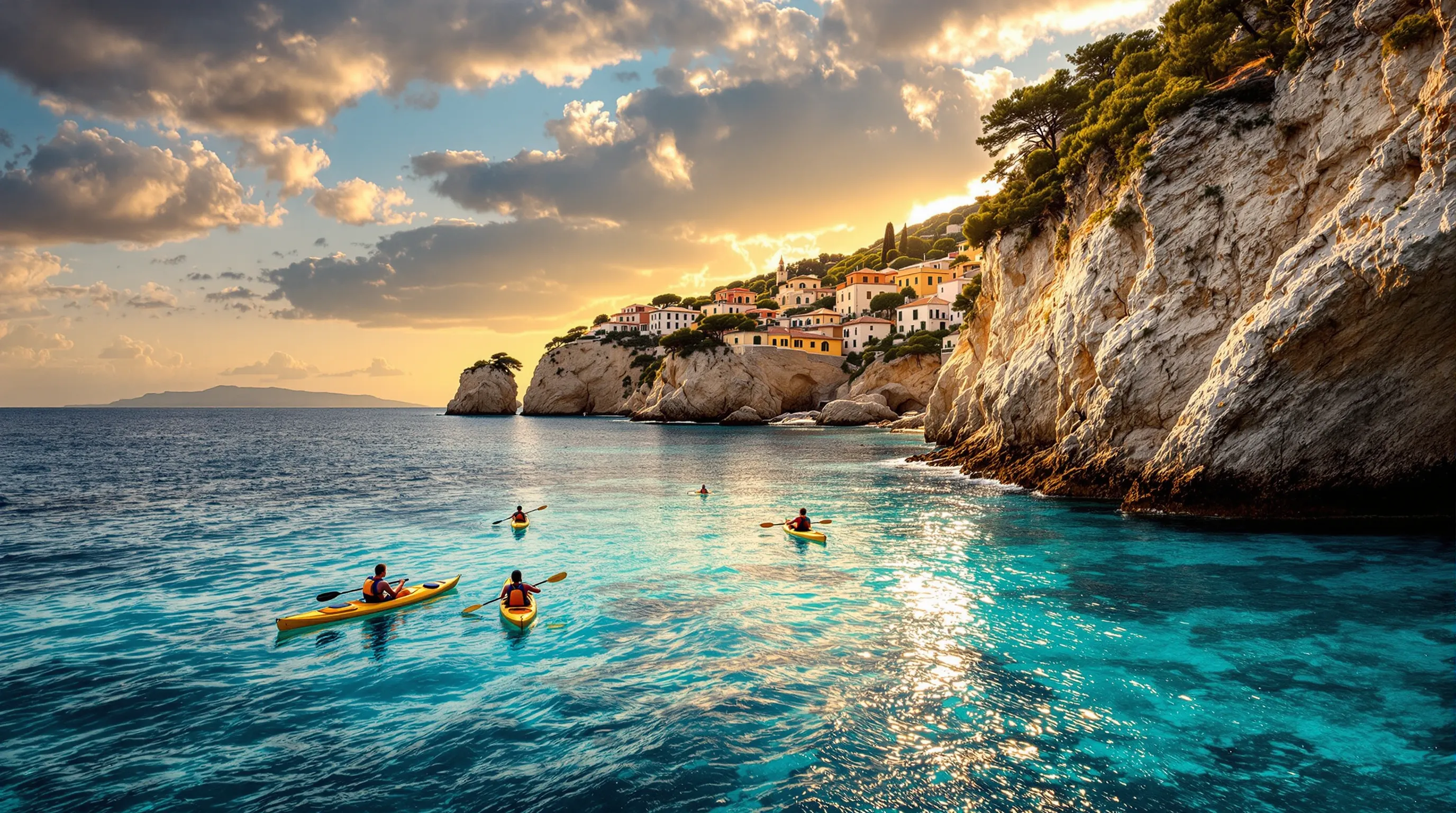
What local guides reveal about kayaking in the Provençal Mediterranean
The Provençal coastline offers over 400 kilometres of shores perfect for kayaking and paddleboarding. Between the calanques of Marseille and the secret coves of Var, these waters harbour exceptional biodiversity with 40 species of Mediterranean fish. Each year, 150,000 enthusiasts discover these water sports along our coasts. Favourable weather conditions, with 300 days of sunshine annually and water temperatures reaching 24°C in summer, make this region a privileged playground. Local guides now reveal their secret techniques for making the most of this unique Mediterranean experience.
Secret spots that only locals know about
Experienced guides jealously guard certain exceptional sites. The Figuerolles calanque, accessible only by kayak, reveals underwater caves illuminated by natural light between 10am and 2pm. The Méjean cove, protected from prevailing winds, offers perfectly calm waters for beginners. These professionals also recommend Pomègues point, where currents create a unique nocturnal bioluminescence phenomenon from April to October. The Carry-le-Rouet marine reserve harbours century-old posidonia seagrass beds, veritable nurseries for Mediterranean fauna. These pristine spots require a respectful approach and knowledge of local tides.
Optimal timing for each site
Mediterranean tides, whilst modest (40cm amplitude), influence the practicality of each spot. Figuerolles is best visited on a rising tide, whilst Méjean reveals its most beautiful seabeds on a falling tide. Guides recommend the 7am-10am and 5pm-8pm slots to avoid summer crowds.
Navigation techniques from Mediterranean professionals
Local experts master techniques specific to Mediterranean conditions. The 'coastal hugging' technique involves staying within 50 metres of the shore, exploiting coastal counter-currents. Facing the mistral (prevailing wind at 40-60 km/h), they adopt the 'low brace' position to maintain stability. Professionals also use 'colour reading': dark blue indicates 15-20 metres depth, turquoise signals 3-8 metres, perfect for observing wildlife. In paddleboarding, the 'pivot stroke' technique allows efficient navigation around limestone reefs characteristic of our coasts. These methods, passed down through generations, guarantee optimal safety and enjoyment.
Privileged marine wildlife viewing from your craft
Kayaking offers a silent approach allowing observation of remarkable biodiversity. Striped dolphins, present year-round, often approach within 10 metres of respectful craft. Loggerhead turtles frequent seagrass beds between May and September, particularly visible early morning. Purple sea urchins carpet rocky seabeds from just 2 metres depth. Guides regularly spot schools of white seabream, gilt-head bream and grouper in protected areas. This privileged observation contributes to environmental awareness, with 85% of participants developing increased interest in marine conservation after their first outing.
Responsible observation protocol
Professionals maintain a minimum 100-metre distance from cetaceans and cut engines at 300 metres. Slow and silent approach maximises observation chances whilst preserving the ecosystem. These rules, codified by the Pelagos Sanctuary, guarantee ethical encounters.
Practical advice
Kayak hire costs £20-28/half-day, £32-40/full day. Guided excursions range from £36 (2h) to £68 (full day). The ideal period extends from April to October, with water temperatures from 16°C to 24°C. July-August require bookings 15 days in advance. Beginners should favour May-June and September for milder conditions and fewer crowds. Equipment provided includes life jacket, paddle and waterproof container. Certified centres offer 2-hour training courses (£28) including basic techniques and safety. A medical certificate less than one year old is required for sea outings. Marine weather must be checked daily, with winds above 25 knots prohibiting navigation.
Frequently asked questions
What's the best time for kayaking in Provence?
The optimal period runs from May to September, with water temperatures between 18°C and 24°C. May-June and September offer less tourist congestion and more stable weather conditions, ideal for beginners. July-August present perfect conditions but require advance bookings.
Can you observe dolphins whilst kayaking off the Provençal coast?
Striped dolphins can be observed year-round, particularly off Marseille and Toulon. Best observation chances occur between 7am-10am and 5pm-7pm, 2-5 kilometres offshore. Respecting distances (100m minimum) and silent approach maximise encounters.
Do you need to know how to swim for kayaking in the Mediterranean?
Swimming 25 metres is mandatory and a medical certificate required. Life jacket wearing is compulsory at all times. Calm Mediterranean waters facilitate learning, and centres offer specific training for non-swimming beginners in shallow areas.
Kayaking and paddleboarding reveal Provence from a unique perspective, combining natural discovery with authentic sensations. These activities democratise access to our coastline's hidden treasures whilst raising awareness of their preservation. To deepen your discovery of Mediterranean biodiversity, explore specialised resources on dauphin-mediterranee.com and plan your next nautical adventure in Provence.
Read also
Why These 8 Secret Harbours Transform Your Mediterranean Journey into an Adventure
Discover 8 hidden picturesque harbours along the Mediterranean coast that will r...
Hidden Mediterranean Creatures You'll Encounter This Summer on the Beaches
Discover fascinating Mediterranean marine wildlife: dolphins, grouper fish, posi...
What Marine Biologists Reveal About Mediterranean Cetacean Watching
Discover expert secrets for spotting whales and dolphins in the Mediterranean. B...
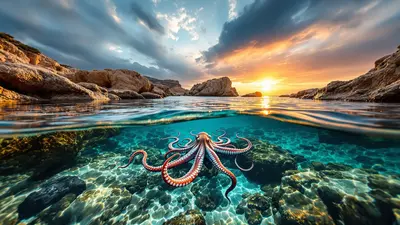
7 secrets of Mediterranean octopuses that even marine biologists don't know
Discover the fascinating secrets of Mediterranean octopuses: intelligence, camou...