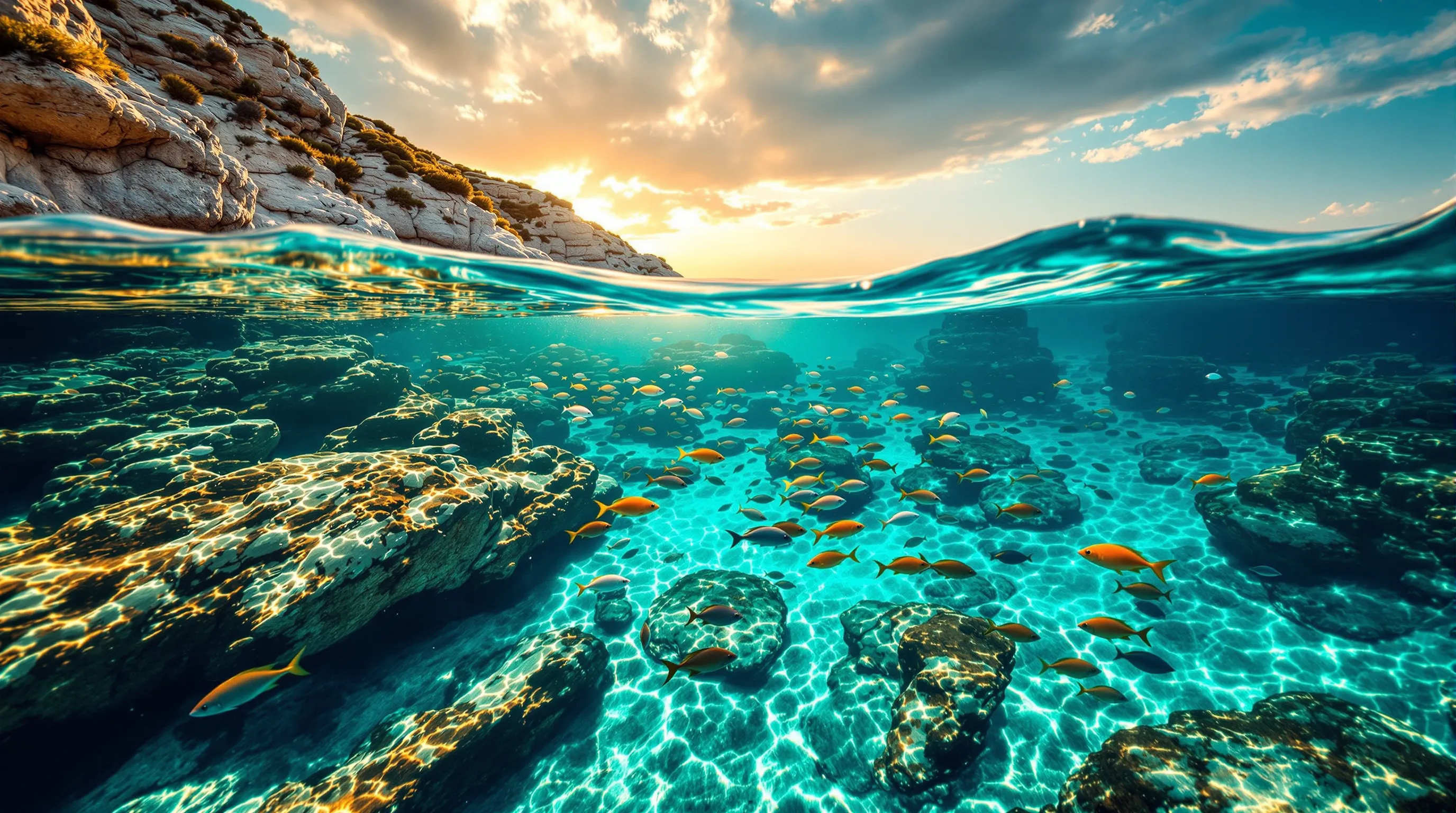
Hidden Mediterranean Creatures You'll Encounter This Summer on the Beaches
The Mediterranean harbours over 17,000 marine species across just 1% of the world's oceans. This virtually enclosed sea conceals exceptional biodiversity, often unknown to holidaymakers. From bottlenose dolphins to century-old grouper fish, through to posidonia meadows essential to the ecosystem, each dive reveals wonders. Nearly 28% of Mediterranean species are endemic, found nowhere else on Earth. This natural wealth, threatened by warming temperatures and pollution, deserves to be discovered and protected by all sea lovers.
Emblematic Large Marine Mammals
The bottlenose dolphin Tursiops truncatus reigns supreme in Mediterranean waters, with a stable population of approximately 150,000 individuals. These intelligent cetaceans particularly frequent the Pelagos Sanctuary between France, Italy and Monaco. Fin whales, the second-largest whales in the world at 20 metres long, migrate each summer to these krill-rich waters. The rarer sperm whale dives to depths of 2,000 metres to hunt giant squid. Long-finned pilot whales, recognisable by their rounded heads, move in tight-knit family groups. This megafauna attracts 2.5 million ecotourists annually, generating £65 million for the local economy.
Best Observation Spots
The Monaco Canyon concentrates 80% of cetacean sightings. Morning excursions between May and September offer 90% chances of encounters. Sanary-sur-Mer, Antibes and Port-Cros make ideal bases for observation. Professionals recommend minimum 3-hour trips to maximise opportunities for discovering these marine giants.
Remarkable Fish and Endemic Species
The dusky grouper Epinephelus marginatus, which can exceed 60kg and live 60 years, symbolises Mediterranean marine recovery. Nearly extinct in the 1980s, its population is rebuilding thanks to marine protected areas. The ornate wrasse, with flamboyant colours changing with age, brings life to posidonia meadows. The black-headed seabream, endemic to the Mediterranean, frequents rocky coasts down to 50 metres depth. The blue sprat, a small silvery-blue fish, forms enormous shoals visible at the surface. Scorpionfish, masters of camouflage, blend perfectly into rocky crevices. These species play crucial ecological roles in the balance of Mediterranean coastal ecosystems.
Fascinating Plant Ecosystems and Invertebrates
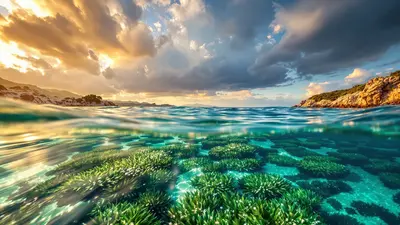
Posidonia oceanica, an endemic marine plant, forms genuine underwater meadows that are essential. These seagrass beds produce 20 litres of oxygen daily per square metre, store carbon and protect coastlines from erosion. Red gorgonians Paramuricea clavata create spectacular coral forests on rocky drop-offs. The fan mussel Pinna nobilis, the Mediterranean's largest mollusc at 120cm, sadly remains threatened with extinction since 2016. Purple sea stars Ophidiaster ophidianus colour rocky seabeds with their vivid hues. These ecosystems shelter 80% of Mediterranean marine biodiversity across just 3% of its total surface area.
Crucial Ecological Role
One square metre of posidonia houses up to 350 different species. These meadows filter 165,000 litres of water daily and store 83kg of carbon per hectare. Their 5% annual decline directly threatens water quality and Mediterranean coastal biodiversity.
Practical Tips
Observing Mediterranean marine wildlife is best between May and October, with activity peaks in June-July. Boat trips cost £30-55 for 3 hours, whilst scuba diving starts from £40 per exploration. Masks and snorkels suffice for discovering 70% of coastal species in 2-5 metres of water. Book 48 hours in advance during peak season to guarantee your spot. Marine protected areas like Port-Cros, Scandola or Cabrera offer the best observation densities. The iNaturalist app allows you to identify and record your discoveries. Choose certified operators who respect the environment for responsible tourism that preserves these fragile ecosystems for future generations.
Frequently asked questions
When should you observe Mediterranean marine wildlife?
The optimal period runs from May to October. June-July offer the best conditions with maximum visibility and intense species activity. Morning trips between 8am-11am guarantee 85% observation success, particularly for marine mammals that surface then.
Where can you see dolphins in the French Mediterranean?
The Pelagos Sanctuary between Nice and Corsica concentrates 80% of sightings. Antibes, Cannes, Sanary-sur-Mer and Port-Cros offer daily excursions. Monaco Canyon remains the premium spot with 90% success rates. Avoid July-August for fewer crowds.
How do you identify posidonia whilst swimming?
Posidonia forms dark green meadows with ribbon-like leaves 1cm wide and 1m long. Unlike algae, it has roots and flowers in autumn. Its presence guarantees excellent water quality. Don't confuse with invasive brown algae.
The Mediterranean reveals its secrets to those who know where to look. This exceptional biodiversity, from playful dolphins to vital posidonia meadows, deserves our admiration and protection. Each sea trip becomes an enriching educational adventure. To organise your responsible marine discoveries and experience unforgettable moments at the heart of this unique ecosystem, visit dauphin-mediterranee.com.
Read also
What Marine Biologists Reveal About Mediterranean Cetacean Watching
Discover expert secrets for spotting whales and dolphins in the Mediterranean. B...
7 secrets of Mediterranean octopuses that even marine biologists don't know
Discover the fascinating secrets of Mediterranean octopuses: intelligence, camou...
What Marseille Locals Keep Secret About Their Favourite Water Activities
Discover Marseille locals' secret sea activities: diving, sailing, paddleboardin...
What Mediterranean Posidonia Seagrass Meadows Hide Beneath the Waves Will Amaze You
Discover the secrets of posidonia seagrass meadows, the true lungs of the Medite...