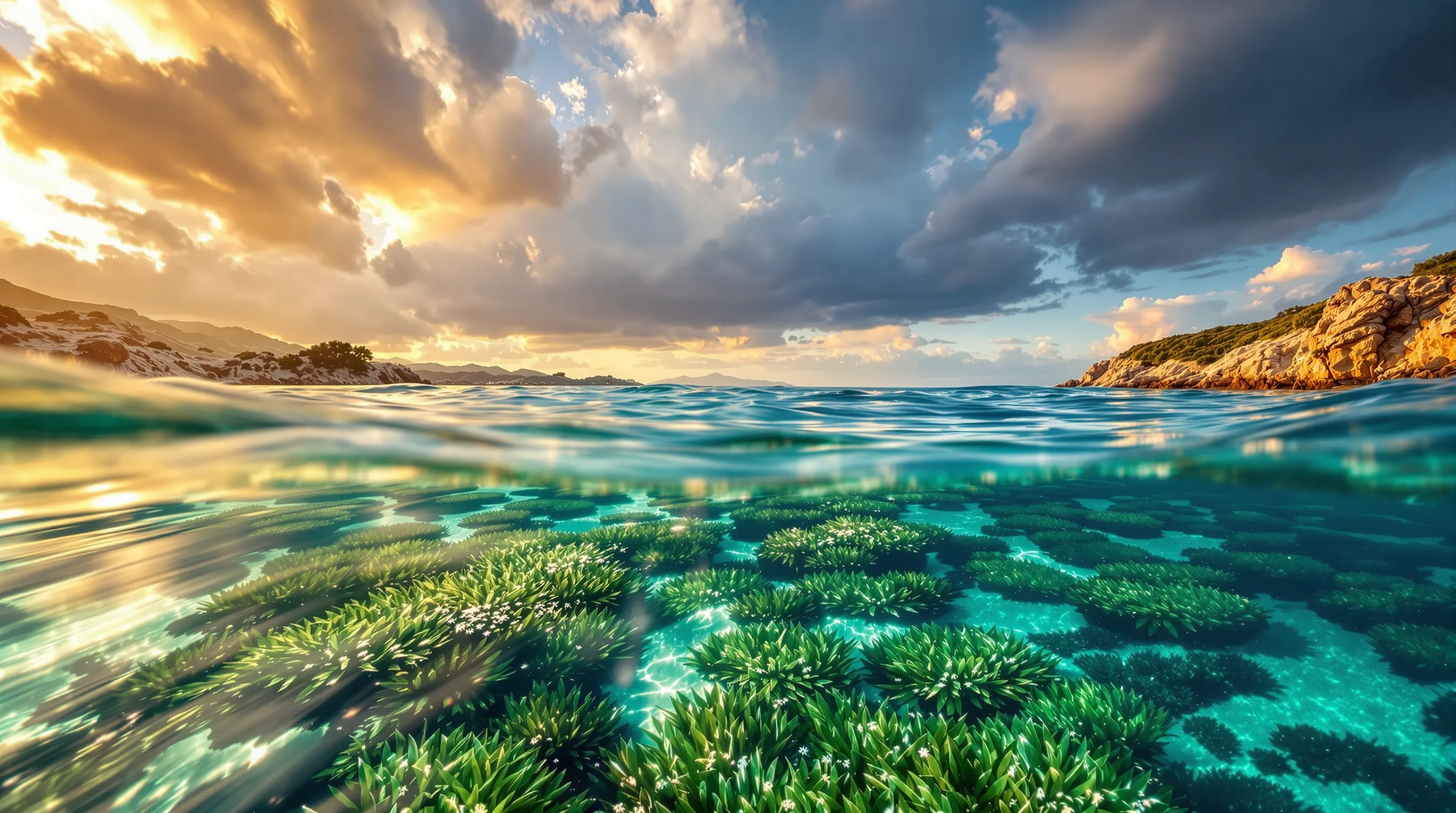
What Mediterranean Posidonia Seagrass Meadows Hide Beneath the Waves Will Amaze You
Posidonia seagrass meadows cover 38,000 km² in the Mediterranean, equivalent to the area of Switzerland. This endemic marine plant produces 20 litres of oxygen per day per square metre, outperforming terrestrial forests. A true blue lung of our sea, posidonia shelters 25% of Mediterranean biodiversity on just 2% of its surface area. These millennial underwater prairies, inscribed on UNESCO's World Heritage list, constitute one of the world's most productive ecosystems, filtering water and protecting our coastlines from erosion.
The Remarkable Productivity of Posidonia Meadows
One hectare of posidonia seagrass produces up to 14 tonnes of oxygen annually, three times more than an oak forest. This exceptional productivity stems from the intense photosynthesis of its lengthy leaves, which can reach 1.5 metres. Posidonia also stores 83 tonnes of carbon per hectare in its rhizomes, contributing significantly to combating climate change. These marine plants live up to 100,000 years, forming clonal colonies amongst the world's oldest. Their slow growth of 1 to 6 cm per year creates complex structures sheltering over 1,000 plant species and 5,000 animal species.
Impressive Figures That Astound
Each square metre of seagrass meadow filters 150 litres of seawater daily, clearing it of suspended particles. Posidonia slows currents by 70%, promoting sedimentation and water clarity. Its roots can penetrate up to 15 metres deep, creating reef-like structures called 'mattes' that sometimes rise 6 metres above the seabed.
A Unique Ecosystem Under Threat from Human Activity
Posidonia seagrass meadows have lost 34% of their coverage since 1960, primarily due to boat anchoring, pollution, and coastal development. Each anchor can destroy 34 m² of seagrass on average, requiring 10 to 35 years to regenerate. Nutrient pollution causes eutrophication, encouraging algae growth that smothers posidonia. The invasive species Caulerpa taxifolia has colonised 131 km² of meadows, gradually replacing them. Climate change, with summer temperatures exceeding 28°C, also stresses these plants adapted to cooler waters. The continuing regression represents an annual loss of 1.5% of this irreplaceable habitat.
Hidden Treasures of Mediterranean Seagrass Meadows
Posidonia seagrass meadows harbour remarkable species such as the speckled seahorse, endemic to the Mediterranean, and the noble pen shell Pinna nobilis, Europe's largest bivalve mollusc reaching 120 cm. Dusky groupers, which can live 60 years, use these prairies as nurseries for their juveniles. Over 350 algae species cohabit with posidonia, creating a unique biodiversity gradient. The meadows also shelter 40% of Mediterranean fish species, many of commercial importance such as white seabreams, saddled seabreams, and salema porgies. This exceptional biodiversity generates an estimated economic benefit of £32 billion annually for Mediterranean fishing and tourism.
Little-Known Ecosystem Services
Posidonia protects 20,000 km of Mediterranean coastlines from erosion by reducing wave force by 70%. Its dead leaves, called 'banquettes', accumulate on beaches and provide natural storm protection. The seagrass acts as a natural water treatment plant, removing bacteria and heavy metals from seawater.
Practical Tips for Discovering and Protecting Seagrass Meadows
Visit marine protected areas such as Port-Cros (£70/adult in season) or Scandola in Corsica to observe preserved meadows. The best period extends from May to October when underwater visibility reaches 30 metres. Book your snorkelling trips 15 days in advance, as places are limited to 12 people per guide. Use exclusively the installed mooring buoys (£4/day) to avoid destructive anchoring. Choose diving centres certified 'Longitude 181' that respect environmental charters. Average budget: £38 for a guided snorkelling trip, £55 for a scuba dive. Glass-bottom boat tours cost £21/adult and allow admiring the meadows without impact.
Frequently asked questions
Why is posidonia called the lung of the Mediterranean?
Posidonia produces 20 litres of oxygen per day per square metre, three times more than a terrestrial forest. Its 38,000 km² of meadows release 760 million litres of oxygen daily into the water, enabling the respiration of all Mediterranean marine fauna.
Can one swim in posidonia seagrass meadows without damaging them?
Yes, swimming and snorkelling don't damage posidonia. Simply avoid standing on the seagrass or pulling up the leaves. Posidonia fibres that sometimes stick to the body are natural and indicate a healthy ecosystem.
Where can one see the most beautiful posidonia seagrass meadows in the French Mediterranean?
Exceptional sites include Port-Cros and Porquerolles (Var), Scandola Reserve (Corsica), Cap Roux (Alpes-Maritimes), and Banyuls (Pyrénées-Orientales). These protected areas offer optimal visibility and dense meadows extending to 35 metres depth.
Posidonia seagrass meadows embody the Mediterranean's overlooked richness, combining natural beauty with vital ecological services. Their preservation depends on our daily actions and awareness. Discover these treasures during your next Mediterranean getaways by consulting dauphin-mediterranee.com for environmentally respectful excursions.
Read also
Why the Calanques of Marseille Hide the Mediterranean's Most Beautiful Diving Sites
Discover the secrets of diving in Marseille's Calanques: exceptional sites, Medi...
These Mediterranean corals survive heatwaves and revolutionise marine ecology
Discover how Mediterranean corals defy climate change and transform our coastlin...
Why naturalists choose these secret cruises from Nice
Discover the naturalist cruises favoured by experts departing from Nice. Pelagos...
Hidden Corsican Marine Secrets That Local Divers Guard Jealously
Discover Corsica's secret marine spots known only to locals. Diving, snorkelling...