
Fin Whales in the Mediterranean: 7 Secrets of the Giant Few Tourists Know
The first time I saw a fin whale's blow shoot up off the coast of Nice, it took me a good few seconds to grasp the scale of what I was looking at: a plume of vapour over six metres high, the telltale sign of an animal that can grow longer than twenty metres. The second-largest animal on Earth after the blue whale, the fin whale (Balaenoptera physalus) lives year-round in the Mediterranean basin, particularly within the Pelagos Sanctuary. Few visitors realise it sometimes cruises less than thirty kilometres from the French, Italian and Monegasque coastlines. Here's what you really need to know before setting off to meet one.
The fin whale: an overlooked colossus of the western basin
The Mediterranean fin whale belongs to a genetically distinct sub-population from its Atlantic cousins, smaller on average but every bit as impressive, with adults measuring between 18 and 24 metres. It's recognisable by its asymmetrical grey-brown back, its white lower right jaw and its sickle-shaped dorsal fin set well back towards the tail. Unlike the sperm whale, it doesn't dive deep to hunt: it feeds at the surface or just below it on krill and small pelagic fish, usually alone or in small groups of two to three. Its presence in the Mediterranean is linked to the nutrient-rich continental slope, particularly the Var Canyon off Nice and the deep waters between Corsica, Liguria and Provence. Scientists from GECEM and the Tethys Research Institute have been monitoring this population since the 1990s using photo-identification of dorsal scarring. The Pelagos Sanctuary population is estimated at a few hundred individuals, a figure that remains fragile given ship strikes, the leading known cause of mortality for the species in the region.
A vulnerable species facing shipping traffic
The shipping lane between Toulon, Genoa and Corsica overlaps almost exactly with the fin whale's feeding grounds. Collisions with ferries and container ships are the main threat identified by researchers at the Pelagos Sanctuary. Systems such as REPCET, a participative alert network between ships, have been developed to reduce the risks, and some ferry operators now adjust their routes or speed when alerts come through. This is also why guided observation with trained professionals matters so much: it limits dangerous close approaches and helps gather scientific data that feeds directly into conservation efforts.
Where to spot fin whales: the best sites within the Pelagos Sanctuary
The Pelagos Sanctuary, an 87,500 km² marine protected area created in 1999 by France, Monaco and Italy, remains the go-to territory for encountering this species. On the French side, the ports of Nice, Antibes and Saint-Jean-Cap-Ferrat run boat trips out to the continental slope, roughly an hour's sailing away. Toulon gives access to waters further offshore, towards the Cassidaigne Canyon, another krill hotspot favoured by fin whales. In Italy, Genoa, Sanremo and Imperia offer direct access to the deep waters of the Ligurian Sea, widely regarded as one of the best observation areas in the western Mediterranean. From Corsica, trips departing from Calvi or Bastia allow you to explore the southern part of the sanctuary, where fin whales and Risso's dolphins sometimes share the same waters. Monaco, meanwhile, serves as the historic launchpad for scientific expeditions run by the Oceanographic Museum. None of these areas can ever guarantee a sighting — the fin whale remains a pelagic animal with unpredictable movements — but statistically, they account for the highest number of documented sightings over the past thirty years.
The Ligurian Sea, a recognised research hotspot
Between Nice, Genoa and the north of Corsica, the Ligurian Sea forms a particularly rich bathymetric triangle, where upwellings of deep water and dense krill concentrations attract fin whales from April to September. The Tethys Research Institute has been running research campaigns there for over three decades, making it one of the best-documented areas in the world for this species. Several accredited operators offer trips combining observation with awareness-raising, with naturalists on board able to identify individual whales using a photographic catalogue shared between French, Italian and Monegasque researchers.
When to go: seasonality and ideal weather conditions
The best time to spot fin whales in the Mediterranean runs from May to September, with a peak generally seen between June and August as the water warms and krill gathers near the surface. Spring, particularly May and June, often brings calmer seas and fewer crowds, a real bonus for the quality of your sighting and general comfort on board. July and August offer the best odds of an encounter but also the busiest boats and ports along the Côte d'Azur and the Italian Riviera. The mistral and spells of strong wind can lead to cancelled trips, particularly off Toulon and in the Corsican Channel, so it's worth building some flexibility into your plans. Autumn, from September into early October, is an underrated option worth considering: the sea is still warm, crowds thin out considerably, and fin whales can still be around before their winter migration. Winter isn't entirely devoid of sightings, but commercial trips are rare then due to tougher sea conditions and the species being less predictably present in coastal-accessible areas.
How to plan your trip: duration, fitness level and kit
A fin whale watching trip typically lasts between three and seven hours, depending on the distance to the continental slope or targeted underwater canyon. No particular fitness level is required, but you'll need to be comfortable at sea, especially given the residual swell often found off Nice or in the Corsican Channel. Anyone prone to seasickness should take preventive medication, ideally the evening before. As for kit, bring your own binoculars even if some operators provide them, a windproof jacket since the chill at sea often catches people off guard even in high summer, high-factor sunscreen, a hat with a strap, and a camera with a telephoto lens if you want to capture the blows or the emerging backs. Book a spot on boats with a limited passenger capacity, as this tends to mean more respectful observation and a better experience for everyone on board. Many reputable operators will cancel a trip in rough seas rather than push ahead regardless, a sign of professionalism worth looking for when choosing who to book with.
Choosing an operator with the High Quality Whale Watching label
The High Quality Whale Watching label, developed under the Pelagos Sanctuary scheme, identifies companies that follow a strict code of conduct: controlled approach distances, reduced speed near the animals, a limited number of boats around any one individual at a time, and crew trained in cetacean biology. Choosing a labelled operator guarantees observation that doesn't stress the animal and that feeds into genuine scientific work, with some crews passing their sighting data on to researchers at GECEM or Tethys. It's a far more reliable criterion than the price on the ticket or the size of the boat.
Practical tips and responsible tourism
The cost of a whale watching trip varies depending on duration, boat size, whether a naturalist is on board and the port of departure; day trips with small groups and scientific guidance generally cost more than general-interest excursions combining several activities. Book several weeks ahead in high season, especially from Nice, Cannes or Genoa, and favour booking directly with operators who clearly display their commitment to an ACCOBAMS code of conduct or the Pelagos label. Regulations require a minimum approach distance, typically around one hundred metres, reduced speed on approach, a ban on cutting across the animal's path or encircling it, and a limit on how long you can observe continuously. Never attempt to swim with a fin whale — the animal is both unpredictable and potentially dangerous given its sheer size. Take your rubbish home with you, avoid throwing anything overboard, and choose biodegradable sunscreen to limit the impact on the marine ecosystem. Reporting sightings to local scientific networks, such as GECEM, contributes directly to the long-term protection of a species already vulnerable to shipping traffic and climate change.
Frequently asked questions
Where can you see fin whales in the Mediterranean from France?
Your best chances are off Nice, Antibes and Toulon, within the Pelagos Sanctuary, where the continental slope and the Var Canyon concentrate the krill this species feeds on. Boat trips generally run for three to seven hours, between May and September, with the highest odds of a sighting in summer.
What's the best time of year to see fin whales?
From May to September, with a peak between June and August when the water warms up and krill gathers in dense patches. Spring offers calmer seas and smaller crowds, while September remains a great option too, with warm water and fewer boats about.
Are fin whales dangerous to swimmers or divers?
They're not naturally aggressive, but their sheer size demands extreme caution. Swimming with this species is discouraged, and indeed banned within the Pelagos Sanctuary, as accidental contact can be dangerous and the stress caused is harmful to the animal. Observation from a boat remains the only recommended and properly regulated approach.
How many fin whales live in the Mediterranean?
Scientific estimates put the figure at a few hundred individuals within the Pelagos Sanctuary, a population genetically distinct from its Atlantic counterpart. This number remains fragile due to ship strikes, the main identified cause of mortality, and is monitored continuously by French and Italian research institutes.
How do you tell a fin whale apart from other whales or dolphins?
The fin whale stands out thanks to its sheer size, its sickle-shaped dorsal fin set well back, its asymmetrical lower jaw (white on the right side) and its vertical blow, which can reach over six metres high. Unlike dolphins, it doesn't leap and moves more slowly at the surface, usually alone or in a small group.
Encountering a fin whale in the Mediterranean brings home both the fragility and the grandeur of an ecosystem we sometimes assume we know too well. Between the Pelagos Sanctuary, the deep waters of the Ligurian Sea and the underwater canyons of the Côte d'Azur, this quiet giant keeps reminding us just how important respectful, well-regulated observation really is. Choose a labelled operator, stick to the required distances, and consider travelling in the quieter periods for a more genuine experience. To plan your next trip out to sea and discover other iconic species along our coastline, take a look at our detailed guides on dauphin-mediterranee.com.
Read also

Riviera Cruises: What Marina Observes Every Summer in the Mediterranean Sea
Discover the best cruises along the French Riviera: ports, dolphin-watching spot...

Seasickness on Whale Watching Trips: The Tricks Marina Actually Uses
Seasickness on whale watching trips: advice from a marine biologist to prevent, ...
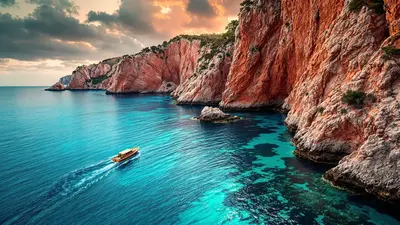
Scandola in Corsica: What This Reserve Reveals Before You Go by Boat
Visiting the Scandola nature reserve in Corsica: access, best time to go, boatin...

Cap d'Antibes: The Secret Path Where Sea and Pines Offer an Unforgettable Swim
Discover the coastal path at Cap d'Antibes: wild coves, turquoise swimming spots...