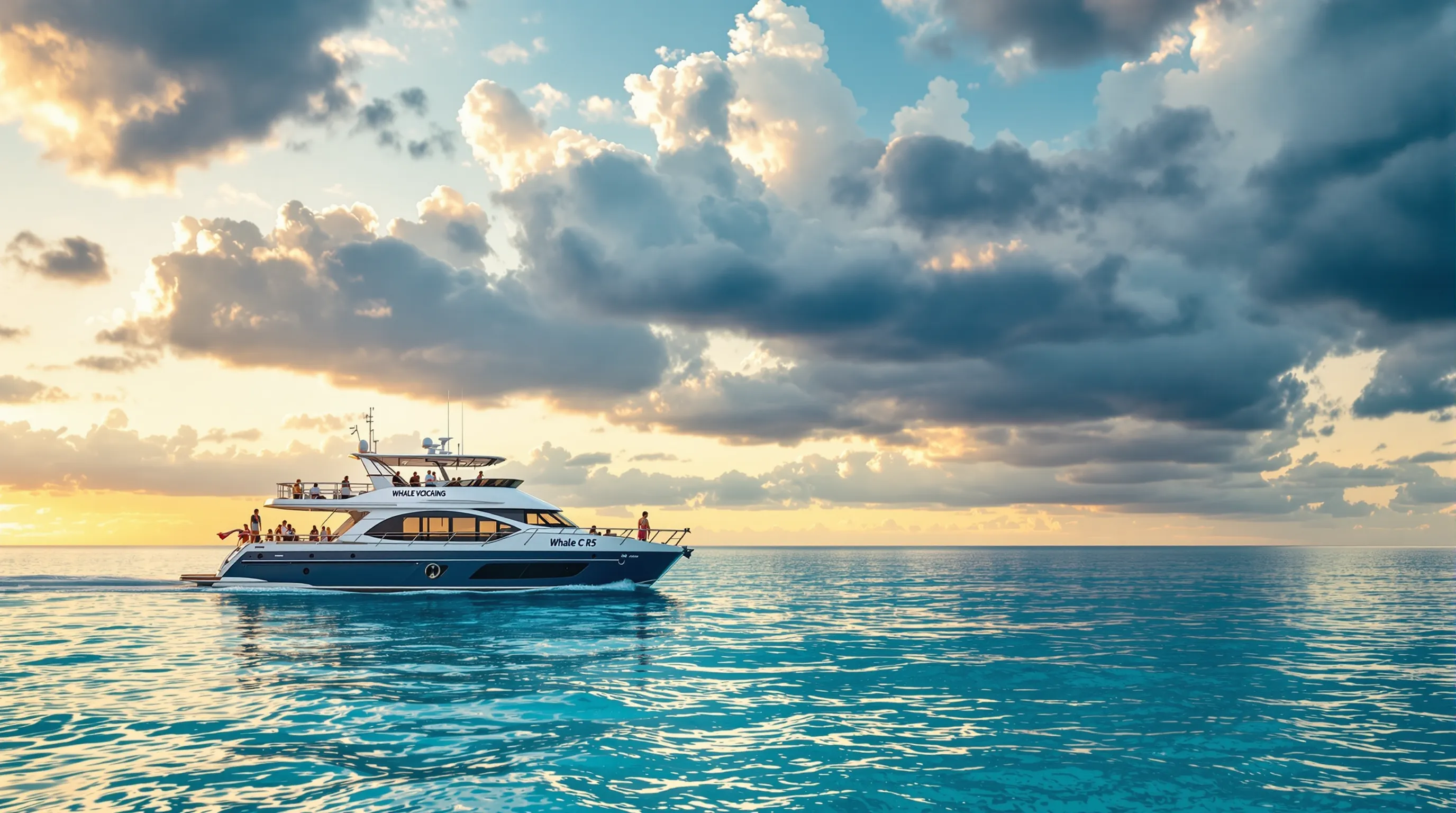
Fin Whales in the Mediterranean: 7 Secrets of the Giant Few Know
The first time I saw a fin whale's blow break the surface off the coast of Nice, I understood why sailors call it the quiet giant. Sometimes reaching 20 metres in length, the second-largest animal on the planet after the blue whale glides through the Mediterranean basin almost silently. Few tourists realise that a resident population lives year-round in the Pelagos Sanctuary, spanning France, Monaco and Italy. This article takes you to meet this colossus, with genuine locations, real seasons and the right etiquette to observe it without causing disturbance.
The fin whale: an underrated giant off our shores
The fin whale (Balaenoptera physalus) is the second-largest living animal on Earth, surpassed only by the blue whale. In the Mediterranean, individuals typically measure between 18 and 22 metres, slightly smaller than their North Atlantic cousins. Its streamlined silhouette, sickle-shaped dorsal fin and vertical blow, which can reach several metres high, make it recognisable from the surface alone. Contrary to the idea of a species merely passing through, part of the Mediterranean population appears to reside year-round in the Pelagos Sanctuary, an 87,500 km² protected marine area stretching between Provence, Corsica, Sardinia and the Italian Riviera. Scientists estimate the Mediterranean population at a few hundred individuals, making it a genetically distinct sub-population, more vulnerable to shipping traffic and collisions. The fin whale feeds mainly on krill and small pelagic fish, which it captures by filtering enormous volumes of water through its baleen plates. It's often spotted alone or in loose small groups, sometimes feeding at the surface with its mouth half-open, a rare and striking sight for those patient enough to wait for it.
A vulnerable species under close watch
Classified as vulnerable by the IUCN at Mediterranean level, the fin whale faces two major threats: collisions with merchant vessels using the Marseille-Genoa-Barcelona shipping lane, and noise pollution that disrupts its low-frequency communication. The REPCET programme, deployed on ferries and cargo ships, allows real-time reporting of cetacean sightings to reduce collisions. These efforts make the Pelagos Sanctuary a unique laboratory for balancing shipping traffic with the protection of great whales.
Where to spot fin whales: the best-known hotspots
The Pelagos Sanctuary remains the reference area for encountering a fin whale in the western Mediterranean Sea. From France, the ports of Nice, Antibes, Saint-Jean-Cap-Ferrat and Toulon offer specialised trips towards the continental slope, a deep-water zone where rising nutrients attract krill. The Estérel canyon and the waters off Cannes are regularly frequented. Further west, the coasts of Monaco and Menton give quick access to the sanctuary's deep waters. On the Italian side, the ports of Genoa, Savona, Imperia and San Remo in Liguria offer direct access to the heart of the Pelagos Sanctuary, with highly experienced local associations. Corsica, particularly from Calvi and Bastia, also allows offshore trips, although fin whales tend to be somewhat less frequent there than along the mainland coast. Outside the sanctuary, occasional sightings are reported off the Balearic Islands and the Gulf of Lion, along the species' presumed migration routes.
The busiest French ports
Nice and Antibes account for most of France's whale watching offering for fin whales, with several-hour trips heading straight for deep-water zones. Toulon offers similar excursions towards the waters off the Hyères Islands. These ports benefit from quick access to the continental slope, reducing travel time at sea and therefore fatigue, an important factor for anyone prone to seasickness on a trip that typically lasts half a day.
When to go: the best season to see one
The ideal period to observe fin whales runs from June to September, with peak krill abundance, and therefore whale presence, between July and August. This is when the water column becomes stratified, concentrating zooplankton near the surface and making observation easier. Spring, particularly May and June, tends to offer calmer seas and fewer tourists, a good compromise for those who value tranquillity over guaranteed sightings. Autumn, from September to October, remains worthwhile before weather conditions deteriorate, with fin whales still present, though seas can be choppier due to the first mistral or tramontane winds. Winter isn't entirely ruled out, since some individuals reside in the sanctuary year-round, but sea trips are rare due to weather conditions and the limited number of operators active out of season. It's worth bearing in mind that no sighting can ever be guaranteed: the fin whale isn't a predictable coastal animal like a resident bottlenose dolphin might be. That said, chances of a sighting remain good in high summer along the continental slope, provided you go out with professionals who know the species' recent movements.
How to plan your trip: duration, fitness level and kit
A fin whale watching trip typically lasts between 3 and 8 hours depending on how far the search zones are, with some operators even offering full days at sea. No particular fitness level is required since observation takes place from the deck of a boat, but a good tolerance for seasickness is recommended, as the areas frequented are often several dozen kilometres from shore, in deep and sometimes choppy waters. Pack warm clothing even in summer, as sea breezes noticeably lower the felt temperature, along with sun protection, binoculars to spot blows at a distance, and a camera with a zoom lens if possible. Boats fitted with hydrophones sometimes allow you to listen to fin whale calls, a sensory experience that complements the visual sighting. Opt for small-group trips, which are both more respectful of the animals and more comfortable for observation. Children are generally welcome from age 6 or 7 depending on the company, but it's worth checking the on-board safety and welcome conditions beforehand, particularly regarding suitably sized life jackets.
Choosing a certified operator
Favour companies certified High Quality Whale Watching, a label developed under the Pelagos Sanctuary that guarantees respectful approach practices and serious scientific oversight. These operators often bring naturalists or biologists on board who can explain observed behaviour and contribute to participatory research programmes, such as photo-identification of individual whales.
Practical tips and responsible tourism
The cost of a fin whale watching trip varies depending on the length of the outing, the size of the boat, the presence of a naturalist guide and the booking period. Longer offshore trips naturally cost more than short coastal excursions, and prices rise during the busy summer season. Ideally, book several weeks ahead for July and August, a period of high demand, and check the marine forecast the day before: many trips are postponed in rough seas, both for passenger safety and observation quality. Cetacean approach regulations, guided by ACCOBAMS recommendations and the Pelagos Sanctuary code of conduct, set a minimum approach distance generally fixed at 100 metres, require reduced speed on approach, prohibit crossing the animal's path, and limit observation time to avoid prolonged disturbance. No boat should ever encircle a fin whale or force it to change direction. Choose operators who clearly display their commitment to these rules, and avoid companies that promise guaranteed sightings or make repeated close approaches. Responsible tourism also means choosing low-noise-impact boats and observing relative quiet on board, to protect an animal that communicates and navigates largely through sound.
Frequently asked questions
Where can I see a fin whale in the Mediterranean from France?
The best chances are from Nice, Antibes, Saint-Jean-Cap-Ferrat or Toulon, heading towards the continental slope of the Pelagos Sanctuary. These deep-water zones concentrate the krill that fin whales feed on. Specialised trips run by associations or certified companies offer the best odds of a sighting during peak summer season.
What's the best time of year to see a fin whale?
June to September is ideal, with a peak between July and August when krill concentrates near the surface. Spring offers calmer seas and fewer tourists. No period guarantees a 100% sighting, but summer remains statistically the most favourable time in the Pelagos Sanctuary.
What's the difference between a fin whale and a blue whale?
The fin whale typically measures 18 to 22 metres in the Mediterranean, compared with over 25 metres for the blue whale, which is exceptionally rare in this basin. The fin whale has an asymmetrical jaw colouration, dark grey on one side and white on the other, a distinctive identifying feature that the blue whale lacks.
Is it dangerous to approach a fin whale by boat?
Fin whales aren't aggressive towards boats, but the main danger remains collision, particularly with large, fast-moving vessels. That's why approach rules require a minimum distance and reduced speed. Following the skipper's instructions and staying quiet minimises risk, both for passengers and the animal.
Can you swim with fin whales in the Mediterranean?
Swimming with fin whales isn't permitted under the Pelagos Sanctuary rules and ACCOBAMS recommendations, as it seriously disturbs the animal and poses genuine risks to swimmers given the whale's sheer size. Observation is carried out exclusively from the boat, at the regulation distance.
The fin whale embodies, all on its own, the unsuspected richness of the Mediterranean, a sea we think we know well but which still conceals this quiet giant beneath its waves. Watching its blow from a boat off Nice or the Italian Riviera remains a rare experience, provided it's done respectfully, following approach guidelines and with reputable operators. To plan your trip, choose the right season and discover the best spots in the Pelagos Sanctuary, find all our detailed guides at dauphin-mediterranee.com.
Read also
Pelagos Sanctuary: 7 Secrets About the Mediterranean Whale Refuge
Discover the Pelagos Sanctuary, a vast protected area dedicated to cetaceans in ...

Microplastics in the Mediterranean: What's Hiding in Our Turquoise Waters
Microplastics in the Mediterranean: where they accumulate, their impact on dolph...
Fin Whales in the Mediterranean: 7 Truths About This Giant That Fascinates Scientists
Discover the fin whale in the Mediterranean: the Pelagos Sanctuary, best times t...
The Legendary Mediterranean Route: What a Well-Planned Coastal Road Trip Reveals
Discover the complete itinerary for a French Mediterranean coastal road trip: st...