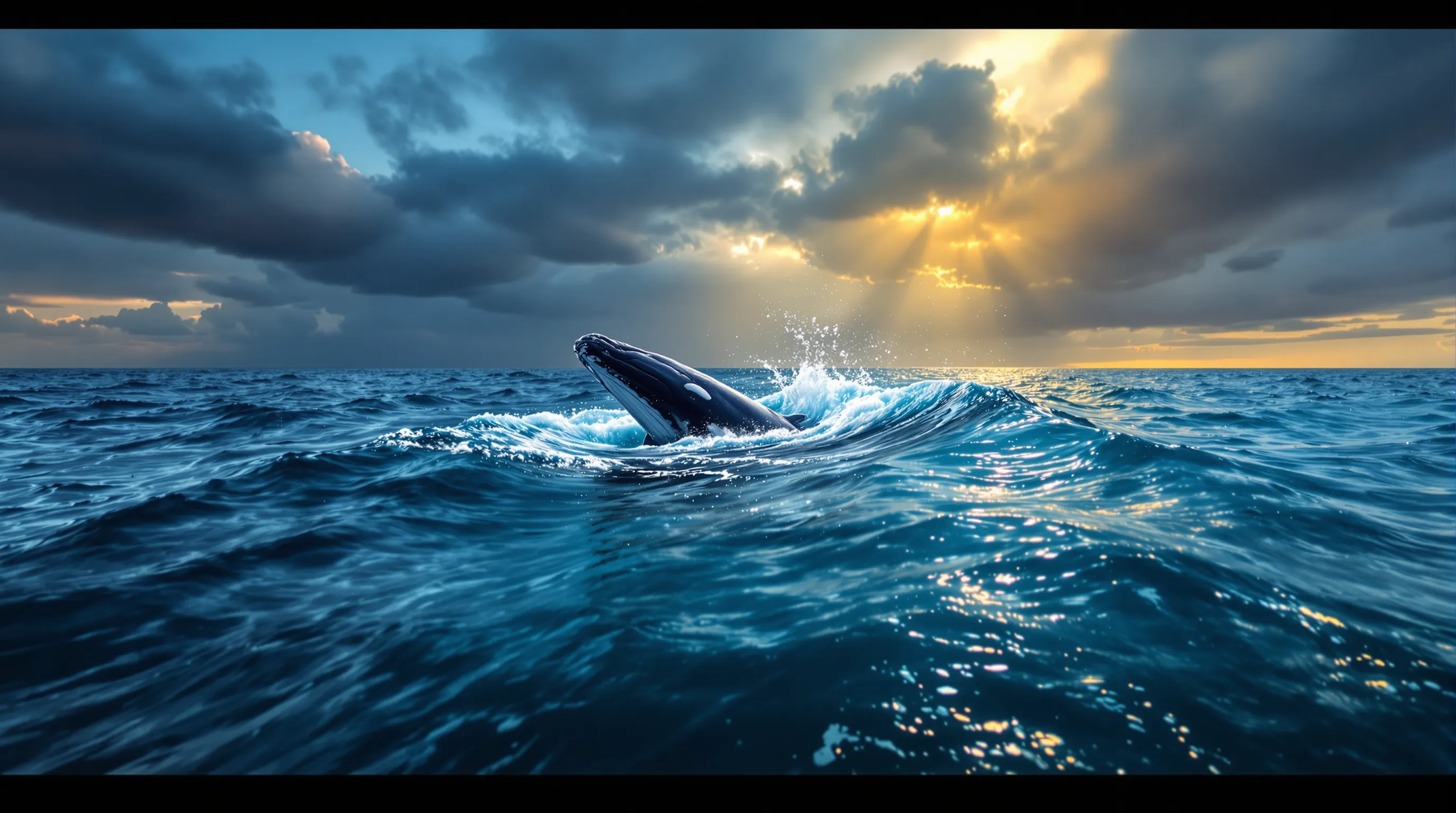
5 Fascinating Secrets About Fin Whales That Marine Biologists Reveal
The fin whale, Earth's second-largest animal after the blue whale, captivates with its majestic presence in the Mediterranean. Measuring up to 20 metres and weighing 70 tonnes, this ocean giant cruises our waters at 40 km/h. Contrary to popular belief, the Mediterranean hosts a resident population of 3,500 individuals, particularly concentrated in the Pelagos Sanctuary between France, Monaco and Italy. These colossi feed exclusively on krill and small fish, filtering up to 2,000 tonnes of water daily.
Exceptional Anatomy of the Mediterranean Giant
The fin whale displays a unique asymmetry found nowhere else on Earth: its right lower jaw is white whilst the left remains dark. This distinctive feature helps biologists identify individual animals. Its dorsal fin, positioned two-thirds along the body, measures 60 cm in height. The ventral grooves, numbering 50 to 100, allow throat expansion during feeding. The heart, large as a motorcar, pumps 400 litres of blood per beat. The tail fluke, spanning 6 metres, propels this behemoth with remarkable efficiency. Females, larger than males, reach sexual maturity at 8-10 years.
Sophisticated Communication System
Fin whales emit low-frequency sounds (16-40 Hz) audible from 500 km away. These vocalisations, called 'songs', last 15-20 seconds and repeat every minute. Scientists have identified over 50 different sound types, suggesting a complex language for navigation and reproduction.
Feeding Behaviour and Seasonal Migrations
In the Mediterranean, fin whales follow upwellings—cold, nutrient-rich water currents rising to the surface. From May to October, they concentrate in the Gulf of Lion and off Genoa where krill flourishes. Their lateral lunge-feeding technique is unique: they swim sideways, mouth agape, to capture prey. An adult consumes 2 tonnes of food daily. In winter, some individuals migrate to the Atlantic whilst others remain in the deep Mediterranean. Nursing mothers reduce feeding by 60% to conserve energy reserves. This strategy allows newborns to double their weight within six months.
Reproduction and Fascinating Life Cycle
Gestation lasts 11-12 months, producing a 6-metre calf weighing 2 tonnes. Nursing continues for 6-7 months, during which the youngster grows 3 cm daily. Births occur every 2-3 years, primarily between November and January in warm Mediterranean waters. Life expectancy reaches 90-100 years, determined through ear plug analysis. Mother-calf bonds are exceptionally strong, with separation occurring only after 8-10 months. Males reach 18 metres compared to 20 metres for females, with the latter dominating the group's social structure.
Individual Recognition Through Photo-Identification
Each fin whale possesses a unique signature: dorsal fin shape, scarring patterns and pigmentation. Researchers have catalogued over 2,000 Mediterranean individuals since 1990. This database reveals migration routes spanning 3,000 km and surprising fidelity to ancestral feeding grounds.
Practical Tips for Responsible Whale Watching
The optimal period extends from June to September, with peak activity in July-August. Trips depart from Nice, Cannes, Toulon or Genoa, costing £40-55 per adult. Book 48 hours in advance as places are limited to 12 passengers maximum. Choose morning departures (8-9 AM) in calm seas—ideal conditions for sightings. Equip yourself with 8x42 binoculars, sun cream, warm clothing and seasickness remedies. Certified guides maintain a minimum 100-metre distance and cut engines during observations. Success rates reach 85% during peak season. Allow 4-6 hours for excursions with 2-3 average sightings per trip.
Frequently asked questions
What's the best time to see fin whales in the Mediterranean?
June to September, peaking in July-August. Summer upwellings concentrate krill, drawing fin whales closer to French and Italian coasts. Favourable weather conditions allow daily departures with 85% success rates.
How large and heavy is an adult fin whale?
Females reach 20 metres and 70 tonnes, males 18 metres and 60 tonnes. They're Earth's second-largest animal after the blue whale. Growth continues until 25-30 years at 30 cm annually.
Can one observe fin whales from the Mediterranean coast?
Exceptionally, in very calm seas from elevated viewpoints like Cap d'Antibes or Portofino. Coastal sightings remain rare as they typically roam beyond 20 km offshore in waters exceeding 1,000 metres depth.
The fin whale reveals the full richness of Mediterranean biodiversity. These gentle giants offer unforgettable encounters for nature enthusiasts. To plan your whale-watching trip and discover other exceptional marine species, consult our specialist guides at dauphin-mediterranee.com and experience something truly unique in the heart of the Pelagos Sanctuary.
Read also

Why These Underwater Meadows Transform the Mediterranean into a Blue Oasis
Discover Posidonia seagrass meadows, the true lungs of the Mediterranean. These ...
Secret Corsican marine spots that even locals keep hidden will take your breath away
Discover Corsica's secret marine spots that even locals prefer to keep to themse...
What Expert Divers Do to Explore Mediterranean Wrecks
Discover the secret techniques expert divers use to safely explore Mediterranean...

These 7 Diving Secrets in the Calanques That Marseille Locals Keep Hidden
Discover the hidden diving spots of Marseille's Calanques, expert tips and under...