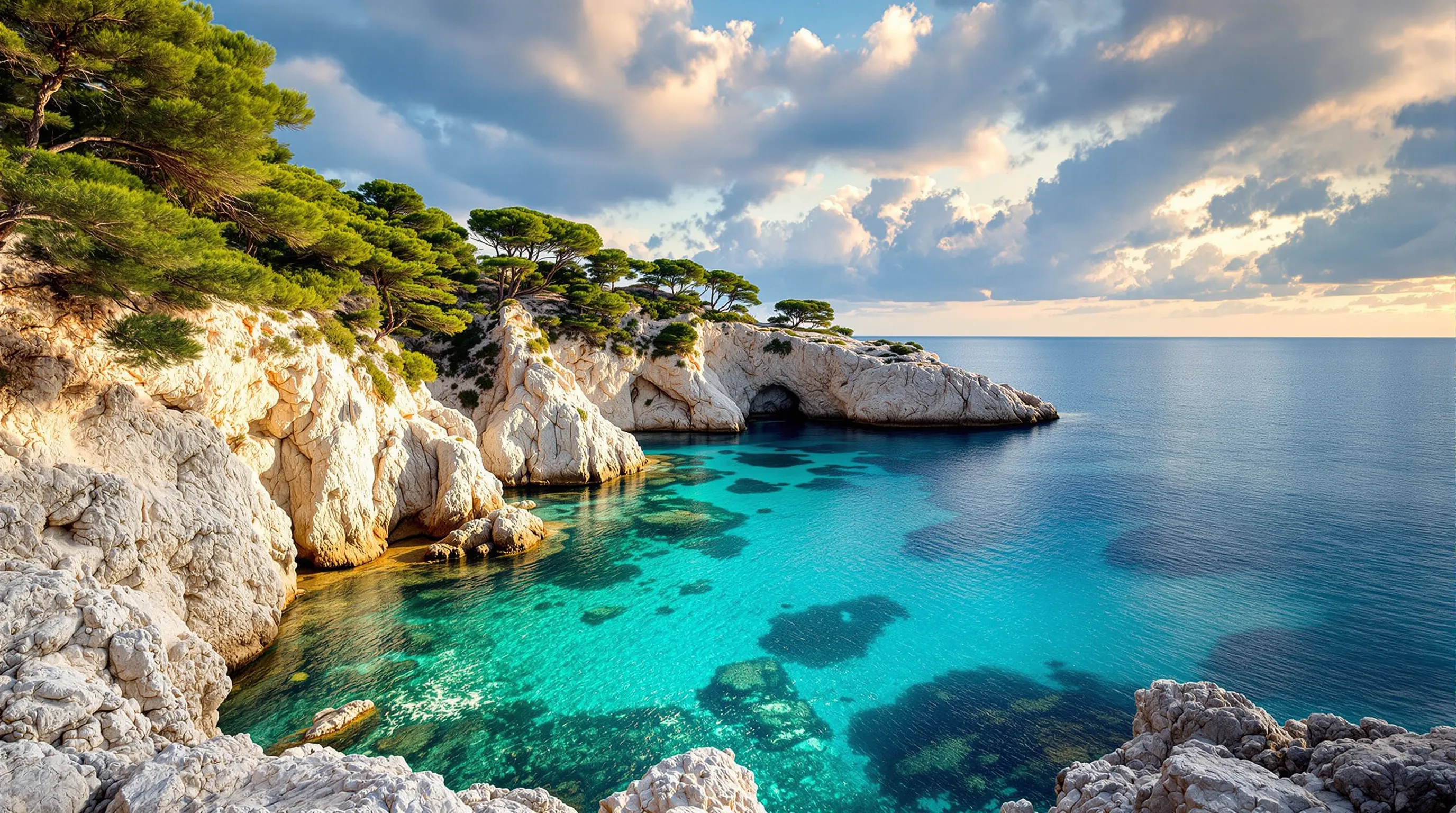
Calanques between Marseille and Cassis: the secret few visitors know about
The first time I dived into the waters of Calanque de Sugiton from my bottlenose dolphin monitoring boat, I understood why this stretch of coast between Marseille and Cassis captivates so many. These aren't simple coves: they're limestone fissures millions of years old, sculpted by erosion, where white cliffs plunge into a turquoise sea of rare clarity. The Calanques National Park, established in 2012, now protects 20 kilometres of exceptional coastline between Marseille, Cassis and La Ciotat. Here are the spots I genuinely recommend, and how to visit them without causing damage.
The must-see calanques between Marseille and Cassis
Along this limestone coastline, a handful of calanques stand out for their beauty and accessibility. Sormiou, the largest, boasts a pebble beach lined with traditional fishermen's huts and a small, still-active fishing harbour. Morgiou, more intimate, retains an authentic charm with its colourful boats moored beneath 100-metre cliffs. Sugiton, reached from Luminy, offers twin coves separated by a rocky islet, hugely popular with climbers and walkers. En-Vau, the most spectacular in my view, sits nestled between vertiginous walls crowned by an iconic rock spire, the Doigt de Dieu (God's Finger). Finally, Port-Miou, the closest to Cassis, has become a marina but retains deep blue water thanks to a unique freshwater upwelling unlike anywhere else in Europe. Each has its own character: Sormiou for families wanting comfort, En-Vau for walkers seeking grandeur, Sugiton for the ideal effort-to-reward ratio. The white limestone rock, typical of the massif, creates this striking contrast with the intense blue water, caused by low turbidity and the considerable depth of some calanques, which can exceed 60 metres near the cliffs.
En-Vau, the most photogenic calanque in the massif
En-Vau lives up to its reputation as the most spectacular calanque in the National Park. Wedged between two limestone walls over 150 metres high, it offers a white pebble beach and startlingly turquoise water, comparable to some spots in the Cyclades. Access is on foot only, via a technical trail from Col de la Gardiole or from Cassis via Pas de la Cordonnière, which naturally limits crowds despite its growing popularity on social media.
Where exactly to go: locations, spots and access
From Marseille, the classic starting point is the Baumettes district or Luminy car park, near the sports science faculty, from where Sugiton is a 45-minute walk. Sormiou and Morgiou are reached from the southern districts of Marseille via narrow roads often closed to non-resident vehicles in summer due to fire risk. In that case, you'll need to walk from the designated park-and-ride car parks, such as La Cayolle. From Cassis, the Sentier des Calanques (Calanques coastal path) leading to Port-Miou, Port-Pin and then En-Vau is the most popular route, roughly 2.5 hours there and back for all three calanques. Boat access remains a popular alternative: seasonal ferries depart from Marseille's Vieux-Port and Cassis harbour, letting you discover Sugiton, Morgiou and En-Vau from the sea without any physical effort. The tourist train and sea kayaking excursions, particularly departing from Plage de la Verrerie in Cassis, also offer an original way to reach Port-Miou and Port-Pin. Note: several trails close from 1 June to 30 September when there's a red fire-risk alert, so it's essential to check this on the Calanques National Park website before setting off.
The Cassis-En-Vau coastal path, the classic route
This waymarked trail starts at Cassis harbour and follows the coast for around 5 kilometres to En-Vau, passing through Port-Miou and Port-Pin. Allow 3 to 4 hours there and back depending on your pace, with moderate elevation gain but rocky terrain requiring proper walking boots. It's the busiest stretch in the massif, especially at weekends, but also the most rewarding thanks to the succession of viewpoints over the cliffs and sea.
When to go: weather, crowds and the best time to visit
Spring, between April and June, remains my favourite time to explore the calanques. The Mediterranean scrubland—rosemary, thyme and Aleppo pines—perfumes the trails, temperatures stay pleasant for walking, and the water, though still cool, already takes on its characteristic blue. Autumn, from mid-September to November, offers similar conditions with water still warm after summer and soft light that's ideal for photography. Summer, from July to August, sees the heaviest crowds: Sormiou and En-Vau can reach capacity by 10am, with the National Park regulating visitor numbers at certain sites. It's also when fire risk forces the most trail closures, sometimes overnight depending on weather alerts. Winter, from December to February, appeals to walkers seeking solitude and spectacular winter light on the white cliffs, though swimming becomes a challenge reserved for the hardiest. To spot local marine wildlife—dolphins and other cetaceans offshore—spring and early autumn generally offer the calmest sea conditions, less choppy than the mistral gusts common in July and August.
How to plan it: duration, difficulty and kit
For a first visit, I'd recommend dedicating a full day to a single area rather than trying to see everything in one trip. The Cassis-En-Vau path suits a reasonably fit, average-level walker, with a few sections where you'll need to use your hands on the rock. Bring proper closed walking shoes without fail—never flip-flops or sandals—plenty of water, as there are no refill points along the trails, plus a hat and sun cream, since the limestone glare is intense. A swimsuit and quick-dry towel round off the kit so you can enjoy a well-earned swim. Families with young children should stick to Sormiou or Port-Miou, which are more accessible, or take the boat option from Marseille or Cassis to avoid walking altogether. Sea kayaking, doable from Pointe du Bec de l'Aigle in La Ciotat right through to the Marseille calanques, allows for a flexible, gradual discovery, with half-day or full-day hire available. Whatever you choose, check the night before on the National Park website whether access to the massif is permitted, as regulations change frequently depending on drought conditions and wind.
Walking, boat or kayak: which option to choose
Walking remains the most authentic option but demands decent fitness and careful management of water and heat. The boat, departing from Vieux-Port or Cassis, suits families and lets you see several calanques in one outing with no effort required. Kayaking offers an interesting middle ground: independence, direct contact with the water, and access to quieter coves, but it requires at least basic training and favourable weather, as the mistral can make paddling difficult within a matter of hours.
Practical tips and responsible tourism
The cost of visiting the calanques mostly depends on your chosen mode of transport: walking alone is virtually free aside from parking, whereas boat trips or kayak hire represent a moderate to high budget depending on duration and season. Book maritime shuttles and guided outings several days in advance during peak season, as spots fill up fast in July and August. The Calanques National Park enforces strict rules: camping and fires are banned everywhere, dogs must be kept on leads, picking plants is forbidden, and access is sometimes capped with a daily quota on particularly busy trails such as Sugiton. If you're heading out to sea to spot dolphins or other cetaceans off Marseille, always choose operators certified High Quality Whale Watching, who guarantee compliance with the approach distances set out in ACCOBAMS guidelines: at least 100 metres for bottlenose dolphins, a sideways and gradual approach, and never surrounding the group. Take all your rubbish home with you, avoid removing washed-up posidonia seagrass, which protects beaches from erosion, and respect local wildlife, particularly the yellow-legged gull colonies nesting on the cliffs in spring. This fragile coastline depends on every visitor's behaviour.
Frequently asked questions
Which is the most beautiful calanque between Marseille and Cassis?
En-Vau is generally considered the most spectacular, thanks to its towering cliffs and intensely turquoise water. Sormiou charms visitors with its scale and convivial atmosphere around its traditional huts. The choice mainly comes down to how much walking you fancy and whether you're after peace and quiet or a livelier setting.
Can you visit the calanques without walking?
Yes, seasonal maritime shuttles depart from Marseille's Vieux-Port and Cassis harbour, letting you cruise along the calanques from the sea. Sea kayaking also offers an accessible alternative requiring minimal training. These options work perfectly for families or those with limited mobility.
Are the calanques trails closed in summer?
Yes, certain trails close temporarily from 1 June to 30 September whenever there's a red fire-risk alert, decided daily based on weather and drought conditions. It's essential to check permitted access the night before on the official Calanques National Park website before setting off.
Can you see dolphins from the calanques?
Bottlenose dolphins do frequent the waters off the Calanques National Park, but sightings from the coast remain occasional. Boat trips run by operators certified High Quality Whale Watching significantly increase your chances of a responsible sighting, while respecting the required approach distances.
How long should you allow to visit the Cassis calanques?
The Cassis-En-Vau path via Port-Miou and Port-Pin takes around 3 to 4 hours there and back on foot. For a fuller visit including a swim and lunch stop, allow a full day. Boat trips let you see several calanques in half a day.
Between Marseille and Cassis, the calanques offer a rare concentration of Mediterranean nature, where limestone cliffs and turquoise waters meet in a setting protected since 2012. Sormiou, En-Vau, Sugiton or Morgiou—each is worth visiting depending on your pace and fitness level. Plan your trip carefully, respect the National Park's regulations, and if you head out to sea to observe marine wildlife, always choose a responsible operator. To learn more about Mediterranean cetaceans and plan a respectful boat trip, head over to dauphin-mediterranee.com.
Read also

Spotting Dolphins Without a Boat: The Secret Coastal Spots Few People Know
Discover where to spot dolphins from the coast in the Mediterranean: rocky headl...

Scandola in Corsica: what this unique Unesco-listed reserve reveals
Discover how to visit the Scandola nature reserve in Corsica: boat access, best ...

Bonifacio seen from the sea: what these white cliffs tell visitors
Boat trips in Bonifacio: limestone cliffs, sea caves and Mediterranean wildlife....

Bandol and the calanques of the Var: the secret coastline few visitors truly explore
Bandol and the calanques of the Var: our complete guide to discovering wild cove...