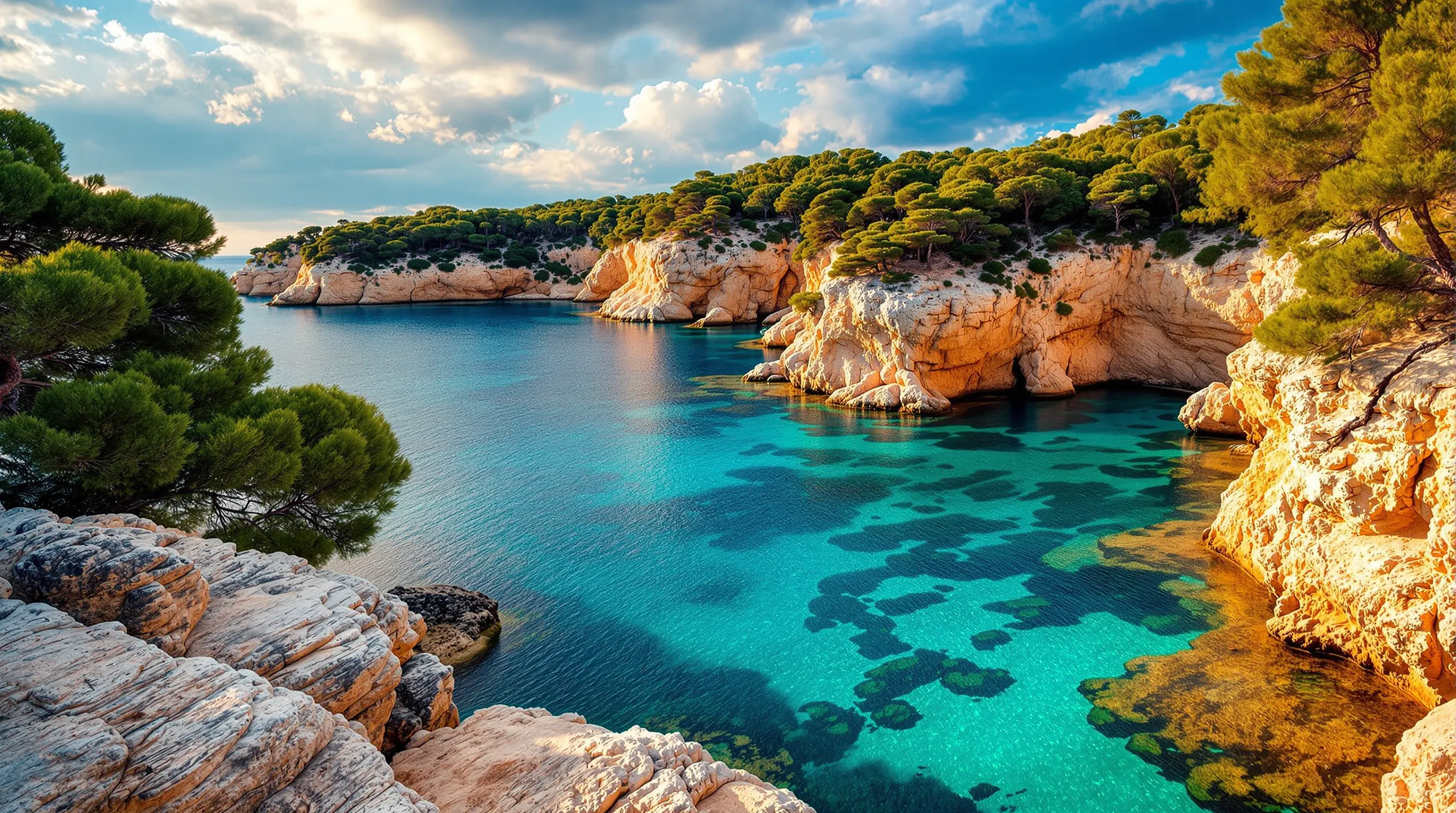
Bandol and the calanques of the Var: the secret coastline few visitors truly explore
I remember my first approach to the calanques of the Var by boat, off Le Brusc, when a shoal of sea bream crossed the shadow of the hull right beneath the ochre cliffs. Few people realise that this coastline, tucked between Bandol and the Saint-Mandrier peninsula, combines secluded coves, coastal paths that are practically deserted outside July and August, and marine biodiversity closely monitored by local scientists. Unlike the calanques of Marseille or Cassis, crowds here remain manageable, and that is precisely what makes exploring so rewarding for those willing to plan properly.
The calanques of the Var, a lesser-known but equally spectacular coastline
Between Bandol and Six-Fours-les-Plages, the Var coastline forms a succession of rocky coves that get far less attention than those in the Calanques National Park, yet are just as photogenic. The Portissol cove in Sanary-sur-Mer, the Pointe de la Cride in Bandol, and the coves of Cap Sicie near Le Brusc all boast striking turquoise waters framed by umbrella pines and low limestone cliffs. This gentler terrain, compared to the towering limestone calanques near Marseille, makes access easier for families and casual walkers alike. What sets this stretch of coast apart is also its underwater richness: Posidonia seagrass meadows still well preserved around the Saint-Mandrier peninsula, breeding grounds for rainbow wrasse and comber, and regular sightings of bottlenose dolphins offshore, particularly between Cap Sicie and the Embiez Islands.
Cap Sicie and its wild coves
Cap Sicie, between Six-Fours and Toulon, is home to the wildest coves in the area: Fabregas, the Bay of Lazaret, and the Bendor cove, reachable by shuttle from Bandol. The rocky seabeds, well oxygenated by the swell, attract rockfish and occasionally dolphins tracking shoals of sardines along the coast. Allow a good half-day to cover three coves on foot, and wear sturdy walking shoes, as the paths remain stony and offer little shade around midday.
Where to go exactly: unmissable spots between Bandol and Toulon
Bandol remains the natural starting point, with its lively harbour and regular boat links to Bendor Island, ideal for a first taste of the area without a car. Heading west, Sanary-sur-Mer and its Portissol cove offer easy family access, with nearby parking and a waymarked coastal path towards Pointe Negre. Further south, Six-Fours-les-Plages opens onto Cap Sicie and its lesser-known coves such as Fabregas or Le Brusc, a favoured launch point for boat trips out to the Embiez Islands. For keen coastal walkers, the path between Bandol and Sanary takes two to three hours depending on pace, with constant sea views and a few stretches perched above the cliffs. As for spotting marine wildlife, boat trips departing from Le Brusc or Sanary harbour bring you closer to dolphin territory, particularly off Cap Sicie, where the seabed drops away quickly, creating conditions that favour their presence.
Bendor Island and the Embiez Islands
These two island groups, easily reached by shuttle from Bandol or Le Brusc, offer a chance to discover a protected marine environment without needing your own boat. Bendor can be visited in half a day, with its discreet coves and coastal path. The larger Embiez Islands feature pebble beaches and an oceanographic institute raising awareness about protecting the Mediterranean marine environment, a worthwhile stop to understand the issues at stake before heading out to sea.
When to go: weather, seasons and crowds along the Var coast
Spring, between April and June, remains the best time to explore the calanques of the Var without the summer crowds. The sea warms up gradually, underwater visibility is often better than in high summer as there is less sediment stirred up by visitors, and the coastal paths can be walked without the crushing heat. September and early October offer an appealing compromise: the water is still warm after summer, the light softens in the late afternoon, and visitor numbers drop noticeably compared to August. July and August remain the busiest months, with car parks in Sanary and Bandol filling up by mid-morning, and coves like Fabregas overrun by 10am. Winter, often underrated, allows for very pleasant coastal walks when the mistral is calm, with a particularly photogenic Mediterranean winter light, even though swimming becomes a pursuit reserved for the hardiest. For boat trips dedicated to dolphin watching, spring and early autumn remain statistically the periods when sea conditions, often calmer, favour sightings and comfortable observation from the boat.
How to plan your visit: duration, difficulty and what to bring
For a thorough exploration of the Bandol-Cap Sicie area, allow ideally three to four days on site: one day for Bandol and Bendor Island, one day for Sanary and the coastal path, one day for Cap Sicie and its coves, and a final day for a boat trip to the Embiez Islands or a marine wildlife watching excursion. The difficulty level remains manageable for most walkers: the coastal paths are waymarked but uneven, with slippery rocky sections near the water, so closed shoes with good grip are recommended over sandals. Bring a mask and snorkel to explore the Posidonia seagrass meadows, mineral-based reef-safe sun cream, and plenty of water, as shade is scarce along several south-facing stretches.
Getting between the coves without a car
Boat shuttles linking Bandol to Bendor, or Sanary and Le Brusc to the Embiez Islands, help reduce car use, which is often a headache in high season due to limited parking. The coastal path connects several consecutive coves on foot, an eco-friendly option that is often more pleasant than the coast road, which frequently becomes gridlocked in July and August.
Practical tips and responsible tourism
The budget for a visit to this area depends largely on the type of accommodation chosen, the season (prices rise sharply in July and August), and the type of boat trip selected, with a group excursion generally remaining more affordable than a private boat hire. Booking boat shuttles and marine wildlife watching trips in advance, from spring onwards, is recommended, as spots fill up quickly during school holidays. For dolphin watching, choose operators displaying the High Quality Whale Watching label or committed to practices in line with ACCOBAMS recommendations: a minimum approach distance of at least one hundred metres, no chasing the animals, reduced speed near a pod, and switching off the engine if dolphins approach the boat of their own accord. On land, stick to waymarked paths to protect the fragile low-lying Mediterranean scrubland, take nothing from the coves (pebbles, shells, or beached Posidonia, which plays an important ecological role), and always take your rubbish home with you. When snorkelling, avoid walking on Posidonia seagrass meadows, genuine nurseries for many species and essential natural carbon stores for the balance of the Var coastline.
Frequently asked questions
Which is the most beautiful cove between Bandol and Toulon?
The Portissol cove in Sanary-sur-Mer wins people over with its easy access and turquoise waters, while the wilder coves of Cap Sicie offer a more authentic experience. The choice mainly comes down to how much walking you fancy: easy for Portissol, more demanding for Fabregas or the Cap Sicie coves.
Can you see dolphins from the coast at Bandol?
Sightings from the shore remain rare and unpredictable, as dolphins mostly stick to deeper waters off Cap Sicie. An organised boat trip, respecting the regulatory approach distances, offers a much better chance of an encounter, particularly in spring and early autumn.
How much time should I allow to visit the calanques of the Var?
Three to four days lets you cover the essentials: Bandol and Bendor, the Sanary coastal path, the Cap Sicie coves, and a boat trip to the Embiez Islands. A single day is enough for a taster, but feels frustratingly short given how many varied spots the area has to offer.
Do I need to book a boat trip in advance from Bandol?
Yes, particularly between June and September when spots fill up fast. Booking a few weeks ahead, especially for marine wildlife watching excursions, guarantees a place and allows you to compare operators who follow good practice when approaching cetaceans.
Is the coastal path between Bandol and Sanary difficult?
No, it remains manageable for most walkers, even those not particularly fit, though it does include uneven rocky sections near the water. Allow two to three hours of walking, wear sturdy closed shoes, bring water and sun protection, as shade is scarce on some exposed stretches.
Between secluded coves, quiet coastal paths and regular dolphin sightings off Cap Sicie, Bandol and the calanques of the Var deserve a thoughtful exploration rather than a fleeting visit. By choosing the right season, a suitable pace, and operators who respect the marine environment, every outing becomes a sustainable immersion in this still-unspoilt stretch of Mediterranean coastline. To learn more about the cetaceans that frequent these waters and plan a responsible trip, check out our guides and tips at dauphin-mediterranee.com.
Read also

Watching Dolphins as a Family: What Children Really Discover at Sea
Complete guide to watching dolphins as a family in the Mediterranean: best spots...

Family-Friendly Beaches on the French Riviera: What Locals Know and Never Tell You
Discover the best family-friendly beaches on the French Riviera: calm waters, fi...

Sète et le bassin de Thau : 7 secrets entre mer et étang que peu de visiteurs découvrent
Découvrez Sète et le bassin de Thau : criques secrètes, huîtres de Bouzigues, fa...

Calanques de Piana: What the UNESCO-Listed Red Cliffs Reveal
Discover the Calanques de Piana in Corsica, a UNESCO World Heritage site: access...