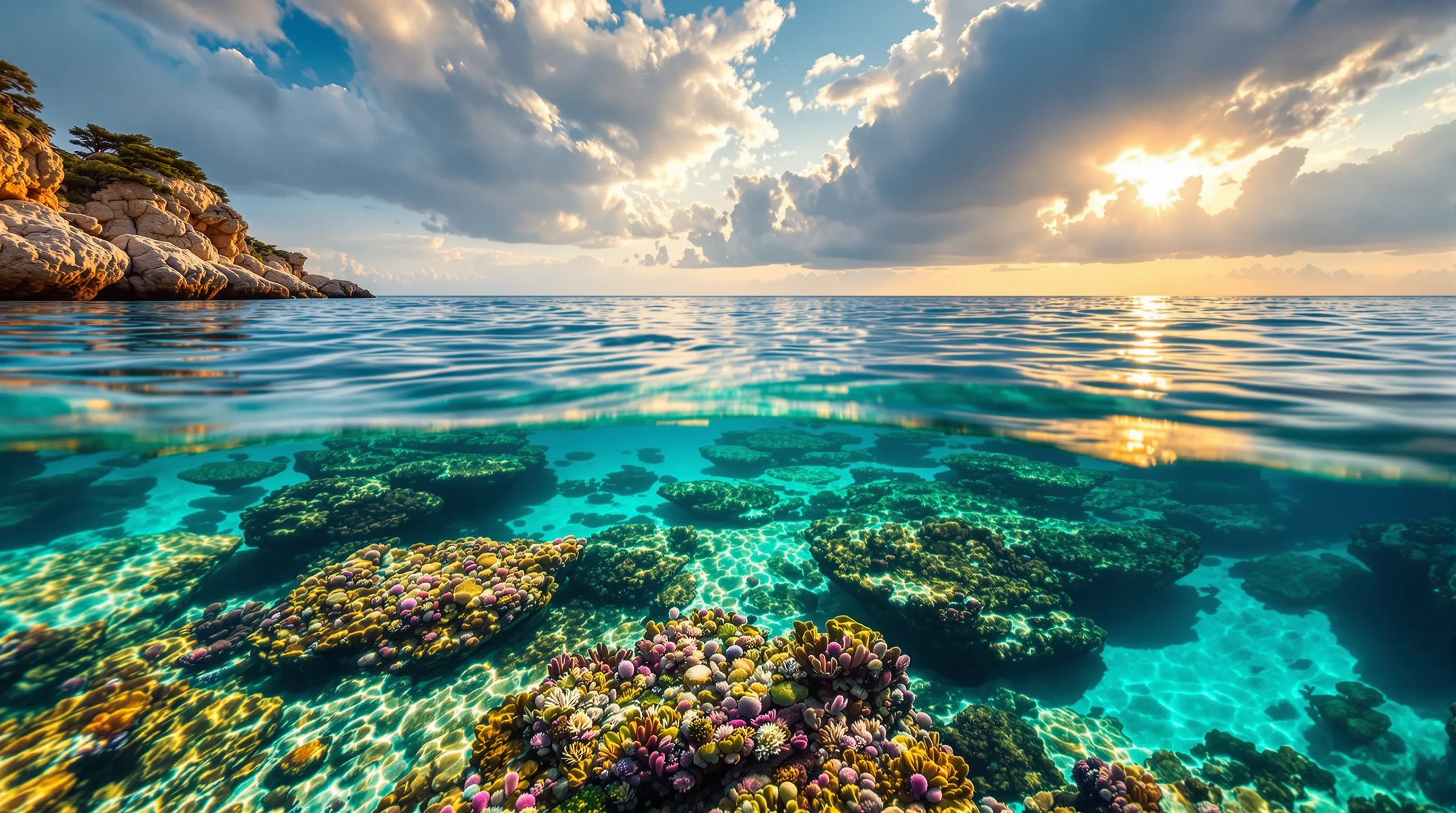
These Mediterranean corals survive heatwaves and revolutionise marine ecology
The Mediterranean is home to over 40 species of corals, some of which withstand temperatures exceeding 28°C. These marine organisms, often unknown to the general public, have been colonising our coastlines for millennia and play a crucial role in ecological balance. Unlike tropical reefs, Mediterranean corals develop unique adaptation strategies in response to climate change. This biological richness transforms our seabeds into veritable underwater gardens, accessible to divers and snorkellers alike. Let's explore these hidden treasures that are redefining our perception of Mediterranean biodiversity.
Iconic coral species of our coastlines
Red coral (Corallium rubrum) remains the flagship species of the Mediterranean, prized since antiquity for its intense scarlet colour. It grows slowly, just 2 to 8mm per year, in caves and rocky overhangs between 10 and 200 metres depth. The yellow gorgonian (Eunicella cavolini) forms veritable underwater forests, with colonies reaching up to 50cm in height. These cnidarians filter thousands of litres of water daily, capturing plankton and organic particles. Their vibrant colours - from red to purple through orange - create spectacular underwater landscapes. These corals tolerate significant temperature variations, adapting to Mediterranean seasons unlike their more fragile tropical cousins.
Areas of maximum concentration
The rocky coastlines of Corsica, Sardinia and the French Riviera concentrate 80% of Mediterranean coral populations. The Marseille calanques, the Hyères islands and Cap de Creus in Spain constitute the prime observation sites. These areas benefit from favourable currents and crystal-clear water essential to their development.
Adaptation strategies facing climate change
Mediterranean corals develop remarkable resistance mechanisms against marine heatwaves. Their tissues contain heat shock proteins that activate at 26°C, protecting their cells from damage. Unlike tropical bleaching, these species slow their metabolism and reduce growth by 40% during warm episodes. Some colonies move their polyps to cooler areas, particularly rocky crevices. Scientists also observe accelerated genetic adaptation: new generations show thermal tolerance 2°C higher than their parents. This phenotypic plasticity explains their survival in a Mediterranean basin where average temperature has increased by 1.5°C over 30 years.
Ecological impact and associated biodiversity
Mediterranean coral formations host over 1,600 marine species, representing 20% of the basin's total biodiversity. These complex ecosystems serve as nurseries for 200 fish species, including groupers, sea breams and sars. One square metre of gorgonian habitat shelters an average of 50 invertebrate species: sponges, bryozoans, crustaceans and molluscs. These communities filter 10,000 litres of water daily per square metre, contributing to the legendary clarity of Mediterranean waters. Corals also produce antimicrobial chemical compounds, naturally limiting bacterial proliferation. Their role as carbon sinks remains underestimated: they store 2 tonnes of CO2 annually per hectare, participating in local climate regulation.
Protected and endemic species
Fifteen Mediterranean coral species benefit from international protection status. Red coral has been listed in Annex III of the Bern Convention since 1982. These measures have enabled a 30% increase in populations within marine protected areas, demonstrating the effectiveness of active conservation.
Practical tips for responsible observation
The best period extends from April to October, when visibility exceeds 20 metres and temperature remains comfortable between 18 and 24°C. Sites accessible by snorkelling include the Cassis calanques (5-15m depth) and the Cerbère-Banyuls reserve (8-12m). For scuba diving, budget £35-50 per guided dive. PADI-certified dive centres offer specialised 'coral reef' training from £140. Maintain a minimum distance of 2 metres from colonies, avoid all direct contact and use oxybenzone-free sun creams. Underwater photographers should favour 60mm macro lenses to capture details without disturbing the wildlife. Book your trips 48 hours in advance during peak season, as groups are limited to 8 divers maximum to preserve the sites.
Frequently asked questions
Can you see corals whilst snorkelling in the Mediterranean?
Absolutely! Gorgonians and encrusting corals are visible from 3-5 metres depth in the Marseille calanques, Port-Cros and Corsican marine reserves. Optimal visibility occurs between May and September with crystal-clear waters.
What's the difference between Mediterranean and tropical corals?
Mediterranean corals better withstand thermal variations and don't bleach like their tropical cousins. They grow more slowly but live longer, with some colonies exceeding 100 years. Their colours remain vibrant year-round.
Are Mediterranean corals threatened by pollution?
Main threats include boat anchors, overfishing and rising temperatures. However, their millennial adaptation to the Mediterranean basin gives them superior resilience. Marine protected areas show encouraging signs of recovery.
Mediterranean corals reveal exceptional adaptability to current climate challenges. Their responsible observation considerably enriches the experience for divers and snorkellers alike. To discover these underwater treasures during your next Mediterranean holidays, explore our detailed guides on dauphin-mediterranee.com and plan your observation trips in the best conditions.
Read also
Why naturalists choose these secret cruises from Nice
Discover the naturalist cruises favoured by experts departing from Nice. Pelagos...
Hidden Corsican Marine Secrets That Local Divers Guard Jealously
Discover Corsica's secret marine spots known only to locals. Diving, snorkelling...
Why These 5 Diving Secrets Transform Your Calanques Experience
Discover the 5 underwater diving secrets in Marseille's Calanques that experts u...
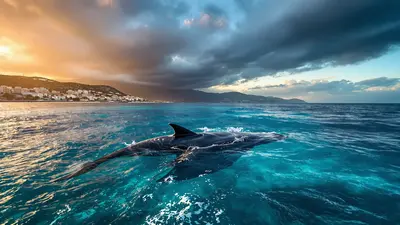
These 18-Metre Giants You Encounter Without Knowing in the Mediterranean
Discover the secrets of Mediterranean sperm whales: prime observation areas, fas...