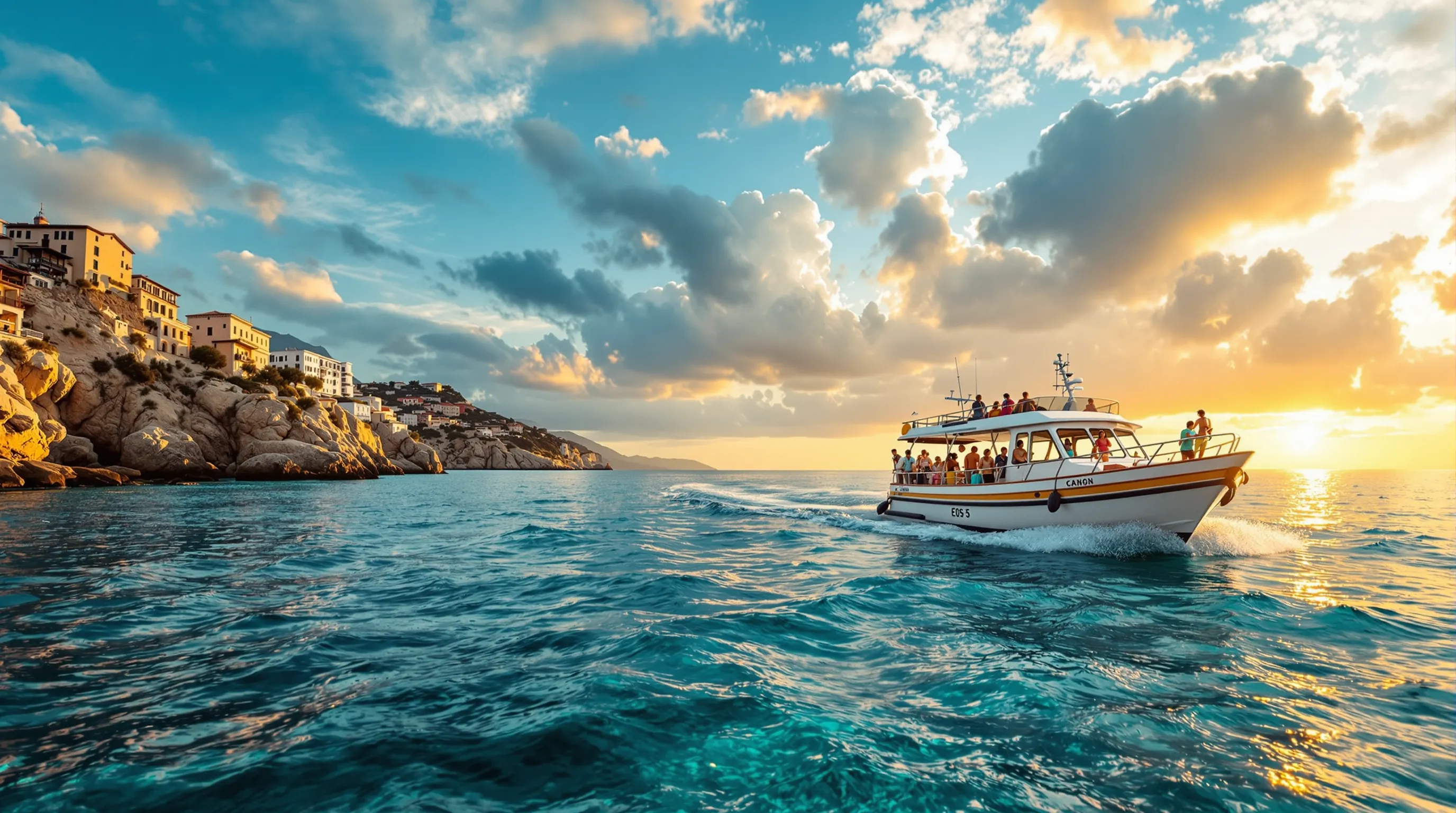
Why naturalists choose these secret cruises from Nice
The Pelagos International Sanctuary, accessible within 90 minutes from Nice, harbours the highest concentration of cetaceans in the Mediterranean. This 87,500 km² zone is home to 8 species of resident marine mammals, including sperm whales and Cuvier's beaked whales. Naturalist cruises departing from Nice offer a 95% sighting rate between April and October, compared to 60% elsewhere in the Mediterranean. Marine biologists favour these excursions to study striped dolphin populations, which are particularly dense in the Nice canyon that plunges to 2,700 metres.
Nice's submarine canyon, a marine biodiversity hotspot
Just 10 kilometres from the Nice coastline, the submarine canyon plunges dramatically from 200 to 2,700 metres depth. This unique geological configuration creates an upwelling phenomenon, where cold, nutrient-rich waters rise to the surface, promoting plankton development. This food abundance attracts krill, pelagic fish and cephalopods, forming the foundation of an exceptional food chain. The Ligurian-Provençal currents generate thermal fronts visible at the surface, creating veritable migration motorways for cetaceans. This natural concentration explains why biologists from GECEM (Mediterranean Cetacean Study Group) conduct 80% of their scientific observations in this precise sector.
Emblematic species of the Nice canyon
Bottlenose dolphins Tursiops truncatus move in family groups of 8 to 15 individuals in coastal waters. Striped dolphins Stenella coeruleoalba form superpods of 200 to 500 individuals offshore. Fin whales Balaenoptera physalus, measuring 20 metres long, follow spring krill currents. Sperm whales and pilot whales frequent deep waters to hunt giant squid and abyssal fish.
Observation techniques favoured by naturalists
Professional naturalist guides use hydrophones to detect cetacean echolocation from 2-3 kilometres away. Surface behaviour analysis allows species identification: striped dolphins perform characteristic acrobatic leaps, whilst fin whales only show their blow and dorsal fin. Optimal weather conditions combine calm seas (force 0-2 Beaufort), morning offshore winds and visibility exceeding 10 kilometres. Naturalists favour excursions from 8am to noon, the period of maximum marine mammal activity. Stabilised 10x42 binoculars and 400mm telephoto cameras enable behavioural observation without disturbance, respecting the regulatory 100-metre distance.
Pelagos Sanctuary: unique international protection
Created in 1999, the Pelagos Sanctuary resulted from a tripartite France-Italy-Monaco agreement protecting 87,500 km² of Mediterranean waters. This transboundary marine reserve prohibits drift net fishing, limits commercial navigation and regulates cetacean watching. Resident populations include 40,000 striped dolphins, 2,500 bottlenose dolphins and 150 fin whales recorded annually. The ACCOBAMS programme (Agreement on the Conservation of Cetaceans in the Black Sea, Mediterranean Sea and Contiguous Atlantic Area) coordinates international scientific studies. Data collected through photo-identification enables tracking of 800 individuals over 25 years, revealing remarkable territorial fidelity.
Regulations and best observation practices
Regulations impose a maximum speed of 5 knots within 300 metres of cetaceans, progressive lateral approach and prohibition of encircling them. Engines must be switched off at 100 metres distance. Certified operators respect a strict code of conduct: maximum 15 minutes observation, groups limited to 12 people, mandatory prior ethological briefing.
Practical advice for a successful naturalist cruise
The optimal period extends from April to October, with peak activity in June-July when surface temperatures reach 22-24°C. Book minimum 48 hours in advance, as excursions are limited to 2 boats simultaneously to preserve animal tranquillity. Expect £35-50 per adult for a 3.5-hour trip, observation equipment provided. Bring SPF50 sun cream, waterproof windproof jacket and non-slip shoes. Departures from Port Lympia (Nice) at 8:30am and 2pm depending on season. Success rate for sightings: 95% between May-September, 75% in shoulder seasons. Cancellation conditions include winds exceeding force 4 Beaufort (20 knots) and swells over 1.5 metres.
Frequently asked questions
What's the best time to observe cetaceans from Nice?
The optimal period runs from May to September with a 95% sighting rate. June-July offer ideal conditions: calm seas, excellent visibility and maximum dolphin activity. Fin whales are more frequent in spring during krill migrations.
How much does a naturalist cruise from Nice cost?
Expect £35-50 per adult for a 3.5-hour trip with a professional naturalist guide. This rate includes observation equipment, ethological briefing and insurance. Children aged 5-12 receive a 30% discount. Booking required minimum 48 hours in advance.
Can you observe whales on Nice naturalist cruises?
Yes, fin whales (up to 20m) frequent the Pelagos Sanctuary from April to October. Sighting rate: 60% in spring, 40% in summer. Sperm whales are occasionally visible (15% chance) in the canyon's deep waters, mainly in late summer.
Naturalist cruises from Nice offer a unique experience observing Mediterranean cetaceans in their natural habitat. The Pelagos Sanctuary guarantees exceptional encounters with 8 species of marine mammals, whilst respecting their ecosystem. To book your observation trip with expert naturalist guides, visit dauphin-mediterranee.com and discover the unsuspected richness of Nice's waters.
Read also
Hidden Corsican Marine Secrets That Local Divers Guard Jealously
Discover Corsica's secret marine spots known only to locals. Diving, snorkelling...
Why These 5 Diving Secrets Transform Your Calanques Experience
Discover the 5 underwater diving secrets in Marseille's Calanques that experts u...
These 18-Metre Giants You Encounter Without Knowing in the Mediterranean
Discover the secrets of Mediterranean sperm whales: prime observation areas, fas...
Why 90% of Tourists Overlook These Sustainable Fishing Techniques in the Mediterranean
Discover the secrets of responsible Mediterranean fishing: ancestral techniques,...