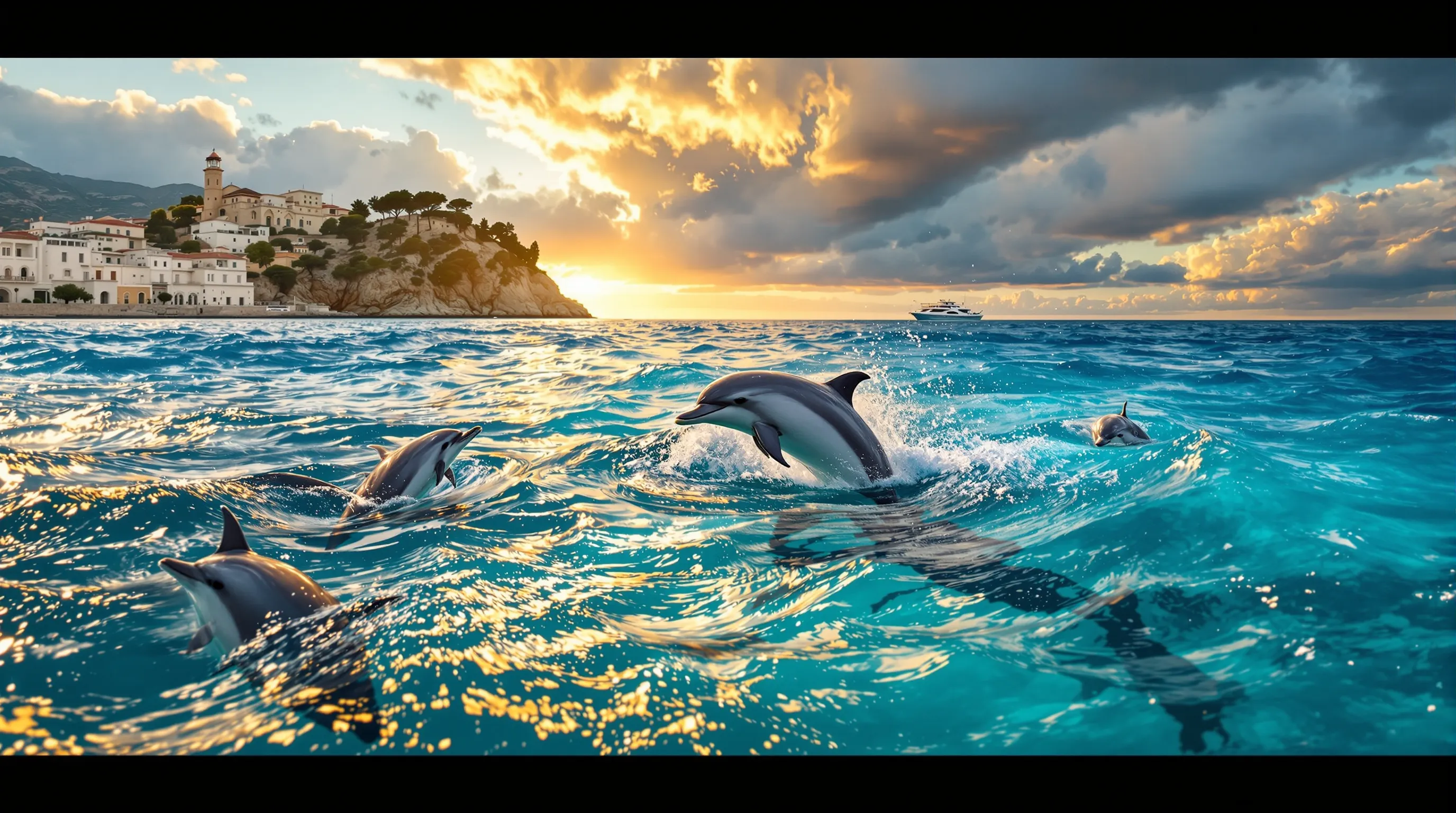
What Marine Biologists Reveal About Common Dolphins in the Mediterranean
Common dolphins (Delphinus delphis) have inhabited Mediterranean waters for millennia, forming distinct populations from their Atlantic cousins. These fascinating marine mammals thrive in a unique ecosystem where average temperatures range from 13°C to 28°C depending on the season. Marine biologists have identified approximately 8,000 to 10,000 individuals in the western Mediterranean basin, primarily concentrated in the Pelagos Sanctuary between France, Monaco and Italy. Their complex social behaviours and specific adaptations to this semi-enclosed environment reveal remarkable secrets that only experts truly understand.
The unique characteristics of Mediterranean dolphins
Mediterranean common dolphins display subtle yet significant morphological differences compared to their oceanic relatives. Their average size reaches 1.80 to 2.20 metres with a weight of 80 to 110 kg, approximately 15% smaller than Atlantic populations. This adaptation results from the Mediterranean's specific food availability. Their life expectancy reaches 25 to 30 years in these warmer waters. Biologists have observed that their metabolism adapts to significant seasonal variations, slowing in winter when prey becomes scarce. Their distinctive colouration presents more contrasted shades, with a brilliant white belly and marked grey-black back. These phenotypic variations testify to millennial adaptation to this unique Mediterranean environment.
Remarkable physiological adaptations
Their cardiovascular system presents fascinating characteristics: a heart capable of slowing to 10 beats per minute during deep dives, compared to 100 at rest. Their lungs can store up to 85% of their oxygen capacity, enabling breath-holds of 8 to 12 minutes. These adaptations allow them to hunt efficiently for sardine and anchovy schools down to 200 metres depth in Mediterranean underwater canyons.
Social behaviour and collective intelligence
Mediterranean common dolphins live in groups of 20 to 200 individuals, forming super-groups that can reach 2,000 members during seasonal migrations. Their matriarchal social structure is organised around dominant females aged 15 to 25 years. Biologists have documented more than 40 distinct vocal signals, including regional dialects specific to populations in the Gulf of Lions, Ligurian Sea or Balearics. Their collective intelligence manifests during coordinated hunts: they use the "carousel" technique to concentrate fish schools, with a capture efficiency exceeding 85%. Young dolphins learn these sophisticated techniques over 3 to 4 years from adults, developing strategies adapted to Mediterranean topographical specifics such as underwater canyons and coastal upwellings.
Concentration zones and seasonal migrations
The Pelagos Sanctuary remains the main concentration zone with 60% of the western Mediterranean population. Biologists have identified four major migratory corridors: the Corsican channel (March-May), Catalan coasts (June-August), Gulf of Lions (September-November) and Italian Riviera (December-February). These movements follow prey availability: anchovies in spring, sardines in summer, squid in autumn. Surface temperature directly influences their movements, with a preference for zones between 16°C and 22°C. Pregnant females seek the warmer waters of protected bays for calving, primarily between May and September. Adult males undertake longer migrations, covering up to 3,000 km annually between Spain and Italy to optimise their reproductive and feeding opportunities.
Prime observation hotspots
Experts identify five optimal observation zones: Rech canyon off Nice (90% encounter chance), Hyères Islands (85%), Cap de Creus (80%), eastern Balearics (75%) and the Ligurian coast between Genoa and Portofino (70%). These percentages correspond to observations documented by marine biologists between 2019 and 2023.
Practical advice for respectful observation
The best period extends from April to October, with peak activity between 7am and 10am when dolphins hunt at the surface. Boat trips cost between £30 and £70 depending on duration and region, with the best rates in May-June and September. Book at least 48 hours in advance, especially during high season. Biologists recommend High Quality Whale-Watching certified operators who respect safety distances (100 metres minimum). Avoid outings in winds exceeding 20 knots and rough seas. Bring sun protection, seasickness medication and 8x42 binoculars. Dolphins are more active in calm seas and slightly overcast skies. Populations are more numerous during new moon when planktonic bioluminescence attracts their prey to the surface.
Frequently asked questions
What's the difference between common dolphins and bottlenose dolphins in the Mediterranean?
Common dolphins measure 1.80-2.20m compared to 2.50-3.50m for bottlenose dolphins. They have a more tapered beak, yellow-beige colouration on their flanks and live in larger groups. Bottlenose dolphins prefer coastal areas whilst common dolphins inhabit open waters. Their diet differs: small pelagic fish versus benthic fish and cephalopods.
How many common dolphins can you observe during a Mediterranean trip?
A successful outing allows observation of 20 to 80 individuals on average, with exceptional peaks of 200-300 dolphins during feeding aggregations. Family groups typically count 15-30 members. Super-groups of 500+ individuals remain rare but spectacular, mainly observed off the Pelagos Sanctuary between May and July during prey concentrations.
How close can you approach common dolphins without disturbing them?
Regulations require 100 metres minimum, but biologists recommend 150-200 metres to avoid any disturbance. Curious dolphins naturally approach stationary vessels. It's forbidden to pursue them, swim with them or feed them. Certified operators respect these distances and cut engines during observations to minimise underwater noise pollution.
Mediterranean common dolphins reveal a fascinating complexity that only respectful observation allows us to fully appreciate. Their unique adaptations and sophisticated social behaviours make them one of the most remarkable marine species along our coasts. To experience this unforgettable encounter whilst respecting these exceptional marine mammals, discover our observation trips at dauphin-mediterranee.com.
Read also
What marine biologists reveal about the best time to see whales
Discover when to spot cetaceans in the Mediterranean according to experts. Optim...
7 Secret French Riviera Beaches Even Locals Don't Know About
Discover 7 secret French Riviera beaches untouched by mass tourism. Hidden coves...
5 Things You Never Knew About the Intelligent Octopuses of the Mediterranean
Discover fascinating secrets of Mediterranean octopuses: intelligence, camouflag...
What Locals Do to Discover Hidden Mediterranean Harbours
Discover secret picturesque harbours along the Mediterranean coast that only loc...