Porquerolles, Port-Cros, Levant: 7 Secrets of the Golden Isles Few Visitors Know
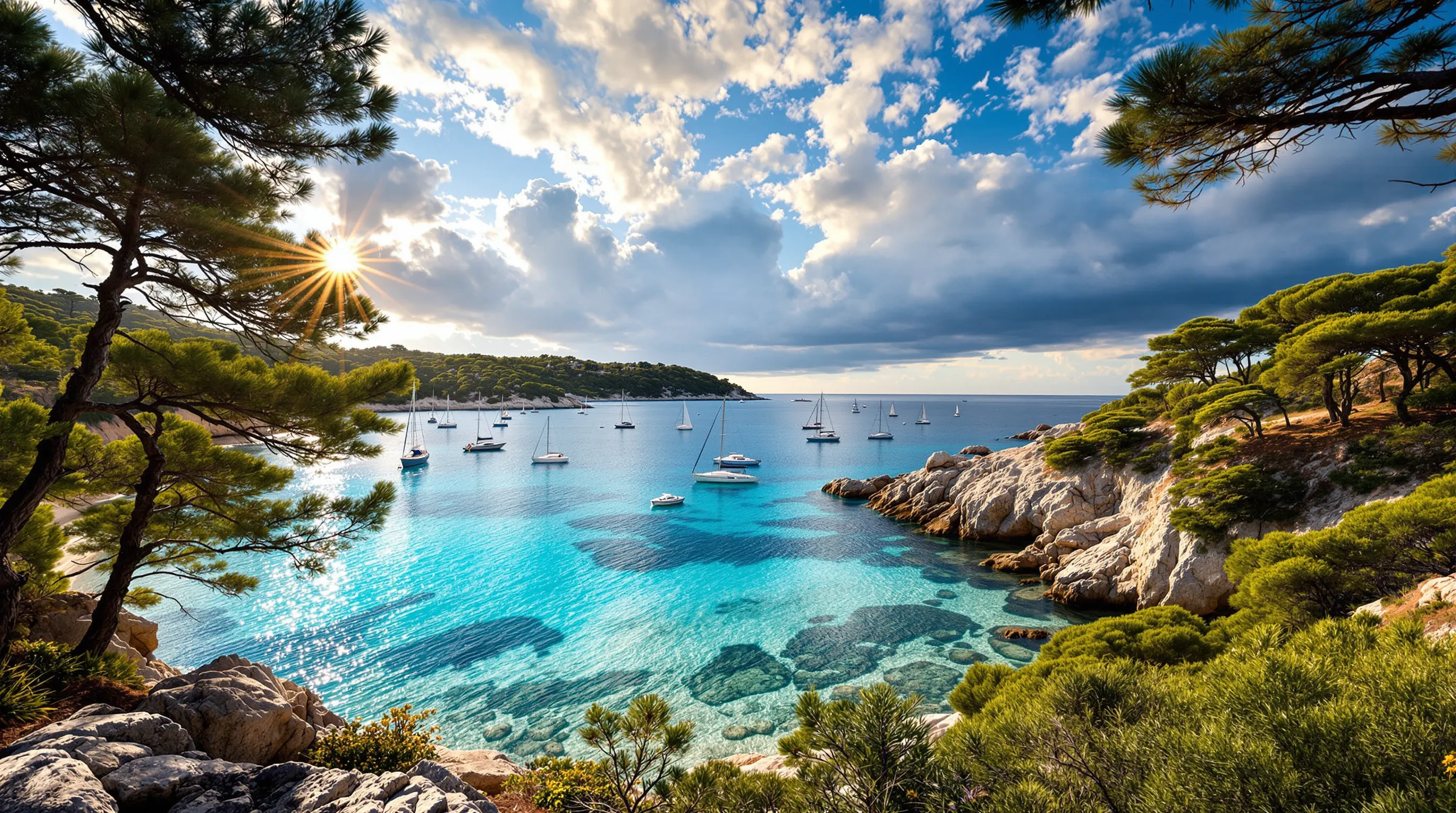
The first time I stepped off the boat at Porquerolles from the Tour Fondue, I could have sworn I'd washed up on a stray Greek island somewhere off the Var coast. Umbrella pines, turquoise coves, near-total silence the moment you wander away from the village. The Golden Isles, Porquerolles, Port-Cros and Levant, form a truly unique archipelago in the western Mediterranean, protected since 1963 by the Port-Cros National Park, France's oldest marine park. Here, nature still calls the shots: no cars, a capped number of visitors, and some of the best-preserved seabeds along the French coastline. A proper open-air laboratory for anyone who loves the sea in its rawest form.
Three islands, three distinct personalities
Porquerolles, the largest and most visited, charms with fine sandy beaches like Notre-Dame and Plage d'Argent, a Napoleonic fort, and terraced vineyards. Port-Cros, entirely classified as a national park since 1963, enforces strict rules: swimming permitted only in designated areas, regulated anchoring, and a marked underwater trail in the Baie de la Palud. Levant, the easternmost and wildest of the three, remains largely occupied by the French Navy's military domain; only the village of Héliopolis, famous for its naturist history dating back to the 1930s, is open to visitors. Each island sets its own pace, from organised lazing about to near-solitary exploration.
Porquerolles, the lively and accessible island
Served year-round from the Tour Fondue in Giens, Porquerolles is packed with restaurants, bike hire shops and marked trails. Notre-Dame beach, to the north, boasts water so turquoise it rivals the Caribbean, while the Cap des Mèdes lighthouse looks out over dramatic cliffs. Allow a full day to soak up the pace, longer still if you fancy cycling to Fort Sainte-Agathe or sampling wine from the island's own estate.
Where to go exactly, depending on what you fancy
For an underwater ramble, head to the Baie de la Palud at Port-Cros: this marked trail, accessible with just a mask and snorkel, skirts a dense seagrass meadow home to wrasse, sea bream and the occasional grouper. Fans of wilder beaches should seek out Plage Blanche or l'Ayguade on the Giens peninsula, far quieter than central Hyères. To spot pelagic wildlife, including dolphins and, on occasion, fin whales, boat trips depart from Hyères harbour or La Londe-les-Maures towards the open waters of the Pelagos Sanctuary, a cetacean protection zone shared by France, Monaco and Italy. Old Hyères, with its Saint-Paul collegiate church and medieval lanes, rounds off a coastal stay nicely, whether before or after your crossing to the islands.
The Pelagos Sanctuary, an invisible but very real border
The waters off the Golden Isles touch the southern edge of the Pelagos Sanctuary, established in 1999 to protect Mediterranean cetaceans. Striped dolphins, bottlenose dolphins and occasionally sperm whales pass through, especially in summer when the deep waters of the Toulon canyon concentrate plankton. Operators holding the High Quality Whale Watching label commit to strict approach distances, in line with ACCOBAMS recommendations.
When to go to dodge the crowds and make the most of it
June and September remain the best-balanced months: the water's already warm, around 22 to 24°C, light conditions are ideal for diving, and visitor numbers are far lower than in July and August, when Porquerolles can welcome several thousand people a day. Spring, from April to May, brings Mediterranean flora into bloom and mild temperatures, perfect for walking the coastal trails of Port-Cros. Autumn, up until mid-October, keeps calm seas and gorgeous golden light for photography. Winter, on the other hand, drastically cuts ferry crossings and closes many shops, particularly on Levant and Port-Cros. The mistral, common year-round but harsher in winter and spring, can cancel crossings altogether: it's worth building some slack into your schedule if the forecast looks dicey.
How to plan your visit based on your fitness level and time available
A single day is enough to explore Porquerolles by bike, but allow two to three days to take in all three islands without rushing. Ferries mainly depart from the Tour Fondue, Hyères harbour and Le Lavandou, with frequency varying by season. No particular fitness level is needed for the classic walking routes, but Port-Cros's underwater trail calls for basic comfort with fins, mask and snorkel, plus decent stamina to swim unaided for around 30 minutes. Pack sturdy closed shoes for rocky paths, mineral sunscreen to limit the impact on seagrass beds, and a reusable water bottle, as drinking water is limited on the islands. For dolphin watching offshore, opt for a guided half-day trip with a labelled operator rather than hiring your own boat, which poses greater risks to wildlife and teaches you far less.
Booking accommodation on the islands or on the mainland
Staying overnight on Porquerolles is possible but capacity is limited, so booking several months ahead is wise for summer. Most visitors base themselves in Hyères, Le Lavandou or Giens and make day trips across, a more flexible and often cheaper option. Port-Cros and Levant offer very few places to stay, which only adds to their unspoilt feel.
Practical tips and responsible tourism
The cost of a trip to the Golden Isles depends mainly on the season, the number of ferry crossings and whether you book guided activities like diving or whale watching, generally pricier than a straightforward walk. Book your ferry tickets ahead of time in high season, as crossings are limited and fill up fast. On Port-Cros, stick closely to the marked underwater trail and avoid any contact with seagrass, a protected marine plant vital to the ecosystem. For dolphin watching, ACCOBAMS regulations require a minimum approach distance, a slow approach with no sudden changes of direction, and strictly no encircling or feeding the animals. Choose operators displaying the High Quality Whale Watching label, a guarantee of ethical practice and proper scientific oversight. Finally, always take your rubbish home with you, as the archipelago has only limited waste management, and choose biodegradable sunscreen to protect seagrass meadows and the marine life clinging to the coves.
Frequently asked questions
Can you visit Porquerolles, Port-Cros and Levant all in one day?
Technically yes for Porquerolles alone, but trying to fit all three islands into a single day isn't advisable, as there aren't frequent direct links between them. It's better to devote a day to each island or book a combined trip offered by some ferry operators from Hyères or Le Lavandou.
Is Levant open to all visitors?
Only the village of Héliopolis, on the eastern tip of the island, is open to the public; the rest of the island belongs to the French Navy and remains off-limits. Héliopolis has a long-standing naturist tradition worth knowing about before you visit.
What's the best time to spot dolphins near the Golden Isles?
May to September offers the best viewing conditions, with calmer seas and more intense feeding activity from striped dolphins in the Pelagos Sanctuary. Morning trips tend to offer better sightings.
Should you book the ferry in advance in summer?
Yes, it's strongly recommended from June to September, as crossings to Porquerolles and Port-Cros sell out days in advance during peak season. Booking online a few weeks ahead secures your spot.
Is the Port-Cros underwater trail suitable for beginners?
Yes, it's accessible to anyone comfortable swimming with a mask and snorkel, no diving qualification needed. Allow around 30 minutes of unaided swimming; children should be accompanied and properly equipped to make the most of the marked route.
Porquerolles, Port-Cros and Levant offer three complementary faces of a protected Mediterranean, from accessible beaches to underwater trails and near-untouched nature. Choosing the right season, sticking to marked routes and picking labelled operators turns the visit into an experience that's both rewarding and responsible. To learn more about dolphin watching in the Pelagos Sanctuary and plan a wildlife-friendly boat trip, continue exploring at dauphin-mediterranee.com.
Read also

Seasickness on Whale Watching Trips: The Tricks Marina Always Uses at Sea
Seasickness on whale watching trips: discover how to prevent and manage it with ...

Collioure and the Vermilion Coast: what its turquoise waters reveal when snorkelling
Discover Collioure and the Vermilion Coast for swimming and snorkelling: hidden ...

Lionfish and Giant Jellyfish: How Warming Waters Are Changing the Mediterranean
Warming seas and invasive species are transforming the Mediterranean: discover t...

Diving in the Mediterranean with No Experience: What Marina Recommends for True Beginners
Beginner diving in the Mediterranean: easy spots, best season, kit and advice fr...