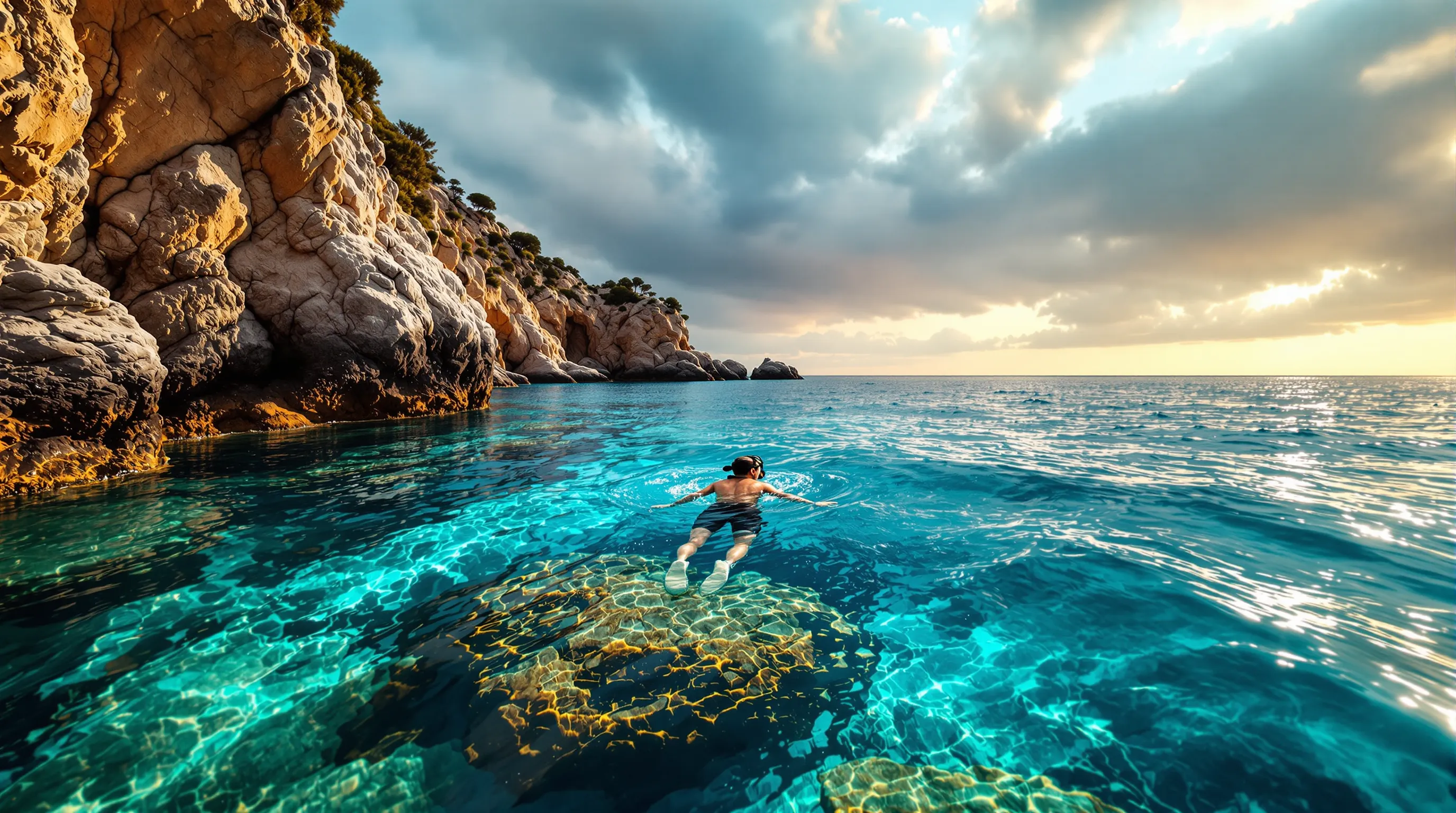
Diving in the Mediterranean: what beginners absolutely need to know before taking the plunge
The first time I put my head underwater off Port-Cros, I came across a shoal of silvery salema swimming between the seagrass beds, and I understood why so many people get hooked from their very first dive. The Mediterranean has nothing to envy in tropical seas: its rocky seabeds, caves and seagrass meadows shelter a dense, often overlooked biodiversity. That said, diving in without any bearings can quickly become off-putting. Between choosing the right club, the ideal season and the appropriate kit, here's a practical guide, with the eye of a marine biologist well acquainted with Mediterranean coastlines, to help you take your first fin strokes underwater without stress or false notes.
Why the Mediterranean is a brilliant place to start diving
Contrary to popular belief, the Mediterranean offers very favourable conditions for beginners: generally calm waters, visibility that can exceed 15 to 20 metres at certain rocky sites, and a host of shallow spots accessible straight from the shore. The Posidonia seagrass meadows, endemic to this sea, play an essential role: they shelter seahorses, juvenile groupers, octopuses and numerous species of nudibranch, making them the perfect spot for a first encounter with underwater life. Lower salinity compared with the Red Sea and a gradual thermocline also make the physical adjustment gentler. At sites such as the Sormiou cove near Marseille, the Cerbère-Banyuls reserve in the Pyrénées-Orientales, or the coves of Cassis, you'll find depths of 3 to 12 metres, ideal for a first dive. These areas combine safety, biological richness and structured professional supervision, with clubs affiliated to the FFESSM or PADI found almost everywhere along the coast.
An underrated biodiversity
The Mediterranean is often imagined as poor in marine life compared with tropical seas, but that's a mistake. Brown groupers, moray eels, octopuses, red starfish, giant fan mussels (when they survive the epizootic that's been affecting them since 2016), and sometimes damselfish in dense shoals populate the rocky drop-offs. Protected areas such as Port-Cros National Park boast a remarkable density of species, the result of decades without fishing. For a beginner, this richness, accessible from just a few metres down, makes every dive memorable, without ever needing to go particularly deep.
Exactly where to dive when you're starting out
Several French areas stand out for their accessibility and supervision. On the Côte d'Azur, Antibes and its underwater trail at Pointe de l'Ilette allow for a first supervised, self-guided immersion, no boat required. In Marseille, the Sormiou and Morgiou coves offer shallow sites managed by clubs such as those at the Vieux-Port or Callelongue. Further west, Banyuls-sur-Mer and Cerbère, a marine reserve since 1974, offer rocky seabeds teeming with groupers and often crystal-clear water thanks to the offshore wind. In Corsica, the Gulf of Porto-Vecchio and the area around Bonifacio have numerous clubs well used to first-timers, with gentle drop-offs and very clear water from June onwards. For those who prefer the Côte Vermeille or the Var coastline, Le Lavandou and Hyères also provide access to the Îles d'Or archipelago, including Porquerolles, where sandy seabeds surrounded by seagrass are perfect for a first supervised outing.
The best spots right along the coast
For a genuinely gentle start, look for sites accessible on foot or via a short boat shuttle, with a maximum depth of 6 to 10 metres. The Port-Miou cove near Cassis, Cavalaire bay in the Var, or Paloma beach at Cap d'Ail near Monaco all tick these boxes. These areas limit logistical stress and let you focus on breathing and buoyancy control, without worrying about currents or a tricky ascent.
When to plan your first Mediterranean dive
The ideal season runs from June to September, when surface water temperature climbs to between 22 and 26°C depending on the area, making a 5mm wetsuit more than sufficient. July and August offer the best visibility but also the biggest crowds at renowned spots such as Port-Cros or the Calanques de Cassis, with first-dive slots often booked weeks in advance. May and October remain excellent alternatives: the water is still cool (18 to 21°C) but the sea is calmer and sites are noticeably less crowded, which makes it easier to observe wildlife that's less disturbed. Winter shouldn't be ruled out for the more dedicated: some clubs run trips year-round on the Côte d'Azur or in Corsica, with water at 13-15°C requiring a semi-dry or dry suit. What to avoid, however: mistral episodes or strong easterly winds, common in Provence during spring and autumn, which cloud visibility and make getting into the water uncomfortable for a beginner.
How to actually get started
No prior experience is needed for a discover scuba dive: it typically takes place over a 30 to 45-minute session underwater, supervised one-to-one by a state-qualified instructor or PADI instructor, at a maximum depth of 6 metres. This first encounter requires no extensive medical certificate or federal licence, just a simple health questionnaire. If you enjoy the experience, the next step is FFESSM Level 1 training (or PADI Open Water), spread over 4 to 6 sessions combining theory, pool exercises and open-water dives down to 20 metres. Expect either an intensive weekend or several sessions spread over two to three weeks. Kit is almost always provided by the club for beginners: wetsuit, regulator, buoyancy control device, mask and fins. Only some people prefer to invest quickly in their own mask, for extra comfort and hygiene. A logbook is strongly recommended from the outset to track your progress and make it easier to sign up with other clubs in future, including abroad.
Essential kit for a beginner
For a discover dive, there's nothing to bring beyond swimwear and a towel, as the club supplies the entire kit. For Level 1 training, it's useful to have your own mask that fits your face well, for extra comfort. Fins, wetsuit, regulator and BCD are generally rented from the centre throughout the course. Investing in personal kit only really becomes worthwhile from Level 2 onwards, once regular diving is confirmed.
Practical tips and responsible tourism
The cost of a discover dive varies depending on the region, the site's popularity and the time of year, with a club on the Côte d'Azur in peak season generally charging more than a centre in Corsica outside July-August. Level 1 training is a bigger investment, but often works out cheaper per session when bundled with a stay or a multi-session package. Always book ahead in summer, as slots fill up fast at iconic sites like Port-Cros or the Calanques. Check that the club is affiliated with a recognised federation (FFESSM, PADI, SSI) and that insurance is included. On the responsible side, the Mediterranean is also home to cetaceans, striped and common dolphins, and fin whales in the Pelagos Sanctuary between Provence, Corsica and Liguria: if your dive trip encounters them at the surface, keep a minimum distance of 100 metres, never change course to approach them, and choose operators certified High Quality Whale Watching, committed to an observation charter in line with ACCOBAMS recommendations. Underwater, never touch wildlife or gorgonian corals, and avoid stirring up sediment near Posidonia meadows, which are essential to local biodiversity and coastal erosion control.
Frequently asked questions
Do you need to know how to swim to do a discover scuba dive in the Mediterranean?
Yes, a basic swimming level is required, generally the ability to swim 25 metres without difficulty. No athletic performance is expected: the instructor stays right by your side throughout the dive. The main thing is feeling comfortable in water and not panicking at the thought of being submerged, the rest is learned gradually with one-to-one supervision suited to complete beginners.
What's the minimum age to start scuba diving?
Most clubs accept discover dives from age 8, under supervised, shallow conditions, often in a pool or a very sheltered area. For certified training such as FFESSM Level 1, the minimum age is generally set at 12. A medical certificate confirming no contraindications to diving is always required before signing up.
What's the best area in the French Mediterranean for beginners?
The Calanques of Cassis and Marseille, Port-Cros National Park, Banyuls-sur-Mer and the Gulf of Porto-Vecchio in Corsica are among the most suitable areas. They combine calm waters, shallow depths, rich biodiversity and plenty of clubs experienced in welcoming complete beginners, with sites accessible directly from the shore.
Can you see dolphins whilst scuba diving in the Mediterranean?
It's rare but possible, particularly further offshore where striped and common dolphins roam, especially within the Pelagos Sanctuary. On shallow coastal dives, sightings remain exceptional. Encounters happen more often at the surface, during dedicated observation trips run by operators who respect the regulatory distances.
How long does it take to get your first diving qualification?
FFESSM Level 1 or PADI Open Water is generally achieved in 4 to 6 sessions, completed either over an intensive weekend or spread across two to three weeks. This training combines brief theory sessions, pool exercises and open-water dives down to 20 metres, under the constant supervision of a qualified instructor.
Starting to dive in the Mediterranean means gaining direct access to a surprisingly rich underwater world, often underrated compared with tropical seas. Between Provençal coves, Catalan reserves and Corsican coastlines, there's no shortage of options for a calm, well-supervised first dive. Choose the right season, a reputable club, and always bear in mind the importance of respecting the marine environment and its inhabitants, cetaceans included. To plan your next trip to the sea and better understand Mediterranean wildlife, explore our guides on dauphin-mediterranee.com.
Read also

Boat Trips with a Marine Biologist: What Dolphins Reveal
Boat trips with a marine biologist in the Mediterranean: species to spot, best t...

What the Experts Pencil Into Their Nautical Diary Before Summer on the French Riviera
Summer boating calendar for the French Riviera: key dates, boat trips, dolphin w...

Fin Whales in the Mediterranean: 7 Secrets of the Giant Few Tourists Know
Discover the fin whale in the Mediterranean: the Pelagos Sanctuary, best times t...

Riviera Cruises: What Marina Observes Every Summer in the Mediterranean Sea
Discover the best cruises along the French Riviera: ports, dolphin-watching spot...