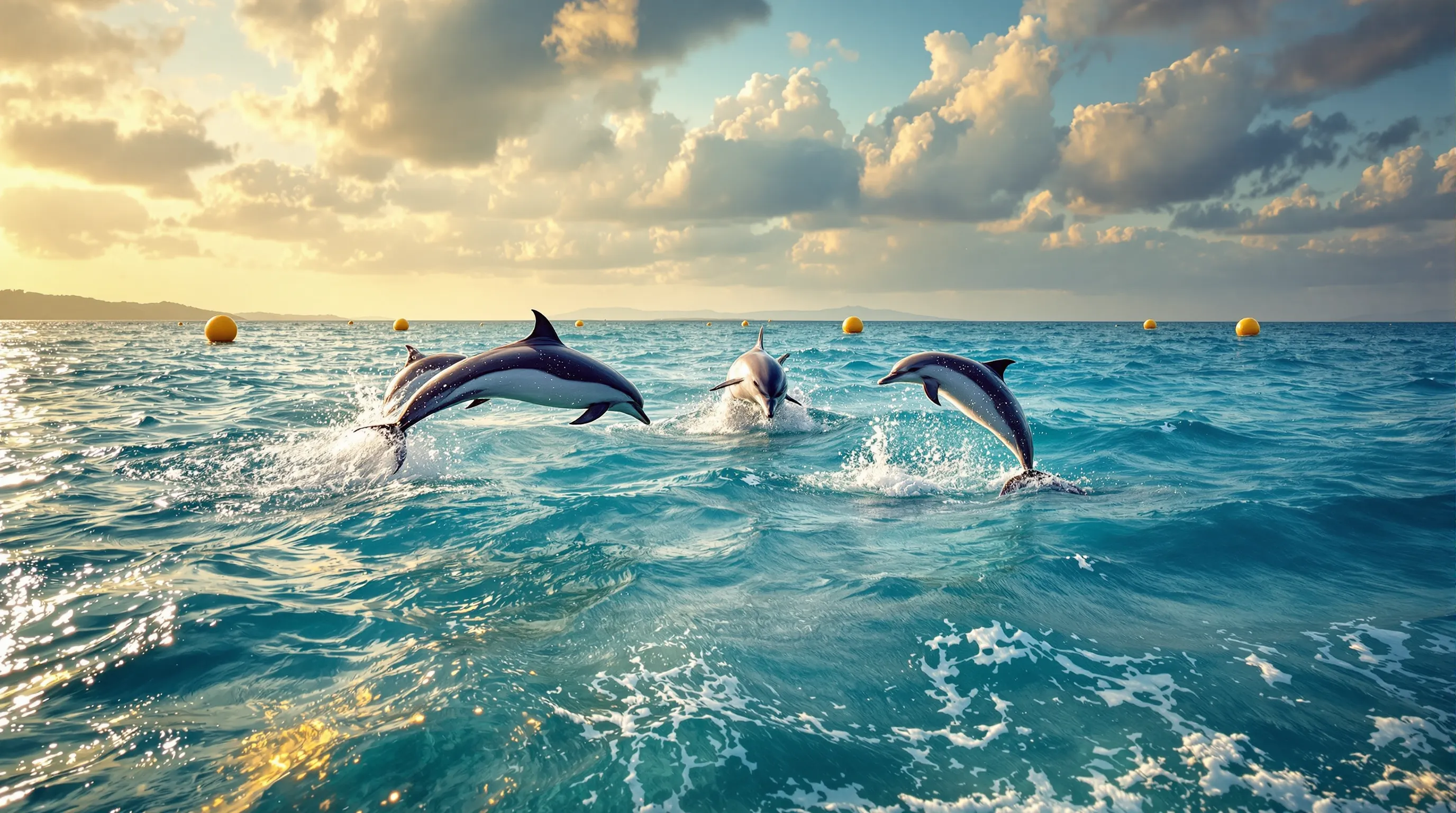
7 Things You Didn't Know About Dolphin Protection in the Mediterranean
The Mediterranean is home to 21 cetacean species, some critically endangered. The Pelagos International Sanctuary, established in 1999, protects 87,500 km² of waters between France, Monaco and Italy. Each year, over 100,000 cetaceans traverse this area, making the western Mediterranean one of the world's most important migratory corridors. Ship strikes cause 40% of fin whale mortality, whilst noise pollution disrupts 60% of their natural communications.
The Pelagos Sanctuary: A Unique Cross-Border Protection
The Pelagos Sanctuary represents the first international marine protected area in open waters. This exceptional zone stretches from Cap d'Antibes to the Sardinian coast, encompassing the waters of the French Riviera, Liguria and Monaco. Upwellings create a krill-rich ecosystem, attracting sperm whales, pilot whales and striped dolphins. Over 8,500 fin whales regularly frequent these waters, representing the largest concentration of these giants in the Mediterranean. The sanctuary coordinates efforts from three countries to reduce human impacts: speed limits for commercial vessels, continuous acoustic monitoring and awareness campaigns for recreational boaters.
Enhanced Regulations and Controls
Since 2021, vessels over 24 metres must observe a maximum speed of 10 knots in sensitive areas. Fines can reach €150,000 for serious infractions. A satellite surveillance system enables real-time monitoring of routes and speeds.
Innovative Technologies for Marine Conservation
New technologies are revolutionising Mediterranean cetacean protection. Underwater hydrophones detect signals over 20 kilometres away, enabling real-time vessel alerts. Thermal camera-equipped drones survey populations with 95% accuracy. Artificial intelligence analyses 50,000 hours of annual acoustic recordings to identify species and their behaviour. Satellite tags reveal that fin whales travel up to 2,000 kilometres between feeding and breeding areas. This high-tech monitoring allows protection measures to be adapted according to migratory movements and concentration zones.
Current Threats and Emergency Solutions
Plastic pollution kills 15% of stranded cetaceans, whilst ghost nets trap 200 animals annually. Maritime traffic has increased 300% since 1990, multiplying collision risks. Engine noise pollution disrupts echolocation over a 50-kilometre radius. Facing these challenges, mandatory shipping lanes divert traffic from sensitive areas. Fishermen now use biodegradable nets and acoustic deterrent devices. Floating treatment stations process 80% of wastewater from marinas. These measures have reduced mortality by 25% over five years.
Participatory Cleanup Programme
Over 15,000 volunteers participate annually in maritime cleanup operations. Divers recover 12 tonnes of plastic waste per year from protected areas. Each geo-located piece of debris helps identify pollution sources and optimise prevention campaigns.
Practical Tips for Responsible Tourism
Observing cetaceans requires strict adherence to rules: maintain a minimum 100-metre distance, limit observation to 15 minutes and switch off engines when animals are present. High Quality Whale Watching certified excursions guarantee ethical practices with certified naturalist guides. The best period runs from May to October, with peak activity in July-August. Expect to pay £40-55 for a 3-hour trip departing from Nice, Antibes or Monaco. Book 48 hours in advance during peak season. Optimal weather conditions require winds below 15 knots and minimum 5-kilometre visibility.
Frequently asked questions
Which cetacean species can be observed in the Mediterranean?
21 species frequent the Mediterranean: fin whales, sperm whales, pilot whales, striped dolphins, Risso's dolphins, and more rarely orcas and long-finned pilot whales. Fin whales are most easily observed between June and September in the Pelagos Sanctuary.
How can I help protect cetaceans during my holidays?
Choose certified operators, respect observation distances, report your sightings on the Miraceti app, participate in beach cleans organised by local associations and avoid non-biodegradable cosmetics. Your contribution makes a difference to their survival.
When does whale watching in the Mediterranean offer the best chances?
The optimal period runs from May to October with a peak in July-August. Fin whales are present 80% of the time between June and September. Choose morning trips in calm seas from the ports of Nice, Antibes, Cannes or Monaco to maximise your observation chances.
Mediterranean cetacean protection is advancing through coordinated efforts and new technologies. Every action counts: choosing respectful tourism, reporting observations and raising awareness amongst others. Discover these marine giants on a responsible trip and contribute to their conservation. To organise your ethical observation excursion, visit dauphin-mediterranee.com and enjoy an unforgettable experience whilst participating in marine conservation.
Read also

What Locals Keep Secret About Porquerolles Island Will Astound You
Uncover the hidden secrets of Porquerolles Island that only locals know. Secret ...
Why Local Guides Keep These Secret Kayaking Spots in Provence Hidden
Discover hidden kayak and paddle spots along the Provençal coast that only local...
What Divers Keep Secret About Mediterranean Snorkelling Spots
Discover 10 secret Mediterranean snorkelling spots known only to experts. Crysta...
5 Fascinating Secrets About Fin Whales That Marine Biologists Reveal
Discover the secrets of Mediterranean fin whales, these 20-metre giants that fas...