Calanques de Piana: What the UNESCO-Listed Red Cliffs Reveal
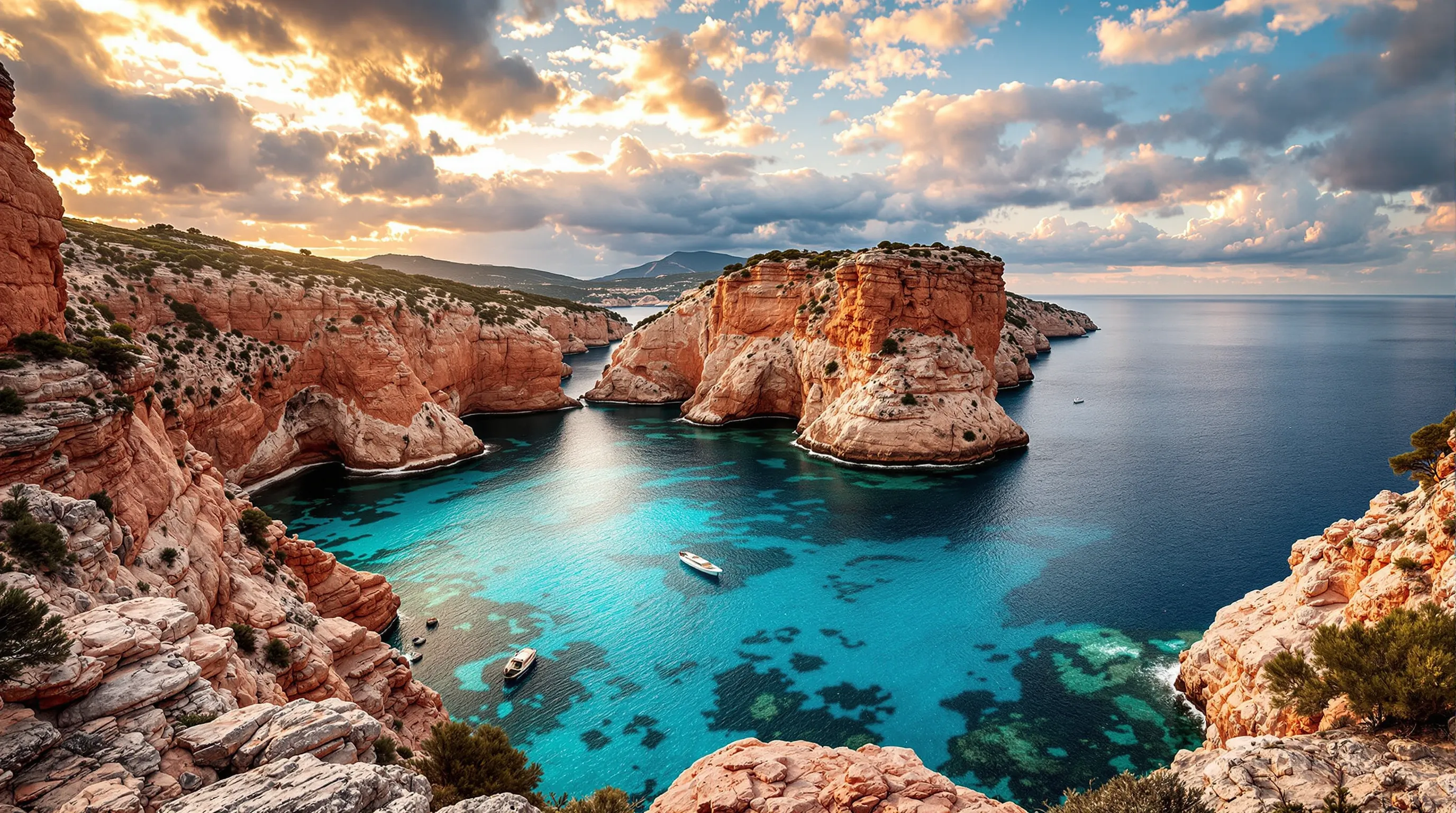
The first time I sailed off the coast of Piana, aboard a small boat out of Ajaccio, I understood why this site has been a UNESCO World Heritage listing since 1983. The pink granite cliffs, sculpted by erosion over millions of years, plunge sheer into a sea of almost unreal blue. The Gulf of Porto, of which the Calanques form part, is also home to waters frequented by fin whales and Risso's dolphins in summer. This contrast between scorching rock and understated marine life makes this stretch of Corsican coastline an exceptional spot for observation, for those who know where to look.
A Unique Geological Site on the World Heritage List
The Calanques de Piana stretch for around 12 kilometres of coastline, between the village of Piana and the Gulf of Porto, in Southern Corsica. The pink and orange granite that makes up these cliffs formed nearly 250 million years ago, before being shaped by wind and sea spray into evocative forms: the dog's head, the bishop, the fortress. UNESCO listed the combined Gulf of Porto-Calanques de Piana-Scandola Reserve as early as 1983, recognising the outstanding value of this coastal landscape. From the D81 road, hewn straight from the rock in the 1850s, one viewpoint follows another, notably at the Les Roches Bleues restaurant, an iconic stop for admiring the sunset. Below, the coves of Ficaghjola and Caspicafucile, reached on foot via steep paths, offer a swim in turquoise water ringed by red granite, a setting with few equivalents in the western Mediterranean.
The Scandola Nature Reserve, right next door
Just a short distance north, the Scandola Reserve completes this UNESCO triptych. Accessible only by sea from Porto or Galéria, landing is forbidden, though observation from licensed boats is permitted. Here you might spot ospreys, resident bottlenose dolphins and occasionally loggerhead turtles during their summer stay. Navigation is regulated to protect the seabed and the volcanic cliffs, distinct from Piana's granite but every bit as spectacular.
Where to Go Exactly: Villages, Harbours and Access
The village of Piana, perched at 438 metres above sea level, is the natural base for a stay, with its whitewashed houses and baroque Sainte-Marie church. From there, the D81 winds down towards the Gulf of Porto in about ten minutes, skirting the main viewpoints over the calanques. For boat trips, departures run from Porto harbour, where several local operators offer outings combining the Piana cliffs, the Scandola Reserve and sometimes the calanques of Girolata, a hamlet reachable only on foot or by boat. Ajaccio, roughly an hour's drive away, remains the main airport and port for reaching the region from mainland France (or, for British visitors, via a connecting flight or ferry). For walkers, the Sentier des Muletiers, linking Piana to the hamlet of Achja, crosses fragrant maquis scrubland of myrtle and rockrose before dropping down to the sea. Another lesser-known option is the path to the Ficaghjola cove, steep but short, which leads to a red-pebble beach tucked between two granite walls, ideal for a late-afternoon swim away from the crowds at the roadside viewpoints.
Girolata, the hamlet with no road
Girolata, nestled at the head of a sheltered bay, can only be reached by boat from Porto or via a two-hour walk from the Col de Palmarella. This fishing hamlet, overlooked by a 16th-century Genoese tower, makes a fitting addition to a Calanques de Piana boat trip lasting half a day, often paired with a pass along the red cliffs of Scandola.
When to Go: Weather, Light and Crowds
May, June and September remain the best months to explore the Calanques de Piana in good conditions. The low, slanting light of late afternoon, particularly between 5pm and 7pm in June, brings out the pink granite beautifully and turns the coast road into a photographer's dream. July and August bring intense heat, heavy traffic along the D81 and car parks near Les Roches Bleues filling up by 10am. The sea, on the other hand, reaches its most pleasant swimming temperature between mid-June and late September. Winter offers a radically different experience: quieter roads, soft winter light on the cliffs, but the sea is often rough and boat trips are suspended as a precaution. For those keen to spot marine wildlife, May to October is when bottlenose dolphins are most reliably present, along with occasional fin whales that head up to feed off the Gulf of Porto in late summer. Autumn storm nights, common in Southern Corsica, can also leave paths slippery and dangerous, worth checking before heading down to any of the coves.
How to Plan Your Visit: Duration, Difficulty and What to Pack
Half a day is enough to drive the scenic road and stop at the main viewpoints, but a full day lets you combine a walk, a swim and a boat trip. The Sentier des Muletiers requires reasonable fitness, around two hours there and back, with a moderate climb but terrain that can be slippery on the polished rock. The paths down to the Ficaghjola or Caspicafucile coves are shorter, about thirty minutes, but steep and not recommended for those with reduced mobility or wearing flip-flops. Pack sturdy walking boots with a good grip, plenty of water since refill points are scarce once you're on the trails, and decent sun protection, as the maquis offers little shade in the middle of the day. For boat trips, booking several days ahead in high season with the operators based in Porto is essential, as places are limited on the small boats licensed to enter the Scandola Reserve.
Driving the D81 safely
The road between Piana and Porto is narrow, winding, and shared with coach tours in high season. Driving early morning or late afternoon reduces the risk of tricky encounters on blind bends. Official parking spots, particularly near Les Roches Bleues, should be used rather than pulling over on the verge, which is both dangerous and liable to a fine.
Practical Tips and Responsible Tourism
The cost of a visit depends on how you approach it: a self-guided walk from Piana is inexpensive, whereas a boat trip to Scandola with a naturalist guide represents a bigger outlay, justified by the reserve's strict regulations and the skipper's expertise. Booking ahead, especially in July and August, helps avoid disappointment on limited slots. For dolphin and whale watching offshore, choose operators displaying the High Quality Whale Watching label or adhering to ACCOBAMS agreement guidelines: a gradual, side-on approach to the animals, minimum distance maintained, reduced speed on approach, limited observation time, and no encircling or feeding of cetaceans. These rules protect populations already under pressure from disturbance and summer boat traffic. On land, stick to marked trails to avoid further damaging the maquis, take your rubbish away with you, and avoid picking coastal plants, some of which are endemic. Swimming in the granite coves should be done with care, as there's no safety equipment on site and currents near the rocks can sometimes be treacherous.
Frequently asked questions
How much time should I allow to visit the Calanques de Piana?
Half a day is enough to drive the scenic road and take in the main viewpoints. To combine a walk on the Sentier des Muletiers, a swim in one of the coves and a boat trip to Scandola, allow a full day, or two if you're staying overnight in Piana or Porto.
Can you see dolphins from the Calanques de Piana?
Yes, bottlenose dolphins are regularly seen in the Gulf of Porto between May and October. Boat trips from Porto, run by operators that respect ACCOBAMS distance guidelines, offer the best chances of a sighting, though nothing is ever guaranteed, as these are wild, roaming animals.
What's the best time of day to photograph the red cliffs?
Late afternoon, between roughly 5pm and 7pm depending on the season, gives the low, slanting light that best brings out the orange and pink tones of the granite. The Les Roches Bleues viewpoint, on the D81, is particularly popular for watching the sunset over the Gulf of Porto.
Are the Calanques de Piana suitable for families with children?
The scenic road and main viewpoints are accessible to everyone. The steeper paths down to the coves suit children who are used to walking and are accompanied by an adult. Boat trips to Scandola remain the most comfortable option for exploring the site as a family.
Do you need to book ahead for a boat trip to Scandola?
Yes, it's strongly advised in July and August, when places on the licensed boats fill up quickly. Booking a few days, or even weeks, ahead in high season guarantees a spot and lets you pick a time slot with favourable light for spotting wildlife.
The Calanques de Piana embody a rare meeting of spectacular geology and understated marine life, along a stretch of Corsican coastline protected by UNESCO for more than forty years. Between a walk on the Sentier des Muletiers, a swim in a red granite cove and a boat trip out to the Scandola Reserve, every visit is worth preparing for and treating with respect. To learn more about responsible dolphin and whale watching in the Gulf of Porto and plan a guided boat trip, dauphin-mediterranee.com offers up-to-date resources on best practices and timing.
Read also

Porquerolles, Port-Cros, Levant: 7 Secrets of the Golden Isles Few Visitors Know
Discover Porquerolles, Port-Cros and Levant: secret beaches, underwater trails a...

Seasickness on Whale Watching Trips: The Tricks Marina Always Uses at Sea
Seasickness on whale watching trips: discover how to prevent and manage it with ...

Collioure and the Vermilion Coast: what its turquoise waters reveal when snorkelling
Discover Collioure and the Vermilion Coast for swimming and snorkelling: hidden ...

Lionfish and Giant Jellyfish: How Warming Waters Are Changing the Mediterranean
Warming seas and invasive species are transforming the Mediterranean: discover t...